





Okay, I’ll admit it: I’m not a fan of all of Remedy’s games. Max Payne 1 and 2 remain excellent, and while I can respect the storytelling and art direction of the Alan Wake series, its gameplay hasn’t really hooked me. Quantum Break is…well, Quantum Break, even if it deserves a fair shot. Let’s not even bring up those awful CrossfireX campaigns that are no longer available. But Control is a different subject entirely.
Seven years after playing it, I’m still enamored by its setting, narrative, characters, and overall vibe. An SCP-style organization under threat from an invasive entity from another dimension was already a solid premise. But the mystery behind the Oldest House, the excellent gameplay that fused fantastic third-person shooting with telekinetic powers, and the Metroid-like approach to backtracking and side content made it an incredible experience. Naturally, expectations were high for Control Resonant.
"Admittedly, I wasn’t immediately on board with Dylan’s awkwardness, even if he hasn’t seen the outside world in decades, and there’s that whole deal about killing multiple FBC agents while possessed by the Hiss in the first game – as potent a source for self-loathing as redemption."
The best comparison is that Resonant is to Control what Batman: Arkham City was to Arkham Asylum, though it doesn’t offer a large open world and diverges significantly in combat. The overarching feeling is that Remedy is finally tapping into its vision for what an out-and-out action RPG could look like while leveling up its art design, traversal, and environments. Even with some technical quibbles on PS5; even with the combat requiring some investment before everything really starts to click; even with some side tasks that don’t feel entirely imaginative; and yes, even past some iffy writing and a familiar trope that ends up working better than I thought, Control Resonant is a fantastic experience.
Seven years after the Oldest House locked down to avoid the Hiss getting out, Dylan Faden awakens from his coma to find that…well, the Hiss got out. However, that’s far from the worst of it, as Manhattan is in the middle of a paranatural cataclysm called The Patterning. It’s somehow keeping the Hiss contained within, but the Federal Bureau of Control – such as it is – still needs to figure out how to contain it and many other entities in what’s essentially the Army of Nightmares scene from Cabin in the Woods but with a more paranatural slant. Then there are the Resonants, powerful entities that seem connected to The Patterning but also unfortunate victims of its effect.
Of course, that makes things a bit awkward because Dylan – who’s looking for his MIA sister, Jesse – isn’t very well-liked by the FBC. Thanks in no small part to Zoe de Vera, an agent from outside the Oldest House who saw what he can do, he serves as a disposable asset. Admittedly, I wasn’t immediately on board with Dylan’s awkwardness, even if he hasn’t seen the outside world in decades, and there’s that whole deal about killing multiple FBC agents while possessed by the Hiss in the first game – as potent a source for self-loathing as redemption.
Thankfully, Remedy knows when to temper it, and he slowly grows in significant ways, whether it’s learning how to be sarcastic or coming to terms with what the FBC did to him in his Prime Candidate Training days. It serves as a good bit more than once, though, like Dylan following a line of cars and telling Zoe with full seriousness that they were heading to a parking building. For reasons beyond the obvious, sure, but the reaction sold it.
Dylan obviously serves as a way to bring new players into the franchise, by sheer virtue of being out of the loop for so long, but this also feels like the start of a new story. One with several vital connections and continuations to its predecessor – and which you’ll appreciate far more by playing through the latter – yet still standing on its own regardless.
"Even if Remedy’s version of Manhattan isn’t bustling with hundreds of NPCs – and those that are present offer pretty much what you’d expect in terms of routines and voice acting – it’s still full of incredible details."
Zoe serves as an excellent foil throughout this, embodying the workaholic, standoffish field agent who also isn’t afraid to do the right thing. Another cliché, the so-called “heart of gold” comes up with her character, but as with Dylan’s awkwardness, it’s thankfully not her only defining trait. Their chemistry, as they go from “strictly business” to friends, is well-handled, even with the odd exchange here and there that could have used a bit of fine-tuning.
For those worried about too many “Focus M”-style situations that would take away from the storytelling and exploration, Control Resonant avoids much of that. As much as Dylan doesn’t know what’s going on, or really what to make of Manhattan, this goes for the rest of the FBC. So in addition to being the only one capable of combating the more serious paranatural threats, Dylan is also paving the way, collecting data and mapping out each zone (which ties into the overall gameplay loop).
After defeating the first Resonant and liaising, for lack of a better word, with the FBC, you’re effectively let loose in Manhattan. Several zones open up, and even if you can’t fight every single Resonant immediately, you also don’t need to. They’re often distinct from Dylan’s other mission, which is venturing into the Faults and assisting Jesse in whatever she’s trying to do. These often unlock new traversal abilities. Hover, double-jump and dashing are available fairly early on, so you can reasonably bound across the city without too many hurdles.
It’s Shift that really starts playing with your perspective, as Dylan can walk on walls and ceilings, readjusting the perspective to fit. So many of the game’s most memorable sequences – including the Sinkhole Incident – make use of it in a lovingly disorienting fashion. However, it’s not long before you’re using it to readjust your position in battle, if only for a momentary reprieve. Reach is more straightforward, sending Dylan across massive gaps. While finding the right angle could be finicky at times, it synergizes with Shift and really opens up late-game exploration.
As noted earlier, this isn’t an open-world experience where everything neatly interconnects, especially from the start. Learning the layout is thus key, and even if a zone looks small on the map, not every objective is a straight path. On that note, Remedy doesn’t give you a waypoint, guided arrows or a scent trail indicating where to go. But hey, the FBC is nice enough to put up a sign leading to The Park, if the abundance of Mold wasn’t enough of an indication – a lovely bit of world-building hinting that the growth wasn’t always this bad.
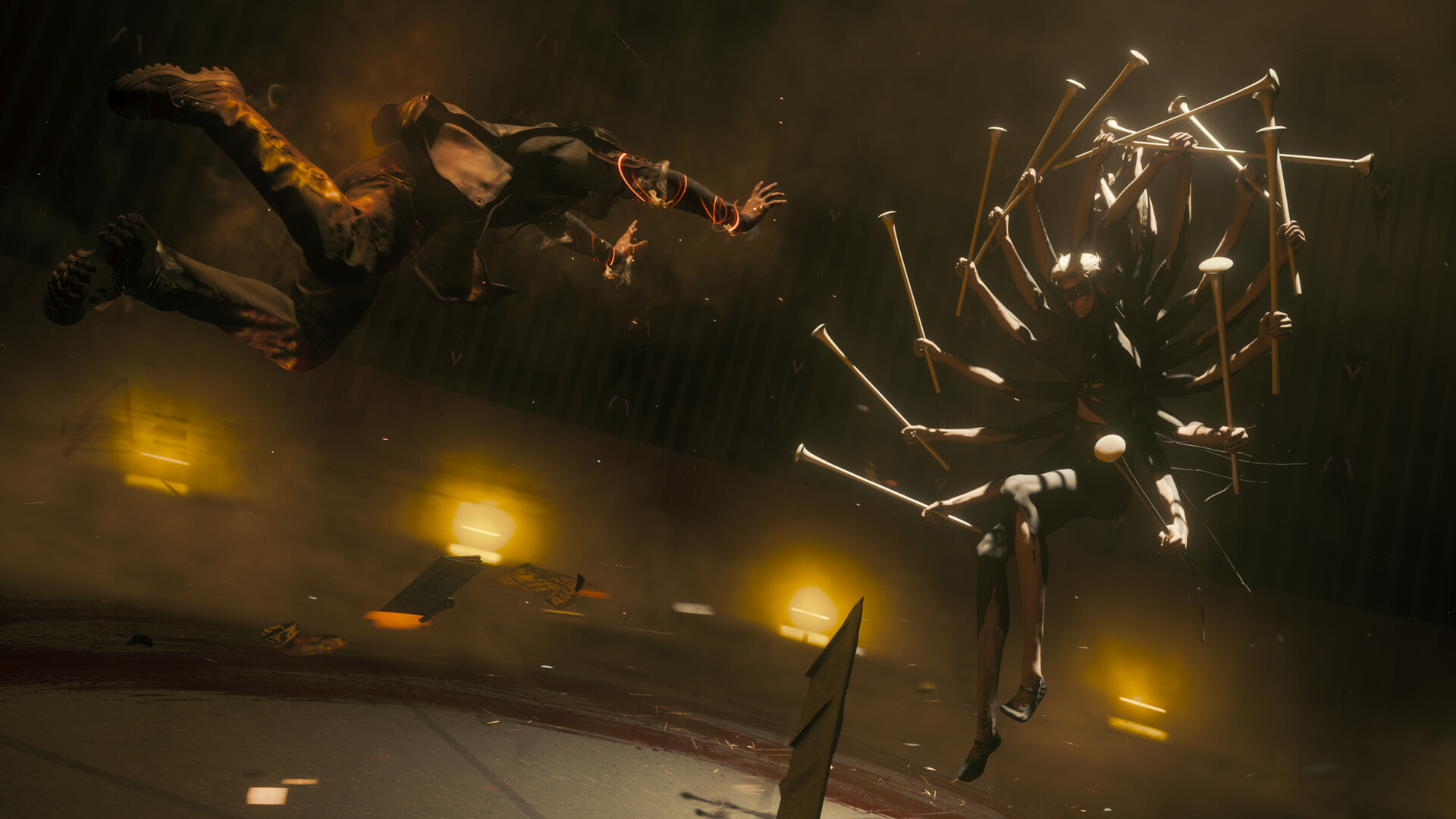
It doesn’t stop there, though. Abandoned FBC outposts, including one near the Oldest House, that left a bunch of mines to stop any Hiss from progressing and where bodies aplenty remain. Laundromats, convenience stores and coffee shops with exquisite detail, which contain crates with resources and other upgrades (not to mention the occasional puzzle to unlock some hidden entrances). Even if Remedy’s version of Manhattan isn’t bustling with hundreds of NPCs – and those that are present offer pretty much what you’d expect in terms of routines and voice acting – it’s still full of incredible details. And that’s before you venture into the West Incursion Zone with skyscrapers folded on top of each other, or the Underpass, which may be my favorite area in a video game this year.
"As memorable and unique as the side quests are, these also pale in comparison to the main quest. No spoilers, obviously, but it’s where the biggest set pieces await, and where the environmental design, traversal and combat really mesh together."
As for the side content, the generic tasks that you receive aren’t exactly the most inspired, whether it’s taking out an Apex enemy, clearing out a mess of hostiles or escorting FBC Rangers to a certain location. They all feel seamless enough, if not particularly original, but don’t worry – there are several unorthodox jobs as well, like a camera that freezes you and disappears when approached from the front, forcing you to find another route and flank it from behind. Or the stroller that moves about different points in an area, which you need to play catch-up with. Or breaking The Patterning in some localized areas, which requires picking the odd one out among a group of similar, spinning objects.
Dylan may also choose to rearrange some objects in a scene to sketch. It’s little more than picking up and sensibly placing them, but it also offers insight into his artistic side and how he views the world. Then there are the Arcade Machines that offer unique combat challenges, from clearing out as many enemies as possible while a zone occasionally shrinks to defending three points from enemies.
Fun as these might be, they break up the monotony when venturing through a zone, and pale in comparison to the actual side quests. Like traveling to a taxi-infested Threshold to save a mysterious woman. Or venturing into an auction warehouse to subdue an empowered speaker, though it’s part of a set, so you’ll need to read a manifesto and find out where the rest are hiding. And even if some of them, like Carbon Copy, may start pretty typically, the Remedy brand of weirdness emerges before you know it, transforming the plot into something else entirely.
All of this goes into leveling up a zone, which introduces more health and resource drops and opens more options from the totally not shady ice cream truck vendor. Killing Resonants also transforms zones in terms of threats, though story events will also change things up pretty significantly.
As memorable and unique as the side quests are, these also pale in comparison to the main quest. No spoilers, obviously, but it’s where the biggest set pieces await, and where the environmental design, traversal and combat really mesh together. And credit where it’s due: the development team delivered multiple shocking twists which I didn’t see coming. At least one may be telegraphed for fans of the original, but that didn’t make it any less surprising or effective.
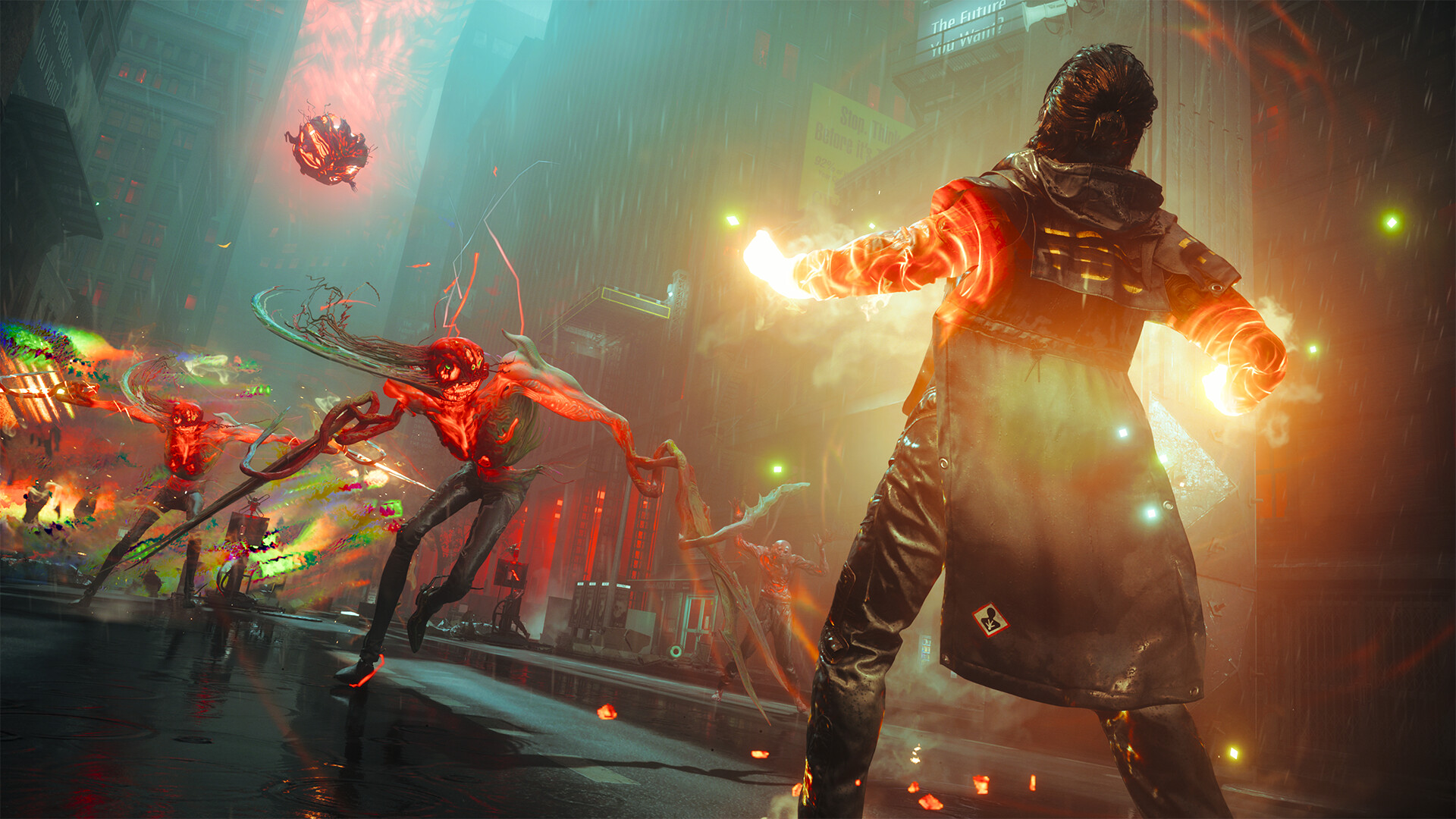
This brings us to perhaps another core foundation of Control Resonant: The combat. There were some mixed reactions when extensive early gameplay was revealed. Personally, I was concerned it wouldn’t feel as responsive or seamless as the original – that was quickly laid to rest within minutes. The hit reactions feel visceral; the perfect dodges are seamless; and seamlessly executing Faltered enemies to gain Dominance, which confers more damage for a brief period, to bring down heavies and keep the engine rolling feels empowering.
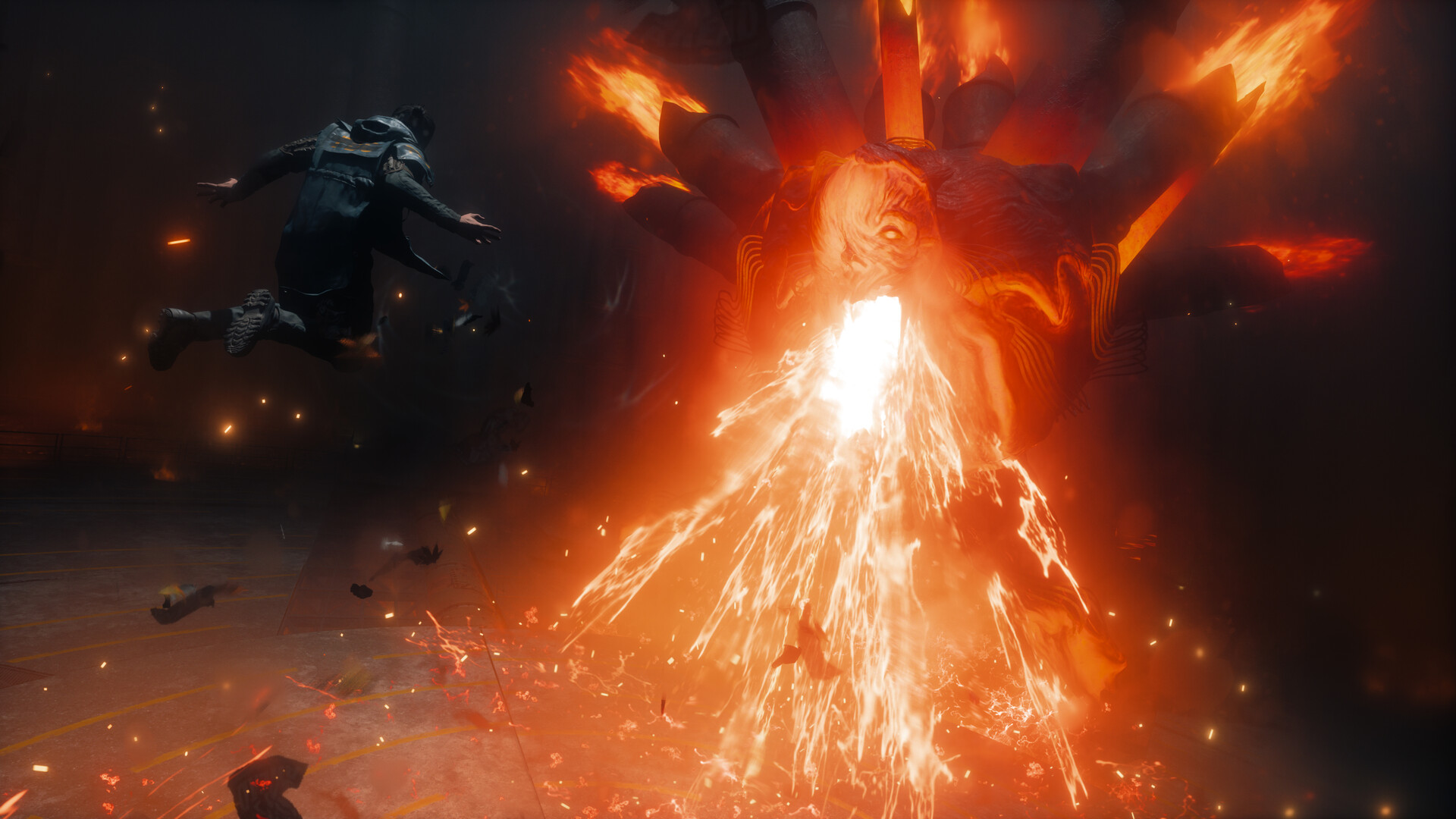
"Thankfully, when the pieces start falling into place past those opening hours, the combat really starts to shine. Greater enemy variety helps because you’ll start off fighting the average Hiss, and slowly, flying types and armored heavies will enter the mix."
The progression is a little more…odd. Dylan is armed with the Aberrant, which starts with a Primary and Secondary form alongside a finisher. Each form deals a different type of damage – Sharp, Blunt and Raw – and certain enemies are understandably weaker to one or the other. That doesn’t mean you’ll find any Sharp options in the Primary forms, but they offer unique functions, from the straightforward Cleave to Flurry, dual daggers that can focus more on criticals or the Glaive’s reach and sheer sweep.
The finishers are more intriguing because they trigger at the end of a Primary form combo, but offer a myriad of options. You could throw hands or execute a single rising uppercut, which builds a significant amount of Falter. Once you unlock the ability to swap to a Secondary attack, combos can extend even further with different effects. And that’s before factoring in abilities, like flame blasts and pushing enemies into the environment or off of buildings to let gravity do the rest.
However, you’re still initially focused on stunning medium or heavy targets to execute them, then relying on Dominance to try and slay everything else. Obtaining Dominance orbs in the environment lets you speed up that process, but that’s more or less it for the first few hours, because the initial Talents – from increased Falter to extending Rush, your typical sprint – feel fairly rudimentary, as do the initial weapon upgrades. The abilities introduce a bit more flavor, and their uptime is decent, but not incredible early on. It can also take time to unlock new Primary and Secondary forms if you’re not taking the time to farm their resources.
So while you have a responsive, satisfying combat system from the outset, the tools feel starkly underdeveloped. You’ll also take on the Hiss for a few hours before the enemy variety really opens up. That’s assuming you don’t try to fight the Mold right off the bat.
Thankfully, when the pieces start falling into place past those opening hours, the combat really starts to shine. Greater enemy variety helps because you’ll start off fighting the average Hiss, and slowly, flying types and armored heavies will enter the mix. There’s also the Hiss bus, which continuously spawns numerous drones to swarm you. And when you get a handle on how to effectively decimate them, there’s the Mold, which requires different tactics – and not just wanton pyromania, though it does help – to take them out.
The Resonants also offer their own unique gameplay challenges, especially since healing isn’t immediately available on demand early on. If The Dancer felt like a deadly sway where messing up a single dodge was bad news, then The Deserter was more like a fatal game of the floor is lava. Your mileage may vary on their default difficulty, but they each felt memorable in their own right.
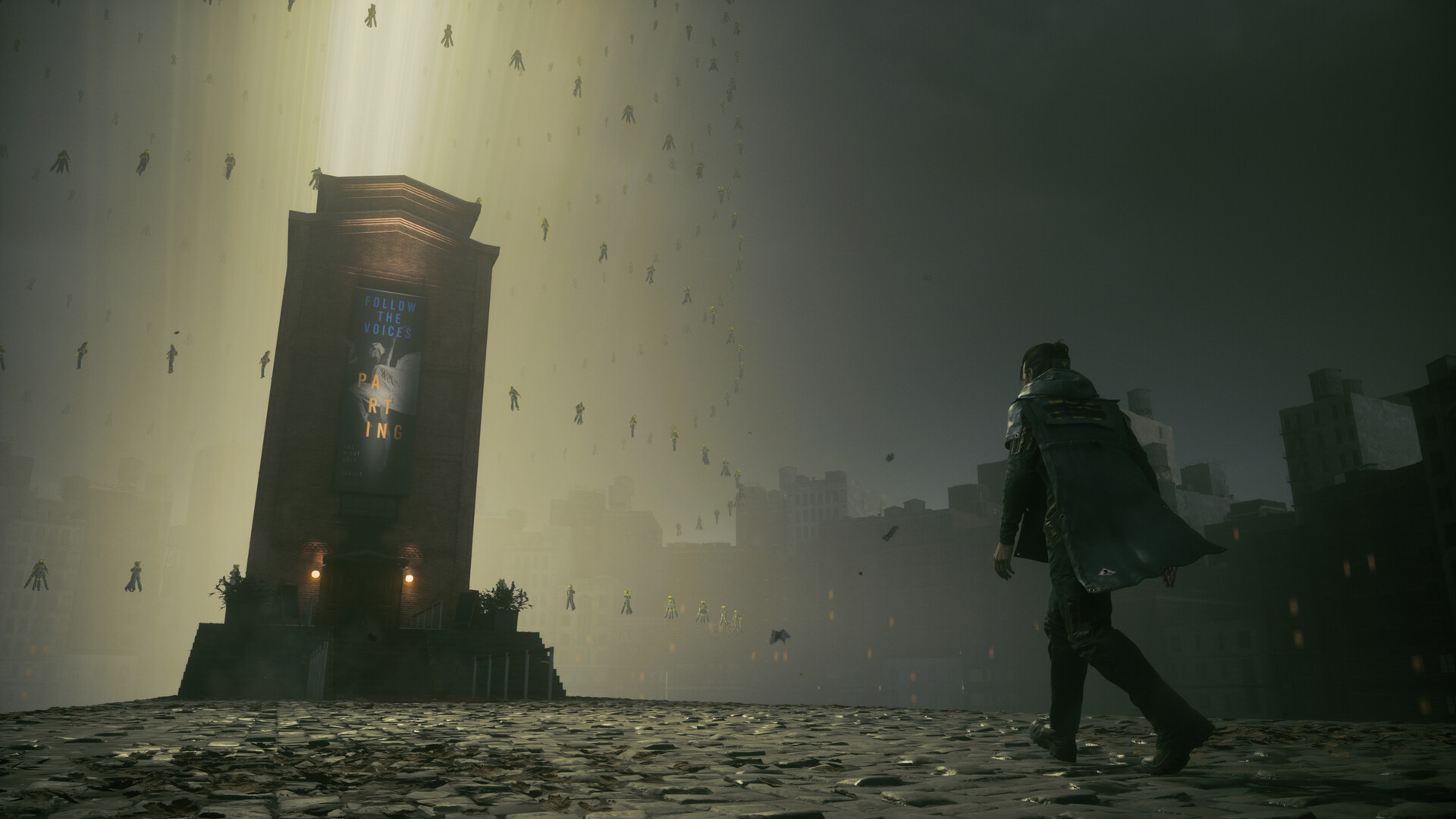
"All in all, Control Resonant is a fantastic game. It builds on the mythos of its predecessor while telling its own emotionally riveting story. I find myself drawn to exploring Manhattan long after the credits roll, unearthing even more paranatural mysteries."
Throughout all this, you’re also digging deeper into a specific weapon’s upgrades, unlocking more notable perks geared to certain playstyles (like leaning into Flurry’s dodge attacks, which have a higher critical chance). Since Talent Points are ostensibly tied to leveling up zones, each one feels worthwhile, and the later Talents offer some pretty meaty upgrades. I still would have liked the weapons to have more varied movesets beyond just “add a third hit to this secondary form combo” or “charge this attack sooner”, but the combat expression becomes far better as you go long. The same goes for the build-crafting.
While you could embrace a generalist playstyle, placing Mold turrets and detonating infected enemies with flame blasts, I really enjoyed igniting Dylan’s weapons and some abilities. Pair this with Flurry’s rapid attacks and the occasional Mold turret to chunk down heavier targets with explosions, and you have something that flits between enemies, building Falter to quickly execute them for Dominance, which adds even more damage on top. Power generation remains…a concern, for sure, but trying to solve that made me want to delve even deeper into the game’s systems and find the best pairings.
Do I go for the uppercut, which delivers more Falter, or further upgrade the splitblade, which can also ignite enemies when upgraded? And how do I get to ranged threats out of reach? Decisions, decisions. The soft targeting system can sometimes be awkward against larger groups, though I’ve seen this more with single-target combos. I also wasn’t the biggest fan of getting chain cced by the Mold’s explosives, but changing tactics quickly solved that.
As noted before, the art direction is stunning and easily some of the best this year (if not many others). It’s backed by solid performance on PS5, with a pretty consistent 60 FPS and respectable draw distances while venturing through Manhattan. There was the odd dip in places, and image quality in Performance Mode isn’t exactly top tier. It’s more noticeable when viewing distant structures while moving, but the noise from shiny objects in the background during dialogue exchanges is far more annoying. Regardless, Remedy delivers its vision while ensuring it runs well on consoles.
All in all, Control Resonant is a fantastic game. It builds on the mythos of its predecessor while telling its own emotionally riveting story. I find myself drawn to exploring Manhattan long after the credits roll, unearthing even more paranatural mysteries. Even if every “how” and “why” isn’t answered, the struggle to maintain control, all for the sake of taking another step forward, remains as endearing as ever.
This game was reviewed on PS5.
Remedy's incredible art direction is on full display, from the detailed streets of Manhattan to patterned landscapes. Traversing these environments and encountering different pieces of content, be it side quests or straightforward tasks, also feels very good. Combat is easy to get into and incredibly responsive, with an impressive array of enemies and bosses to battle. Exceptional storytelling and writing, punctuated by some genuinely unexpected twists. Solid performance and fidelity on PS5.
Combat takes some time to open up and really let you lean into its options. Even then, I would have appreciated more moves for the weapons. Some iffy dialogue abounds, and certain tasks can feel a little too cliche. Image quality occasionally suffers on console in Performance Mode.