






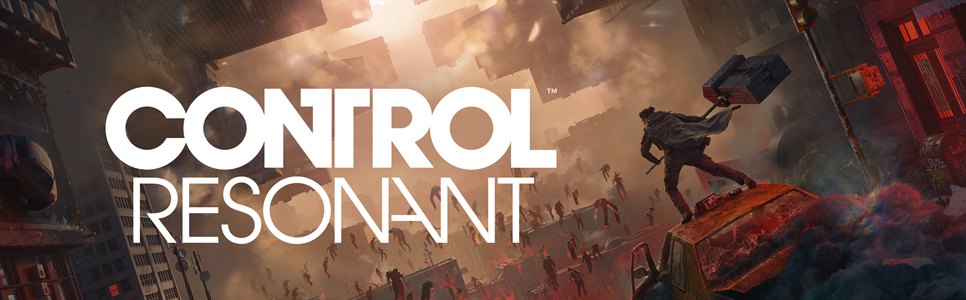
Control Resonant is clearly bigger than its predecessor, but its most meaningful changes aren’t necessarily the obvious ones. Rather than providing another jaunt through the supernatural, with a new protagonist, setting, and combat systems, Resonant is reshaping how Control actually works and how it feels to play. From objectives that can be tackled in different orders, to enemies that harbour distinct combat roles, this is a world showcasing significant differences between Control and Control Resonant. Here are ten of the biggest that you need to know.
You Have More Control Over The Order Of The Campaign
Control was generous with exploration, but its story ultimately followed a pre-prescribed narrative. Jesse moved through the Oldest House according to the campaign’s structure, with optional missions, secrets, and place to revisit providing opportunities to deviate from the path. Now, Control Resonant is loosening these restrictions. While the first and final Resonant encounters are fixed, Remedy says the major Resonants in between can be tackled in whatever order you choose. Accommodating this, much of Manhattan becomes freely available early on. This change affects the structure of the campaign itself by giving you the option to determine the sequence of events for yourself, rather than simply providing a larger world to explore.
Defeating a Boss Can Permanently Change The World
In Control, bosses were generally obstacles for Jesse to overcome. Defeating one meant collecting a reward, acquiring the next piece of the story, and moving on. Their impact, then, was confined to the encounter itself. In Control Resonant, Dylan’s victories are considerably more consequential. When he defeats a Resonant, Manhattan shapeshifts, with new threats appearing, existing encounters growing more dangerous, and objects and activities evolving as part of what Remedy calls the Resonance Cycle. Thus, killing major enemies in the upcoming sequel can create new obstacles elsewhere, potentially changing your trajectory as you move through Manhattan. Resonant’s bosses then, are strategic milestones; not isolated challenges.

Dylan Doesn’t Level Up – Manhattan Does
Control kept progression focused on Jesse. Completing missions earned Ability Points which could be invested into improving her paranatural abilities. It’s a standard loop used in countless games, but Control Resonant takes a divergent approach. Here, Dylan doesn’t have conventional XP, but the zone he’s operating in does. Completing activities levels up the zone, which can provide benefits such as health drops, loot reveals, and extra excursions. Zone progression, also, can award Dylan with Talent Points. Without intending to find a philosophical underpin, Resonant brings an inversion of the usual RPG formula, and that’s fitting for a follow-up which its developer describes as the opposite side of the same coin to its predecessor.
Combat Encounters Don’t Always Lock You In Anymore
By Remedy’s own admission, Control frequently forced you into combat by sealing off areas with Hiss barriers, locking Jesse in until she’d cleared every enemy. Now, to be fair, this worked well in the amorphous confines of the Oldest House, where penned-in combat encounters could be more plausibly constructed, but this idea is less practical on Manhattan’s open streets. So, rather than trapping you wherever enemies appear, Resonant instead incentivises you to fight. Remedy wants you to engage in this sequel because there’s something worth fighting for, not because you simply have to. The knock-on effect is that encounters should feel more organically engrained into both the environment and exploration, with the decision to engage or move on resting squarely in your hands.
Dialogue Choices Can Actually Have Consequences
Like boss encounters, Jesse’s conversations throughout Control had a primary purpose: to deliver information that points you toward the next objective. However, in Resonant, Dylan gets much more to say, with the sequel introducing dialogue choices that can influence how characters respond to him and how their relationship develops going forward. Some World Quests can even have their outcomes altered by your decisions, whether Dylan says something or chooses to stay silent. While conversations require more participation and lead to tangible consequences, an important caveat to remember is that Control Resonant will not feature branching narratives, and there is still one main ending. It’s more about shaping your relationship with Dylan and the world around him, rather than bringing a seachanged story.
One Playthrough is Deliberately Not Enough to Unlock Everything
While Control offered plenty of ways to develop Jesse, you could still complete her progression during a single run through the Oldest House. Flavoured builds existed, but Resonant’s forebear wasn’t designed around sending you down an exclusive upgrade path. Dylan’s journey, meanwhile, is more explicitly committed to specialisation, with Remedy confirming that you won’t be able to unlock everything in a single playthrough. Furthermore, some rewards will push Dylan toward a specific playstyle, meaning the choices you make during your first campaign could follow a substantially different direction from your second. It’s one of the clearest indications yet that Remedy is pushing the sequel into action-RPG territory rather than expanding on the foundations Control already laid.

Your Build Menu Is An Actual Place
And, back to Jesse’s progression – throughout Control her upgrades were handled inside conventional menus and systems accessible via Control Points. It’s not really in keeping with Remedy’s style, especially given how memorable Alan Wake 2’s metaphysical Mind Place was for narrative organisation. So, for Control’s sequel, the Finnish outfit plans to take you somewhere decidedly stranger: The Gap. Now, this surreal space connected to Dylan’s psyche is where you can manage and shape his build, with recent coverage even highlighting potential spaces where you can test his augmentations. Going forward, Remedy has no choice but to place progression inside some supernatural realm – it’s very much their signature now.
Control’s Isolation Has Been Deliberately Reversed
Isolation was one of Control’s heaviest themes, with Jesse entering the Oldest House as an outsider and spending much of her time navigating its shifting forms with relatively few companions. Underlining our suggestion earlier of Resonant inverting some of Control’s most prominent ideas, Dylan’s relationship with Manhattan develops alongside others. See, Manhattan here isn’t an empty disaster zone. No, there are civilians remaining within the ongoing catastrophe, while the FBC maintain a field presence with characters such as Zoe operating as handlers for Dylan’s journey.
Enemies Are Designed Around More Distinct Combat Roles
Control had plenty of enemy variety, from different Hiss forms to Mold enemies and other phantasmagorical threats. But, for this upcoming sequel, Remedy has stretched its legs considerably. Yes, in Resonant, the developer claims they’ve taken enemy design to “the next step”, with enemies that fulfil more distinct combat roles alongside an expansive gauntlet of different shapes, sizes, and danger. Evolved versions of the Hiss and Mold appear, intended to make you consider the appropriate response based on Dylan’s outfit. In summary: Resonant isn’t simply introducing more enemy types, but individualising threats so that they occupy more distinct roles within each encounter.
You Can Maintain Multiple Concurrent Playthroughs
This quality of life change is perhaps the smallest we’ve discussed in this feature, but it could prove itself to be one of the sequel’s most useful additions. See, listening to player feedback, Remedy has provided the option for multiple save slots, which is something the original Control did not have. What this allows is for you to maintain multiple concurrent campaigns, enabling you to explore divergent builds, choices, and outcomes without having to start again.