





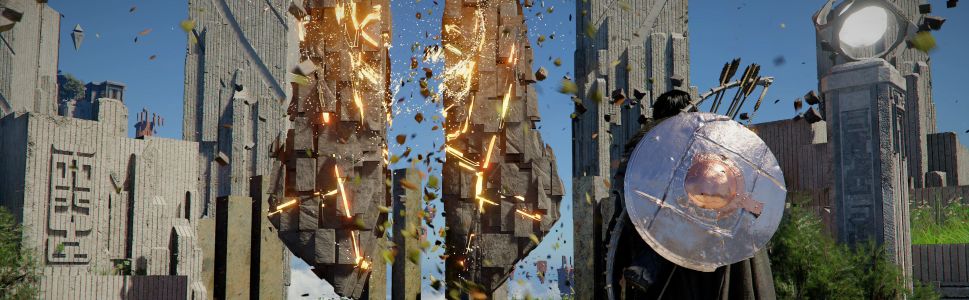
As Crimson Desert was more exposed over the past two years, comparisons to Red Dead Redemption 2 inevitably emerged. Not for nothing, because the latter is still, to this day, one of the greatest games ever made and a significant benchmark for open-world immersion and storytelling. So while it’s certainly superior in numerous aspects, how close does Crimson Desert get to matching it? Which areas are completely different and unique? Let’s dive into it, starting with…
Open World Structure
One of the ways Crimson Desert shines is in its overall variety of environments. Not only are there forests and plains that channel The Witcher 3, but it’s mixed with the sheer verticality of something like Breath of the Wild, and that’s only the starting area. Delesyia feels more elegant yet mysterious; the titular Crimson Desert – far from its sandstorms and desolate flats – is packed with technological developments, and the Abyss itself defies description with its various floating islands. Red Dead Redemption 2 offers many of the same environmental conditions and biomes, but with much less verticality or imaginative surroundings, so we’ll give the nod to Crimson Desert for this one. The latter also feels more like a “journey” in terms of how you’re gradually progressing, going from outright nothing to grander scenarios.
World Cohesion vs Abundance
However, there’s a dilenation between the two that’s difficult to ignore. Pywel is absolutely packed with activities and sights, mixing high fantasy with medieval times and steampunk technology. Red Dead Redemption 2’s environments are fictional, but they’re influenced by real-world locations at the dawn of the 20th century, where technology is slowly yet surely developing, and civilization is snuffing out the outlaws. One is more extensive and voluminous; the other feels more cohesive and grounded. It’s ultimately up to the player, although I would go for Red Dead Redemption 2. That cohesion is important, and the realism intertwines with the reactivity and characters to make it feel all the more alive.
Immersion vs Friction
Each game has its own kind of friction – something that pushes back against the player for different purposes. In the case of Red Dead Redemption 2, it’s getting to the more methodical controls and various systems that define Arthur’s life. It takes some time to fully acclimate to because it’s all in service of a different way of life that no longer exists. Yet everything is gradually rolled out while still feeling immersive, gradually drawing the player into its world and storytelling. Unfortunately, despite the strong opening cutscenes, Crimson Desert feels awkward in its sudden transition to Pywel while constantly dumping new systems and complex controls on the player. There is still friction in understanding how the world works, but you feel less immersed when having to remember all the controls and their different scenarios.
Exploration Payoff and Progression
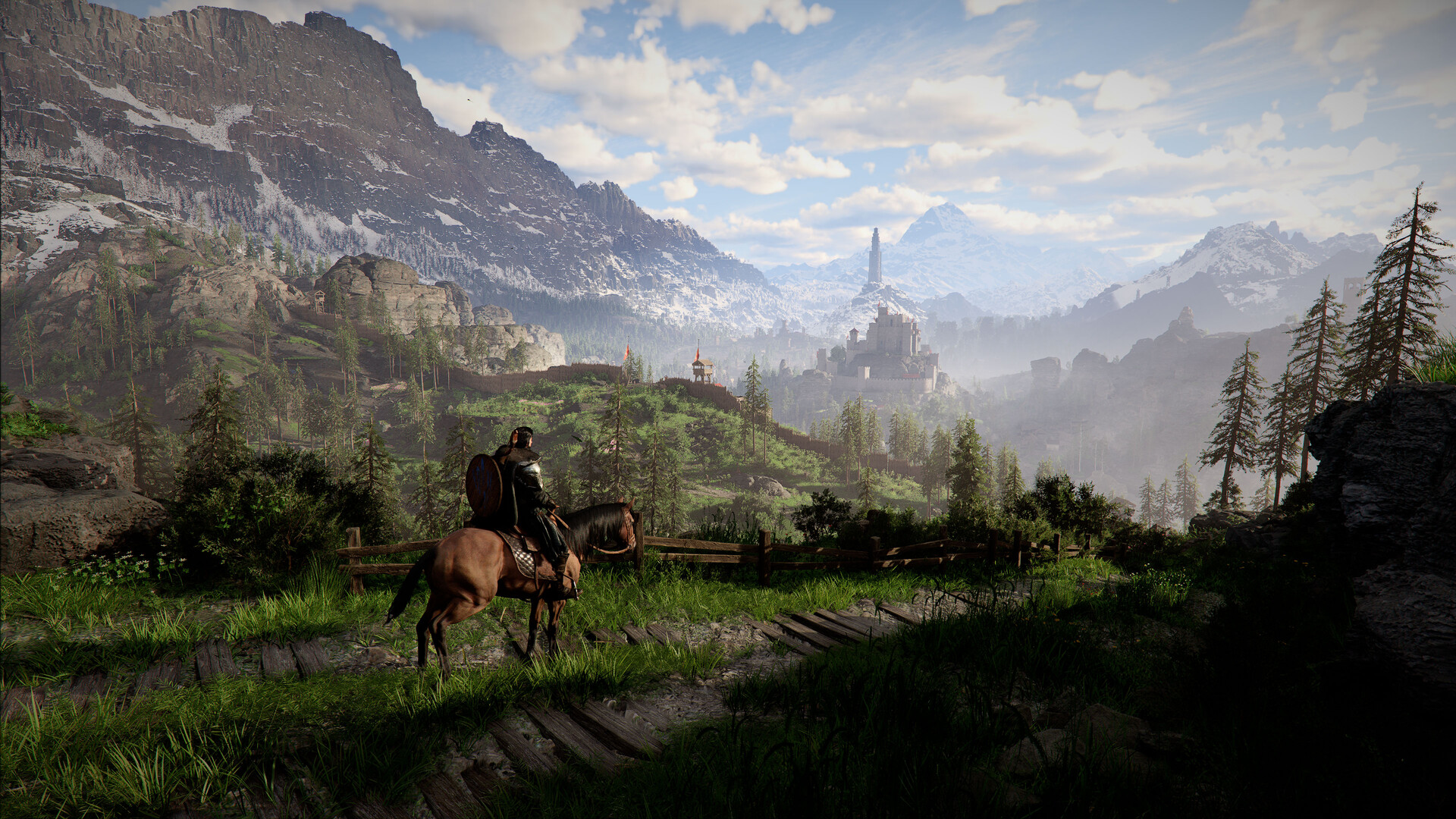
If you enjoy discovering new things at an organic pace, both games are recommended, but as you’d guess, there is a catch. For Crimson Desert, it’s in finding potential new mechanics, advancing faction quests, maybe happening upon bizarre puzzles, or engaging in combat for the sake of Abyss Artifacts, resources, and potential loot. Red Dead Redemption 2, on the other hand, is more about the various stories inherent throughout the world. There are mysteries to unravel, characters with their own detailed backstories and needs, and multiple steps that either advance that subplot or lead to unique scenarios. Throughout all of this, the writing is top-notch – something which Crimson Desert lacks in spades, and the fact that some quests or discoveries don’t always feel as rewarding relative to the effort required is also annoying. I would go with Red Dead Redemption 2 in this case but it can honestly depend.
However, in terms of actual progression, Crimson Desert falters due to the sheer stinginess in certain resources. The fact that you need to spend Abyss Artifacts to upgrade gear and weapons at a fairly early point also dampens one’s excitement, especially when obtaining new items and trying to level them up enough to obtain some numerical advantage.
Combat Philosophy
Controls aside, combat really is where Crimson Desert shines, between its combos, weapon transitions, elemental enhancements and plethora of gear with unique effects. Despite significant overlap in skills, Oongka and Damiane also offer their own intriguing playstyles, whether you prefer a berserker or a melee caster hybrid. And though there are some quirks that I didn’t like – the camera during boss fights, for instance – the overall responsiveness and feel is enough to have you wanting another skirmish as soon as possible. Red Dead Redemption 2 is more down-to-earth, both in terms of weaponry and actual mechanics. It’s visceral up close and tactical from afar, which suits the era and the story it’s trying to tell. But even if it isn’t as complex as Crimson Desert, it takes significantly less time to feel comfortable with the controls.
Mission Design and Player Freedom
As mentioned previously, Red Dead Redemption 2 offers a vast spread of memorable tales. There are plenty of instances in the main missions where you have to stick to the objective or risk instant failure, but the freedom in approaching other content is pretty surprising. Even more so is how the game reacts if you do things differently – simply because the development team had the foresight to anticipate that. Outside of combat expression – like pummeling a boss with broken pillars – and maybe basic traversal, Crimson Desert doesn’t really offer much freedom in terms of its objectives or side content. Perhaps if there was more room for nuance in their objectives or interesting tales that facilitated multiple approaches. At least there’s very little restriction on where you can go, and being able to back out of boss battles whenever you want is a nice touch.
Story and Characters
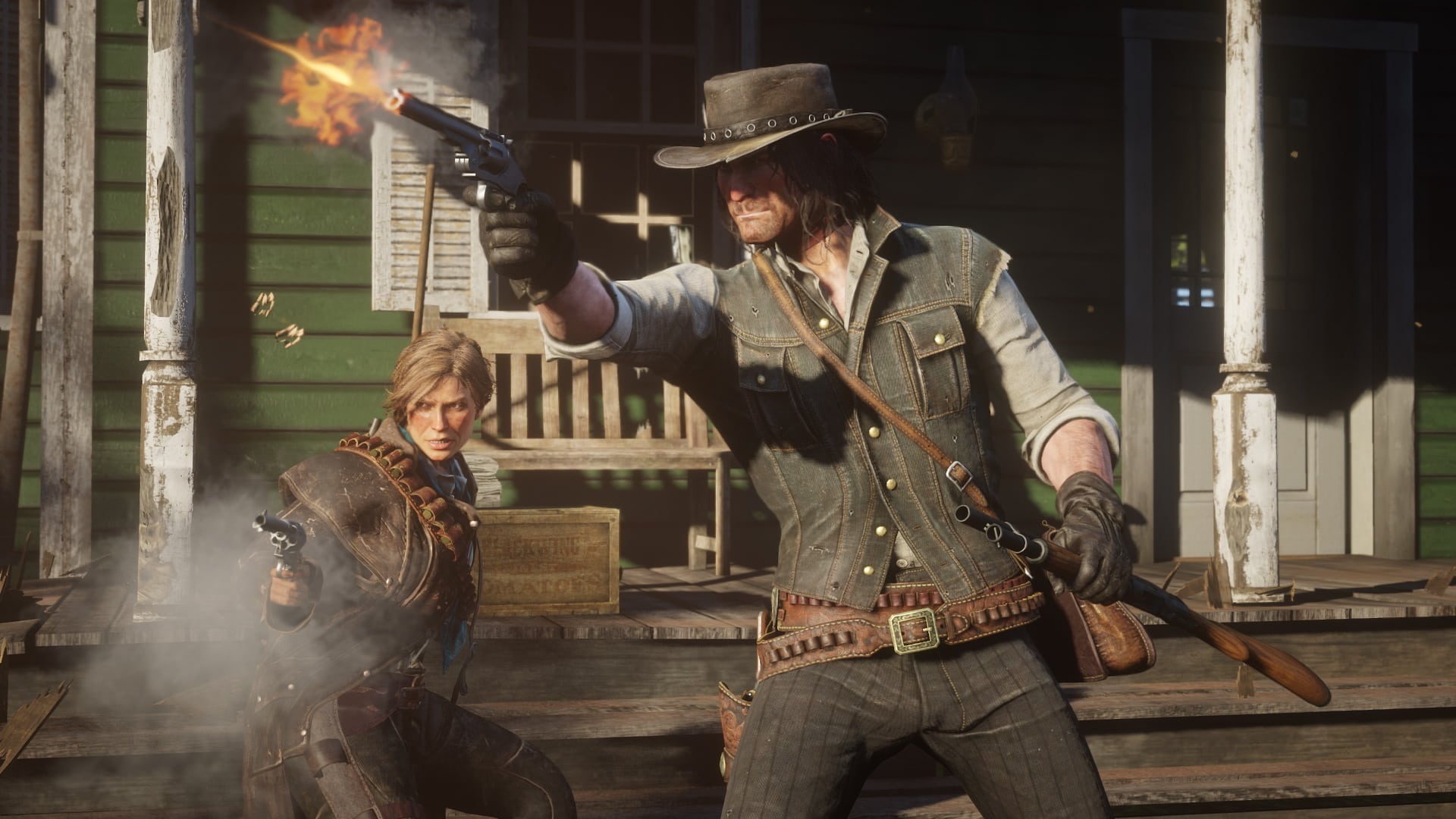
No debate here: Red Dead Redemption 2 is the clear choice. The story of the Van der Linde gang, particularly of the bond between Arthur and Dutch, is so masterfully crafted that it remains one of gaming’s best. And that’s without getting into all the other memorable characters interwoven throughout, including that whippersnapper John Marston and the indomitable Sadie Adler. There’s an emotional pull throughout that’s backed by incredible writing, even if the pacing can be a little too gradual for some.
Crimson Desert lacks all of this, sadly. Sure, there are flashes throughout, but Kliff is as bland and mostly unexpressive as they come, and the actual plot feels rudimentary and lacking in any emotional weight.
AI and NPC Design
In the same vein, the non-playable characters inhabiting the world of Red Dead Redemption 2 feel alive. Almost all of them have a full 24-hour schedule, and while they might be as super-nuanced as you’d expect, it goes a long way towards convincing you that they’re actual people. Meanwhile, in Crimson Desert, despite how the AI can behave in combat (archers constantly trying to maintain distance and melee fighters not waiting their turn to attack), its characters are nowhere near as believable. Maybe if the majority had more than one line to spout while doing anything.
Traversal Mechanics
You’ll spend a good chunk of time on horseback through Pywel but it’s not the only option by far. Kliff can glide, unlock different kinds of mounts with unique properties – including the much-touted dragon – and even use a mech to wreak havoc on his surroundings. The fact that Damiane and Oongka have their own unique ways to traverse environments is also notable. Red Dead Redemption 2’s more grounded approach means that Arthur will rely on horseback, stage coaches and trains to get around. It’s more grounded, yes, but Crimson Desert wins in terms of sheer options.
Visual Fidelity
Despite its age, Rockstar’s magnum opus is still one of the best-looking games of today. Environments radiate with details while character models animate realistically, both in movement and facial expressions. The fact that it goes beyond what’s immediately apparent, incorporating various subtleties and nuances, is also a key element of its appeal, whether you’re in the middle of a heist or simply taking in the sights on horseback. Crimson Desert also looks quite good, especially with its environments, weather conditions and sheer variety. Those long rendering distances and level of detail are also nothing to sneeze at, but it falls short when it comes to animations, especially in cutscenes and dialogue interactions.
System Depth vs Elegance
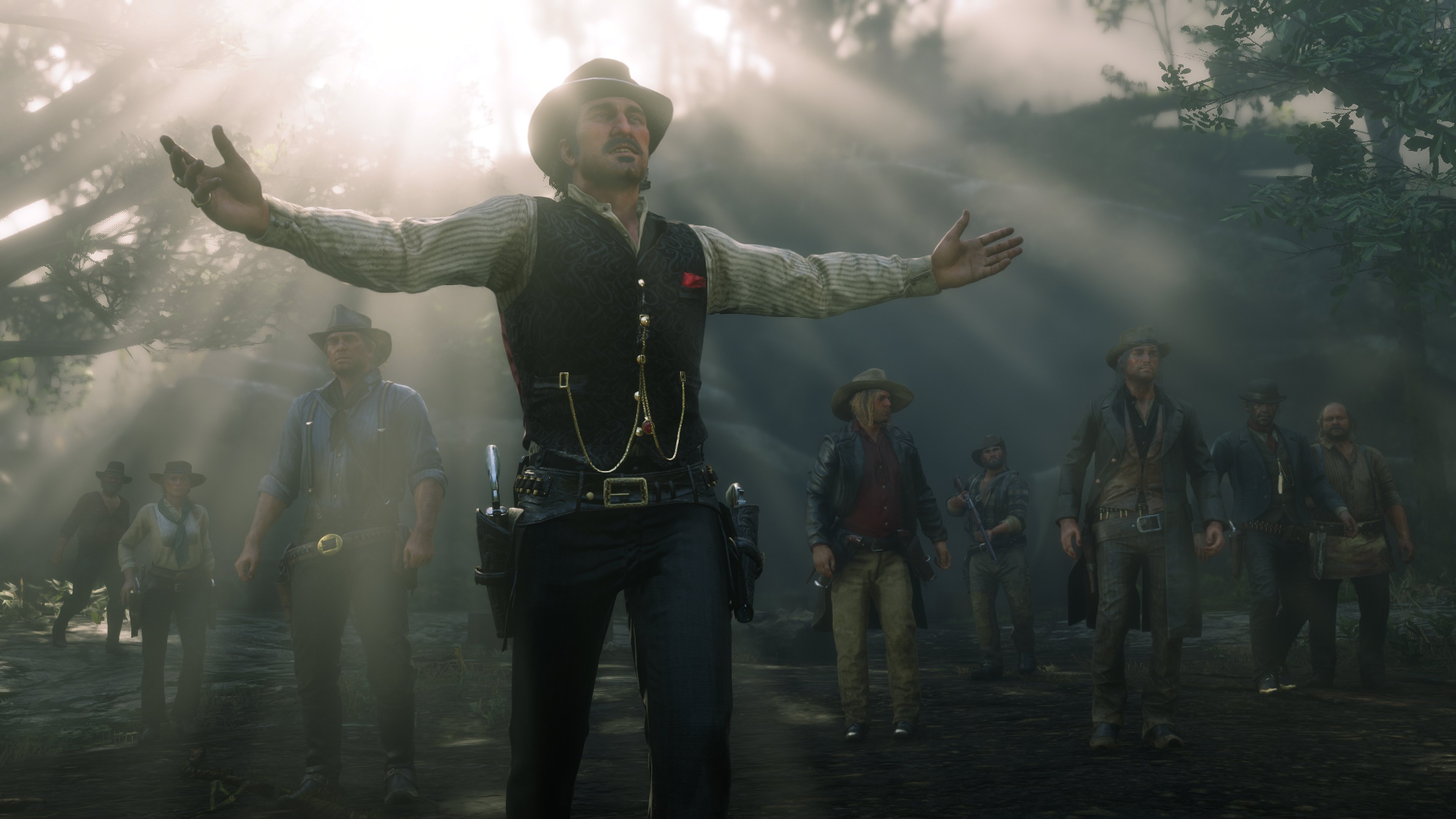
At the time of its release, Red Dead Redemption 2 received significant attention for the sheer number of things that players could do. However, it was all for immersion: Shaving Arthur’s beard and maintaining his appearance to garner the respect of townsfolk, the drawn-out process of skinning prey for that more rustic feel, the list goes on. Crimson Desert offers a much more extensive feature set with its MMO-lite systems, reputation that serves as currency, sieges, expeditions, camp development, and whatnot. The problem? Not all of it feels as rich or coherent. Heck, some features feel like they’re just there to be there – see the fact that you can steal stuff and commit crimes, but it has no actual effect on Kliff’s morality or character or even on how the world views him.
There’s enough to like, but in terms of overall well-roundedness and polish, Red Dead Redemption 2 gets the nod once more.
Conclusion
When analyzed individually, Rockstar’s masterpiece remains as strong as ever. Crimson Desert does stand out in certain aspects, and others can feel a lot more subjective, especially when it comes to the kind of world that players want to explore. Competing against a legend like Red Dead Redemption 2 is no easy feat. However, at least the developers behind Crimson Desert tried their hardest while cramming a dozen other influences.