





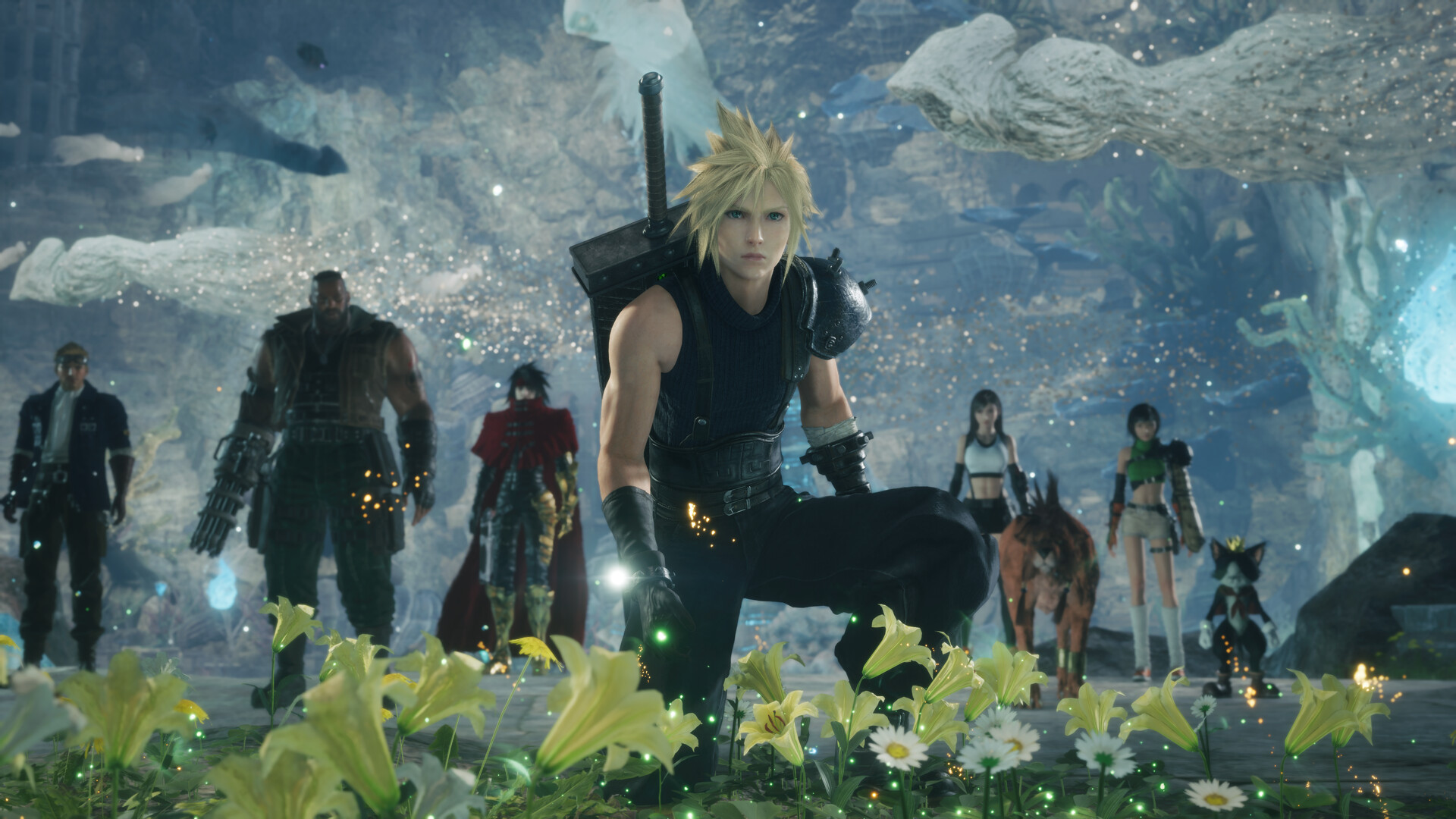
When Final Fantasy 7 Revelation launches, it may go down as one of the most ambitious remake projects of all time. Turning the 1997 classic into a trilogy of games with immense scope and scale is unprecedented, and even if the approach was a major risk for Square Enix, game director Naoki Hamaguchi says it was “non-negotiable.”
“Even as a multi-part series, providing a complete experience in each individual game was a non-negotiable premise from the very beginning. The biggest thing to avoid in a multi-part series is having the creators think ‘there’s more to come, so it’s fine to stop here for now’,” he told EDGE magazine (transcription via GamesRadar) for its latest issue.
Of course, the second part, Final Fantasy 7 Rebirth, famously omitted several iconic locations like Wutai and Rocket Town (which are confirmed for Revelation). Despite Hamaguchi’s insistence on a “complete experience,” there’s actually a more technical reason: The game just became too big.
“When we looked at the overall plot and gameplay experience of Rebirth, we determined that depicting those elements at the same time would have made the game too dense with information, disrupting the story’s pacing and the focus of the second game.” Whether that will happen with Revelation remains to be seen, but given it’s the finale, Hamaguchi and his team probably don’t have any other choice at this point. Which would explain why he said it can “easily” take over 100 hours to complete.
Then again, it takes a very different approach with side content. The whole world is open to explore from the start, as players control the Highwind and can go almost anywhere. However, those who want to focus on the story can do so with a new automatic leveling function. It ensures you’re always at the required level while engaging with minimal (or really, any) side content.
Final Fantasy 7 Revelation launches on April 8th, 2027, for Xbox Series X/S, PS5, PC, and Nintendo Switch 2.