





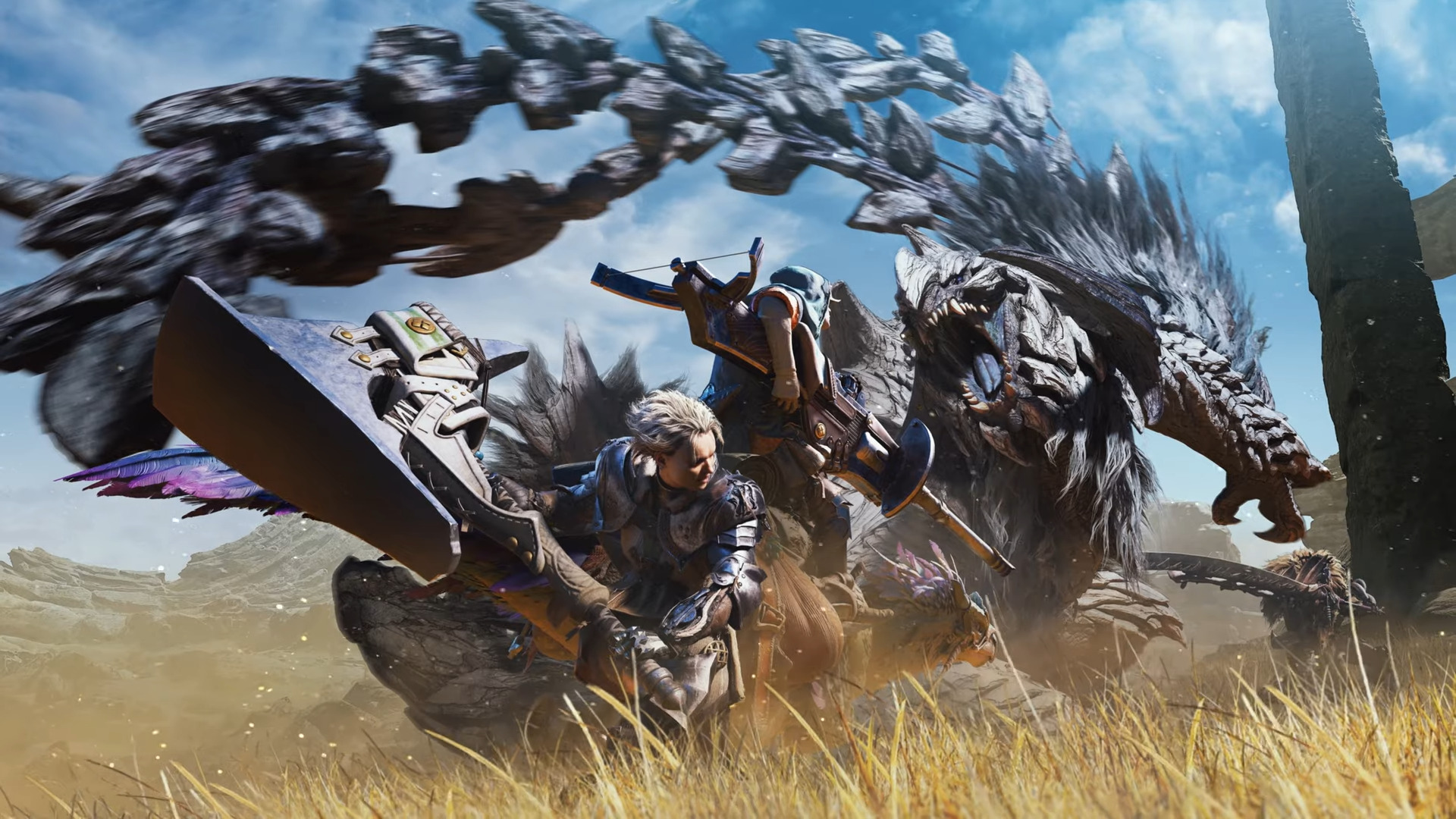
As the Nintendo Switch 2 release of Monster Hunter Wilds gets closer, producer Genki Sunano has revealed more details about the difficulties Capcom faced in bringing the title to Nintendo’s platform. In an interview with Kotaku, Sunano spoke about the development team’s target performance of 30 FPS in handheld mode even during four-player multiplayer hunts.
“The Nintendo Switch 2 version of Monster Hunter Wilds was developed around the concept of delivering a natural Monster Hunter Wilds experience on Nintendo Switch 2. In other words, we didn’t want it to feel like a simple port, where the graphics or performance had merely been scaled down to make the game run on Nintendo Switch 2. Instead, our goal was to bring the Wilds experience to Nintendo Switch 2 without compromising the experience of Monster Hunter Wilds.”
Part of the process was the development team needing to figure out which aspects of the visuals in Monster Hunter Wilds could be adjusted to improve its performance on the Nintendo Switch 2. Sunano went as far as to call the process “painstaking, and at times seemingly endless”.
“Wilds is packed with a tremendous number of elements, so we had to carefully evaluate the assets and underlying processing behind each one, determining what needed to be preserved and what could be adjusted without changing the overall experience. It was this painstaking, and at times seemingly endless, process of making decisions and optimizations one by one that proved to be one of our biggest challenges in delivering a comfortable handheld experience while preserving what makes Wilds feel like Wilds.”
The team had to go through Monster Hunter Wilds with a fine-toothed comb to find areas that could be further optimized. This involved rebuilding entire systems from scratch with “more efficient implementations” in mind, while still making sure that sacrifices in terms of visual fidelity and gameplay quality aren’t substantial.
“We focused our resources on areas that directly affect the gameplay experience. At the same time, we took another, much closer look at areas we had previously considered sufficiently optimized for home-console hardware. To make the game run on handheld hardware, we reassessed every aspect of these areas and replaced certain visual techniques and internal processing with more efficient solutions. We plan to apply the knowledge and expertise gained through this project to the performance improvements that we will be making for existing platforms in the lead-up to the release of Monster Hunter Wilds: Ascendance.”
The Nintendo Switch 2 version of Monster Hunter Wilds is slated for release on December 4th. Capcom confirmed this release date with a trailer last month showcasing the title running on Nintendo’s platform. The timely release of the game also means that it will be getting the Ascendance expansion when it comes out next year.
While Capcom hasn’t revealed precise performance details about the port yet, a report has indicated that it makes heavy use of dynamic resolutions of between 1080p and 1440p in docked mode, and 720p to 864p in handheld mode, all to ensure that it manages a performance target of between 30 and 40 FPS.