





If I, this mortal shell, am going to die, let me at least live on through my creations.” Granted, it doesn’t fully apply to FromSoftware since it didn’t directly create all the Souls-like clones we see today. But nearly every single one, ironically, the first Mortal Shell, owes something to Dark Souls, at the end of the day. Call it flattery, even if the imitation isn’t perfect enough to consider everything going forward as the next of its kind.
Of course, Mortal Shell had its strengths, many more than you’d expect from a Souls-like built by a relatively smaller team. So imagine one’s surprise when that same team rolls out a sequel that’s bigger in almost every way, and embraces an open world. Rather than going on a marketing blitz to tell you all this, it’s exemplified best by an extensive gameplay reveal highlighting the game’s three Shells, and in the recent open beta (though that concludes when the world opens up).
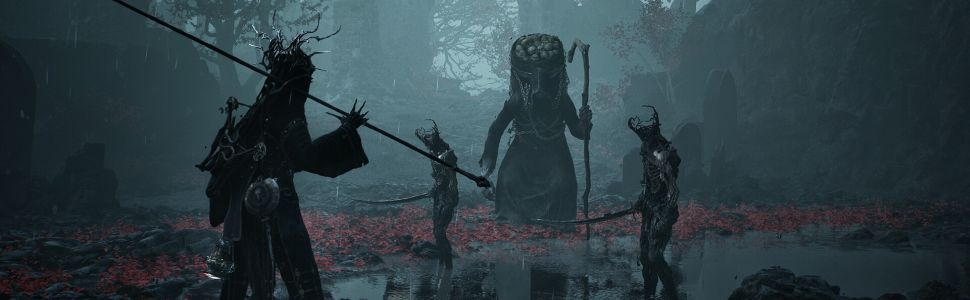
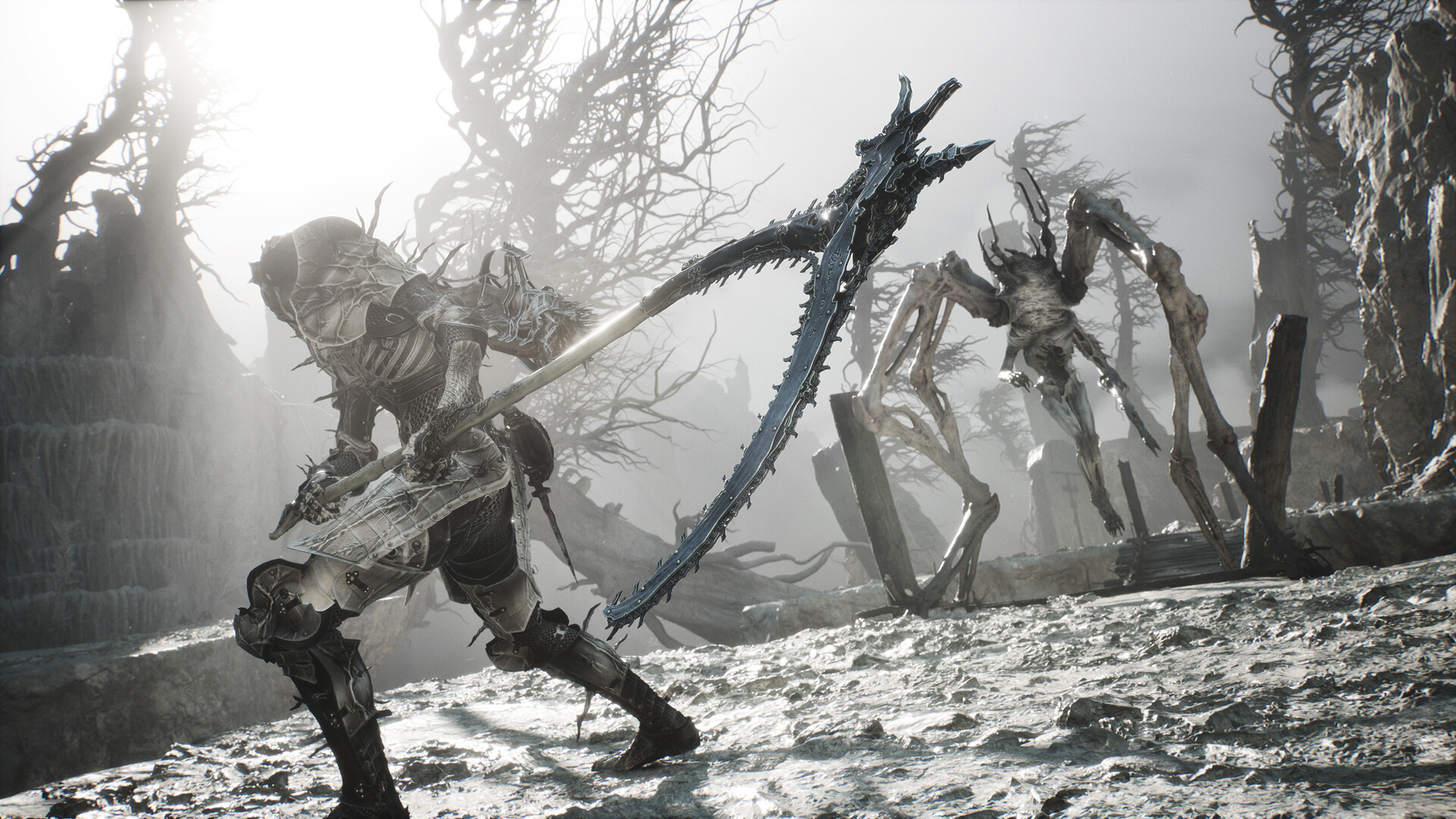
But even in this beginning region, the atmosphere is undeniable. Upon gaining your first Shell – Harros the Iconoclast – you awaken among figures turned to stone. A haggard talking crow with a human skull as its head guides you. Turn the corner and the remnants of a battlefield, one filled with massacre, await. Ramparts, pikes, the whole works. And just before you start getting Mordhau flashbacks as more ordinary soldiers assail you, creepy cliffsides and wooden bridges eventually lead to the body horror amalgamation that is the Tainted Vestige, the first proper boss. Suffice it to say that things only escalate from there.
Every single moment of what’s essentially an hours-long introduction to the world feels deliberate. Sure, a lot of it feels guided, but when you’re past it all and exploring other regions, there is more freedom. Many more places to try your luck and discover what awaits. Plenty of mistakes to be made and Shells to eject from, even if the Harbinger feels more equipped to fight back next to the Foundling.
What’s interesting is that the development team isn’t shying away from the size of Mortal Shell 2’s world. I think back to the official gameplay reveal, which sees Tiel, one of the initial Shells, looking out over the foggy landscape at distant buildings. It’s only after some casual murder that we see the entrance to a keep and dozens of crows flying overhead. A few more notable threats later, he jumps down, and we immediately smash cut to all kinds of locales. Ruins, caverns…transforming into a sheep and punching other sheep? A snowy landscape with serpent-like terrors…and that’s before shifting perspectives to the next Shell, Eredrim, as he one-hands a massive hammer through a castle ridden with Autumn leaves.
It’s the sight of the world map that ultimately draws notice. Two landmasses are shown, likely representing different regions. A good chunk is seemingly hidden in the ambiguous fog of war. But even when viewed to scale, it’s clear that Cold Symmetry isn’t going for an Elden Ring-style world design.
Instead, it’s described the open world as “compact.” “Interconnected.” “Expansive yet deliberately compact, designed to unfold its twisted landscapes and hidden structures while respecting the player’s time.” But besides the 80+ dungeons in the world, you’ll discover additional Shells that unlock new playstyles, more weapons, “curiosities” (which we can only speculate on), and much more. It’s certainly the concept of an open world, but one that wants to balance between you getting lost and sticking to the path.
The average Dark Souls enjoyer may scoff, but it really does feel like an expansion of that formula…just going about things in its own way. Embracing the interconnected nature of the original, combined with the more expansive environments of the latter. And before you say that’s essentially akin to Elden Ring, The Lands Between were a different beast altogether, massive plains best facilitating travel by Spectral Steed intermixed with massive castles, encampments and the sheer torture that is Caelid. To say the scale only increases from there would be an understatement.
By comparison, Mortal Shell 2 isn’t aiming to create something large for the sake of it. There’s a sense of deliberation and focus to everything – a more honed-in exploration that’s not-so-subtly guiding you towards key points and monuments of interest. But if you’re going to wander off and discover the meaner parts of the world, it won’t punish you. Or rather, dissuade – there’s plenty of punishment to be had.
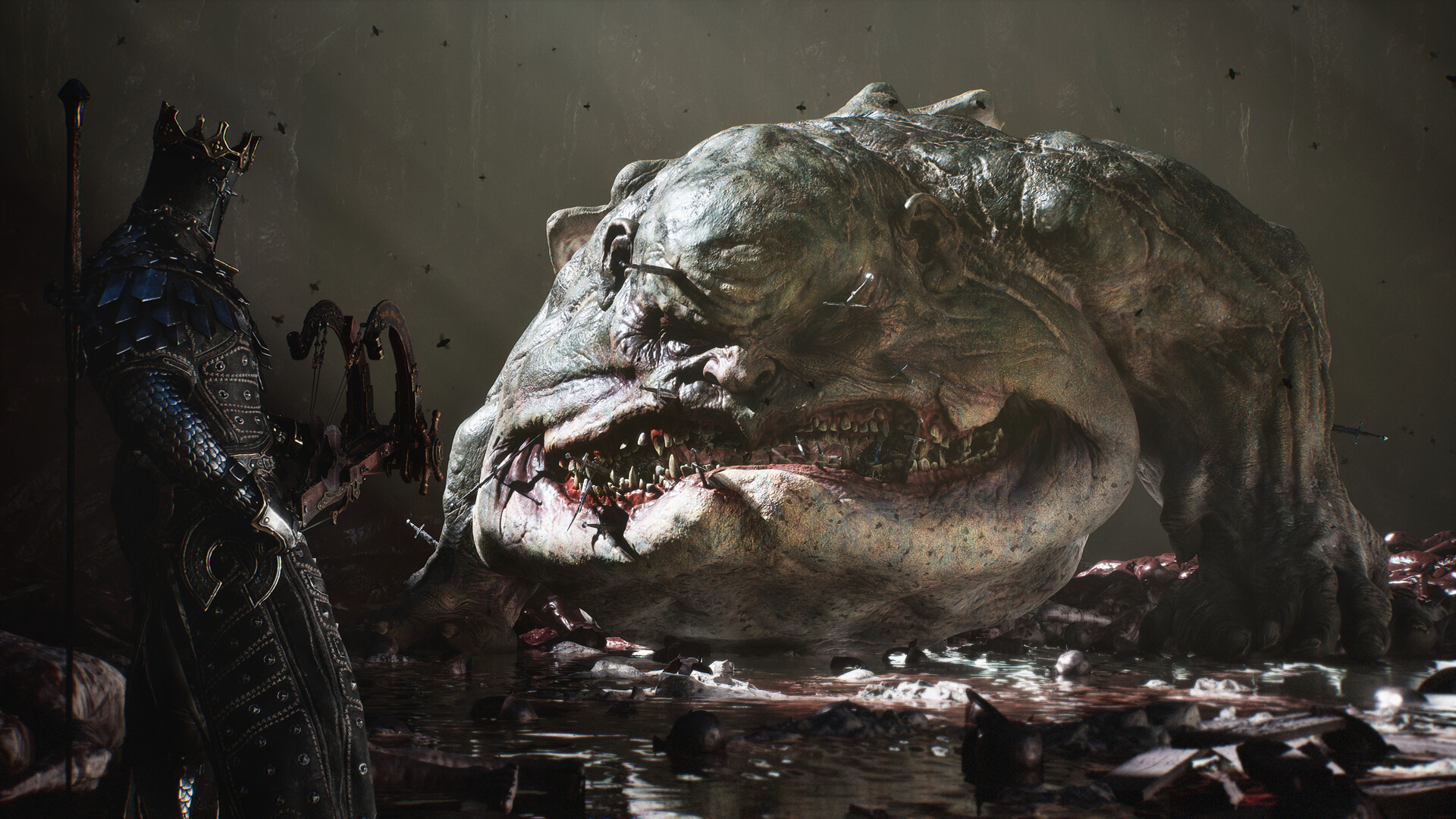
Besides “respecting your time,” as the developers note, this approach feels more conducive to the kind of storytelling it’s going for. Elements of body horror abound, especially in several of the enemies. The macabre dominates their aesthetic, if the armless, chained man who’s had a heavy crossbow stuck to his head or the dual-wielding boss whose death animation consists of impaling himself with both swords isn’t enough indication. It’s an atmosphere that feels almost opaque in its darkness but also uniquely fantastical. And if you want to go completely off the rails to plunge into its secrets, then you can rest assured that it won’t require sinking dozens upon dozens of hours (maybe even a hundred) to do so.
There are some caveats, of course. More compact spaces mean that you won’t find those iconic, towering foes that can be fought on horseback (or really any kind of gameplay involving mounts). Don’t let the constrained spaces fool you, though. Some areas have bosses that run around plenty. See the Tar Golem from the recent open beta.
The Shells also serve as templates for builds, thus limiting overall customization, but it’s a given that you won’t see a selection of weapons, spells, and equipment that could even remotely compete with Elden Ring. And as big as the locations appear, they may not be hiding as many nooks and crannies with secrets that you’ll only discover years later on another playthrough.
But that’s the inherent beauty of Mortal Shell 2’s world – it exists and fulfills its purpose (at least based on everything we’ve seen) without needing all that. There aren’t a lot of Souls-likes that attempt an open-world structure, much less compete with FromSoftware’s masterpieces. Admittedly, those who enjoyed the first Mortal Shell may not completely vibe with the structure going from a more traditional Dark Souls-like layout to an open world. However, sticking to the spirit and tone of the original, providing a world that isn’t littered with icons to chase or checklists to complete, feels very much in line.
Granted, there are plenty of ways in which Mortal Shell 2 could stumble. The earlier locations may end up far superior to the later. Some dungeons may prove not as interesting or unique compared to others. Dare we suggest that some bosses may be repeated or regular enemies turned into glorified big bads to chop down in these places? If a team like FromSoftware with years of development and extensive resources can fall victim to such things, then anything is possible.
But maybe Cold Symmetry will avoid those pitfalls by sheer virtue of avoiding such a massive scale. Maybe the real appeal of not subscribing to the “bigger is better” philosophy is that it can focus on providing a unique, engaging experience within every single aspect that matters. Either way, we won’t have to wait long to find out since it launches on August 20th for Xbox Series X/S, PS5, and PC. Whether the spirit of FromSoftware courses through, or it turns out to be something else entirely, Mortal Shell 2 certainly has our attention.
Note: The views expressed in this article are those of the author and do not necessarily represent the views of, and should not be attributed to, GamingBolt as an organization.