






Most third-person shooters are designed to push your instincts. This newest IP Pragmata commands the same spatial awareness, quick reflexes, and fluid manoeuvres as the genre’s mainstays, but instead of pure instinct it demands you lean on intellectual judgment too. Here, in this upcoming sci-fi action adventure – a game which looks like your typical shooter on the surface – you’ll adopt a combat system which asks you to slow down your thinking even if everything else speeds up.
Everything in this article is based on officially revealed information.
At its core is a dual-character system that refuses to let either side carry the other. Armoured spacefarer Hugh brings firepower, but without companion Diana’s hacking his bullets may as well be rubber. The two are so intertwined, in fact, that neither feels functional without the other. And because every encounter unfolds in real-time, with no freezeframes or slomo, you’re forced to multitask under constant, sometimes crushing pressure.
Look – Hugh and Diana’s aim-hack-destroy combat loop isn’t a gimmick. While encounters follow an ever-recycling rhythm: lock onto an enemy, initiate a hack, expose their weak points, then capitalise with gunfire, Pragmata is also set to test your nerve, your dexterity, and your brainpower before every pull of the trigger. This shooter wants you to think.
So, forget running and gunning as Pragmata makes that impossible. See, as enemy shields and armour make standard gunfire ineffective you’ll need to bypass defences before opening fire. To do this, Diana’s grid-based hacking interface will reveal nodes which you’ll use the face buttons on your controller to channel through, where extending routes through every object in the grid yields longer vulnerability windows or opportunities for Hugh to unleash greater damage. But, the longer you stand your ground committing to one enemy, the risk of others closing in increases. Your opponents are always always on the move at full speed, so the question is: do you push for maximum damage, or settle for safety and reposition?
It’s a simple loop in principle, but, again, you’re making these calculations in real-time. In practice, you’re aiming, repositioning, and managing threats as Hugh whilst simultaneously solving puzzles as Diana. Their inputs overlap, so it’s remarkable that the gameplay doesn’t feel overwhelming. Cool-headed focus, yes, but rarely do enemies feel impenetrable.

Now, to be clear, Pragmata favours balance between each of its controllable characters. Through build customisations, you can lean heavily into hacking if you like, even to the point of outpacing traditional gunplay. But the game’s design constantly nudges you to utilise both, with depth coming from how these two systems feed into each other.
Hacking, you see, isn’t just contained to enemies. Missiles can be redirected, traps disabled, locked doors bypassed, and entire security systems shut down. Diana’s hacking toolkit expands the further into the game’s lunar base you go too, with collectible nodes unlocking abilities like multi-target hacks, faster shield breaks, and higher damage output. Quickly, node hacking becomes the game’s strategic backbone, and through loadouts, customisations, and upgrades this part of the system begins to excel in experimentation.
But what do you do if enemy units can block Diana’s hacks? These enemies arrive, and they will directly interrupt your flow, requiring Hugh to blast away at their defences before Diana can even lock-in. In these moments, you’re using Hugh as a battering ram, stripping away an opponent’s shell and exposing their circuitry for Diana to rewire, which then brings Hugh back into the fray. It’s an extra step, but one that reinforces the need to think on your feet to survive.
For his part, Hugh packs four weapon types that are introduced as quickly as Diana’s expansive hacking abilities. Grenade launching types are ideal for crowd control while long-range shockwaves allow you to pick off enemy weak points before Diana even needs to get involved. The Stasis Net and Decoy Generator are all about buying valuable time, freezing enemies that are trapped in its web or deploying Hugh-alikes to distract their targeting reticules respectively.
As Diana’s puzzles grow more elaborate, you’ll be using as many tools for delay and distraction as you can. However, your choice of weapon might not always come down to the difficulty of the hacking puzzle that hovers in front of you. In reality, the smartest plays will come from whatever utilities you have and sequencing them according to the pair’s aim-hack-destroy loop. That means locking enemies down however you can, weakening them through hacks, then committing to high-damage bursts. Ammo, spatial awareness, positioning, timing – it all contributes to the game’s cerebral rhythm. But, the key thing remains: decision-making.
Yet, despite these symbiotic, multi-layered systems, Pragmata rarely punishes restraint. Diana’s various hacking nodes are consumables, yes, but they’re plentiful enough that you’re encouraged to use them freely rather than hoard them in your inventory Resident Evil style. Still, the most effective strategy will likely be to keep your most powerful nodes in reserve, meaning resource management, in whatever shape it ultimately takes, will be about recognising which enemies are worth using a powerup, and which can be blasted cleanly without the extra investment. This is real-time optimisation, and is another example of the game’s rapidfire problem solving; intellectual skills you’ll depend on when waves of enemies become increasingly numerous.
In officially captured footage showcasing the events shortly after the game’s sketchbook demo, you’ll see boss fights which stretch these intertwined combat systems even further. The same core loop applies, albeit grander in scale with tension heightened. Here, these robotic colossi bring more aggressive behaviours, outlandish manoeuvres, and increasingly complex defensive systems over the game’s more standard opponents. And, throughout these battles, you’ll need to adapt your approach: prioritising evasion, reading patterns, ascending the environment, and so on. In a way, it’s all about composure now, which is a skill you’ve been honing every time you enter into one of Diana’s puzzle minigames whilst taking fire anyway.
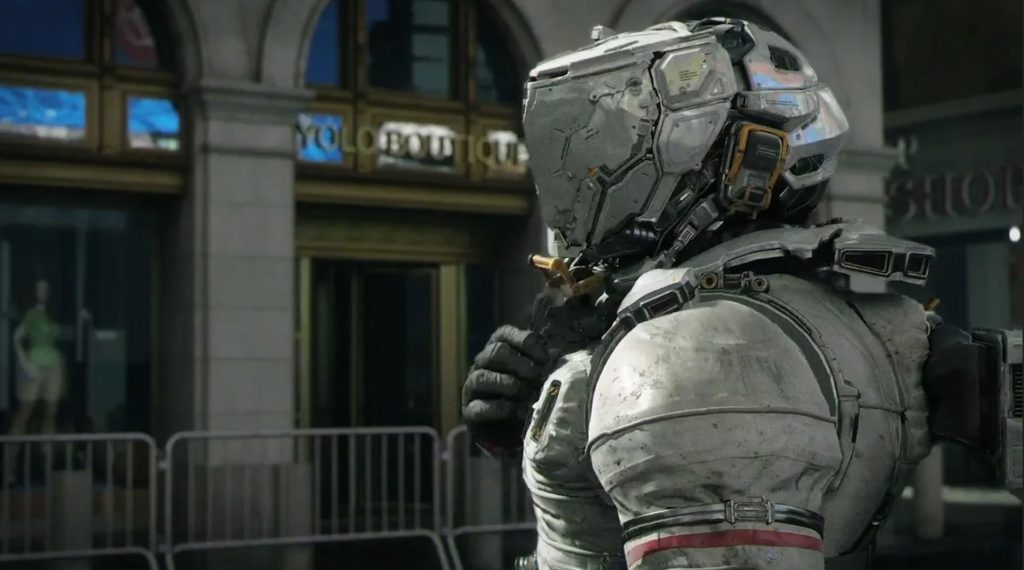
Another noticeable feature of this official preview footage is the tight, linear corridors of the demo open up into expansive arenas. Taking the form of a digitally replicated Times Square, this wider environment reinforces the game’s combat mix. Breadth of space means more angles to cover, more threats to track, and more opportunities to lose control of a fight. Spatial awareness and positioning – elements we’ve been banging on about throughout this feature – become just as vital here as successful hacks and firearm accuracy.
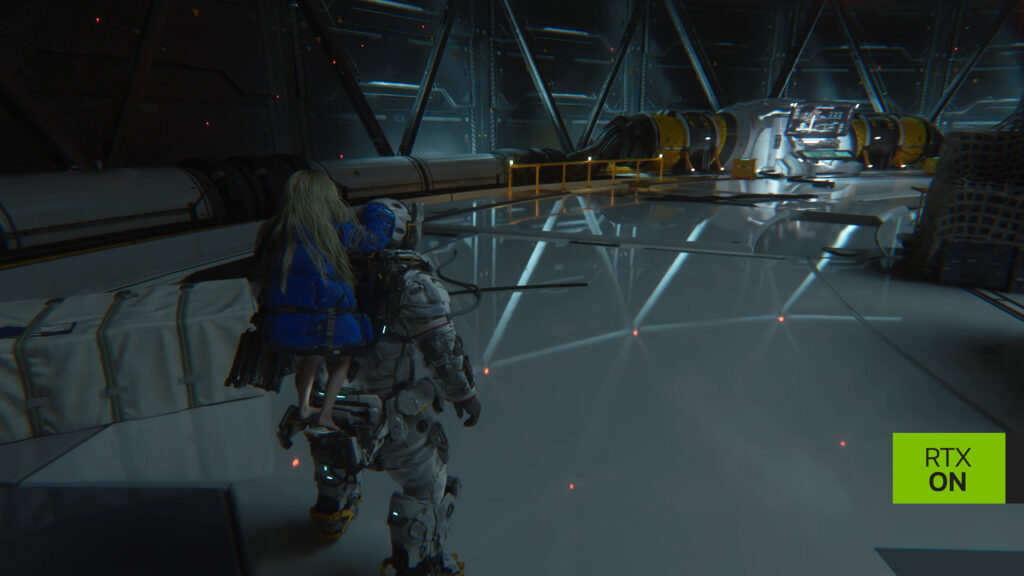
By this point, you can probably think of these as soft skills. Moving fluidly through the environment, taking up the most opportune positions, and firing with speed and precision, these are typical of third-person shooters, but alone – as this feature continually points out – they won’t bring success. Important, yes, but Pragmata is presenting something relatively unexplored for the genre. Shooting, hacking, positioning, they all carry equal weight, but it’s your decision-making – more often than not under duress – that’s the determining factor here.
Pragmata is a game that balances raw instinct with controlled thinking, asking you to assess, process, adapt, and execute under constant pressure. It’s not necessarily about being faster or more accurate than the game. It’s about being more composed. Knowing when to commit, when to pull back, and how to multitask numerous priorities at once. If this balance holds up across the full experience, Pragmata could end up feeling less like a traditional action game and more like a constant, real-time exercise in problem solving.
Note: The views expressed in this article are those of the author and do not necessarily represent the views of, and should not be attributed to, GamingBolt as an organization.