





RoadCraft has been out for a few weeks now, and in that time, we’ve also gotten the chance to play and review the co-op construction game. However, playing the title left us with a few burning questions about some of its aspects. Thankfully, members of the development team from Saber Interactive were kind enough to answer these questions. Without further ado, here are production lead Ivan Khomenko, game director Vitaliy Yaruta, lead game designer Aleksei Kriushkin, and graphics R&D technical director Denis Sladkov.
How much of RoadCraft was under development alongside last year’s Expeditions: A MudRunner Game?
Ivan Khomenko (Production Lead): RoadCraft was developed by an entirely different team, and both projects were cooking in parallel, give or take. In our case, the game went through a few iterations as the vision and specifically scope evolved – so even though they started around the same time, the paths were pretty different.
The overall timeline of development is about 3.5 years, but the project heavily changed a couple of times.
"However we’ve definitely spent some time exploring player feedback at the release."
Did feedback from Expeditions alter your original plans for RoadCraft?
Vitaliy Yaruta (Game Director): Not really – by the time Expeditions launched, RoadCraft was already deep in the polishing phase, with its core systems locked down. We were watching the feedback closely, of course, but it was a bit too late in the cycle to make meaningful changes based on it. However we’ve definitely spent some time exploring player feedback at the release. While we could not make much use of it momentarily, we took a lot of hints for future projects.
How did the idea of expanding the gameplay of previous games like MudRunner and SnowRunner into also including massive construction vehicles come about?
Vitaliy Yaruta (Game Director): We had an “ancient” technological demo which worked on the MudRunner engine where we could disperse sand and drop down some trees with a “BAT-M” vehicle. That was kinda it, but the idea of pouring sand everywhere building some kind of roads out of it, stuck. It was a much smaller project in scope, we were in the very beginning of building a new engine iteration for future “vehicle projects”. The basic idea was “we build sand roads somewhere in deep forest as a logistical support unit, that gets rid of the forest itself and provides a path for an automated convoy”. As you can see all this ended up pretty differently, but that was the first iteration of the idea only, it evolved alongside our engine capabilities and ongoing playtests.
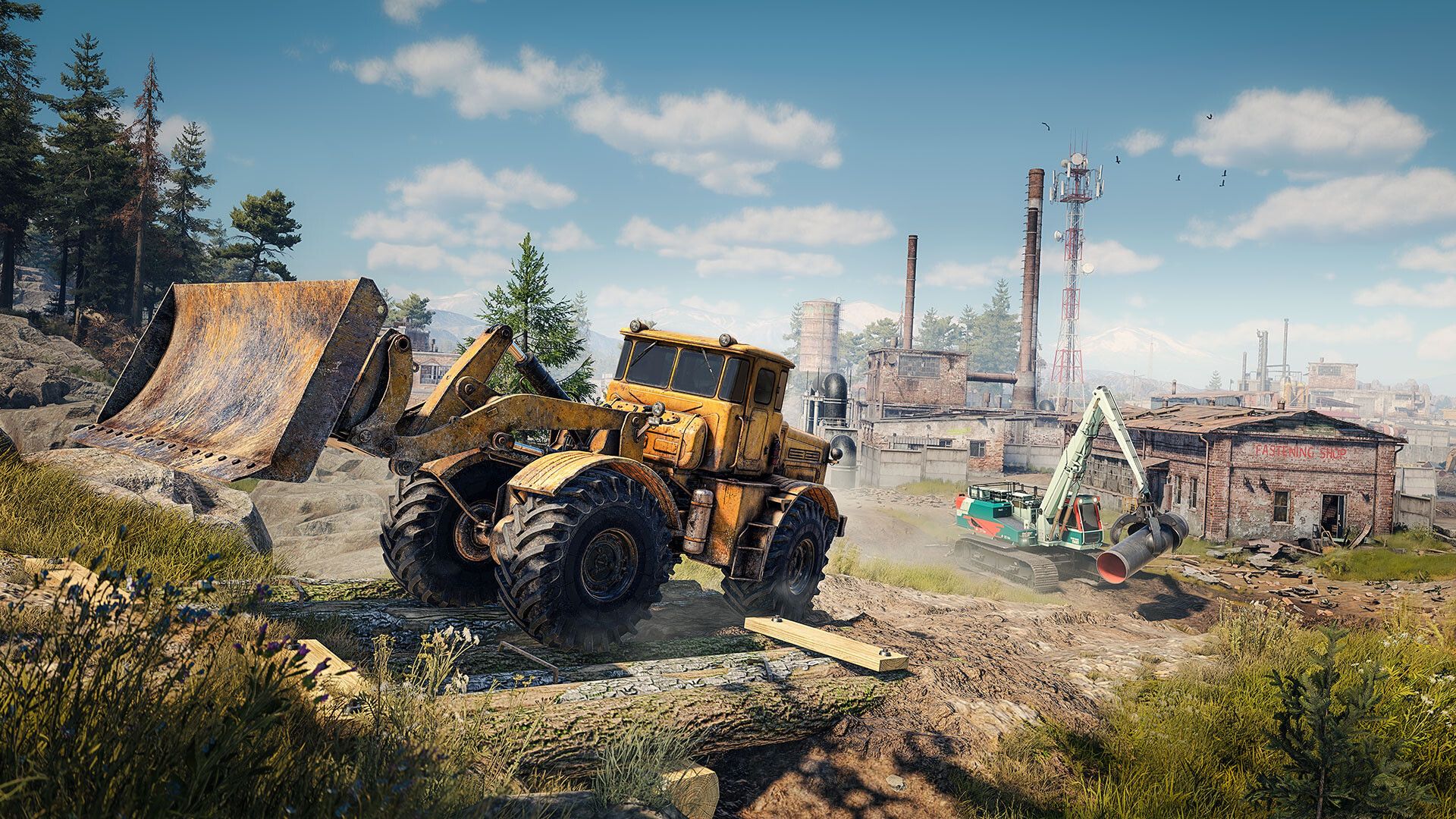
Construction vehicles seemed cool and at some point people just wanted to add more different things from cranes to dozers to cable layers. More gameplay features appeared to support those “weird machines” existence along the way and not everything even ended up in the game. Even asphalt itself was not a part of the first feature scope and appeared later in the development. We’ve tried a lot of different approaches, features, gameplay loops. Some did stick, some did not, for some we did not have a technology basis, some appeared to be even more UI heavy, than existing ones. It was a long process, and the original idea itself has transformed several times during the development process.
"Construction vehicles seemed cool and at some point people just wanted to add more different things from cranes to dozers to cable layers."
What can you tell us about the two maps that are planned for RoadCraft as part of its Rebuild Expansion?
Vitaliy Yaruta (Game Director): The level designers really went all-in here. They took everything we learned: the good, the painful, the surprising – from crafting the base game, and put it into building two brand new maps that they’re genuinely excited about. You’ll definitely feel a step up in ambition and clarity. Not to mention new vehicles, mechanics and objectives.
And we do, of course, have more in development than those 2.
Which of the many vehicle types in RoadCraft does the development team find the hardest to work with?
Ivan Khomenko (Production Lead): There are different types of “hard.” On the programming side, harvesters and dump trucks were beasts. Harvesters required custom logic for cutting, grabbing, trimming, and converting trees into logs – all while syncing with complex physics and animated parts like rollers, blades, and pistons. Dump trucks, on the other hand, pushed us into full-on sandbox physics with how the material moves in the bed and then forms terrain when dumped. Some machines were tricky just because they’re so unusual. The Baikal crane and Kronenwerk, for instance, don’t even have suspension systems – so we had to strike a balance between realism and playability. Same goes for the Lynx with its weird suspension layout. Truth is, almost every vehicle was a puzzle of its own. No shortcuts when you’re dealing with this level of mechanical variety.
Are there plans to bring in more environment types than what RoadCraft will launch with?
Aleksei Kiriushkin (Lead Game Designer): Depends on what you mean by “environment types.” If we’re talking full-blown new biomes – not in the Rebuild Expansion. But, if you mean maps with drastically different terrain profiles, traversal challenges, and visual identity – absolutely. Variety is important not just for the players but for our designers as well, so they stay sane and focused during long hours.
As for completely new biomes – we’ll see what the future brings.
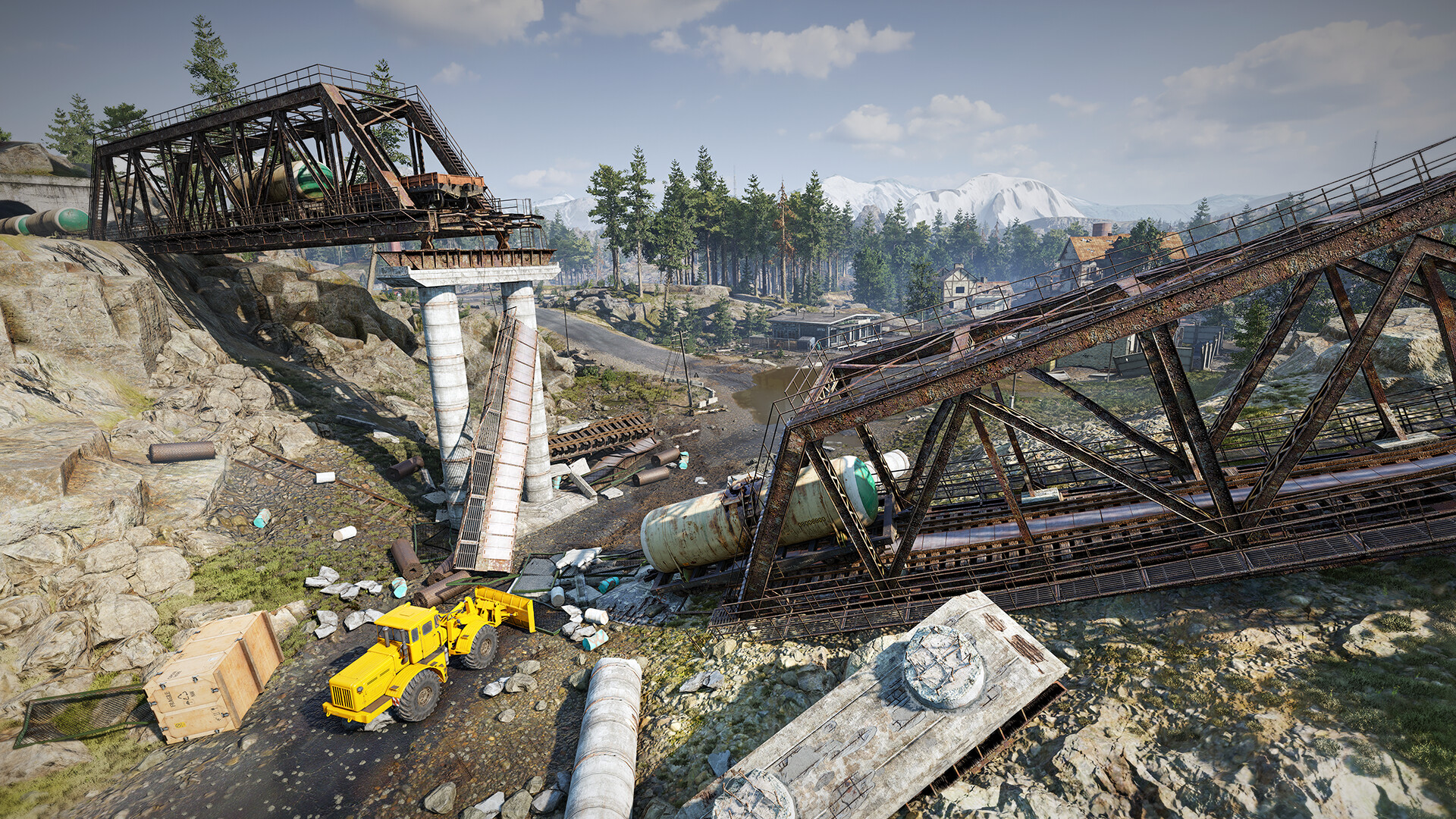
"We’ve tried a lot of different approaches, features, gameplay loops."
Are there any plans for post-launch content that revolves around the co-op system?
Aleksei Kiriushkin (Lead Game Designer): Co-op isn’t just a mode in RoadCraft – it’s part of its DNA. Pretty much everything in the game is designed to work both solo and in multiplayer, so we don’t really think in terms of “this is a co-op feature” vs. “this is a single-player feature.” That said, we have plenty of new stuff in the works that’ll give you and your crew more toys and tools to play with. Stay tuned!
What kinds of new vehicles can we expect to come to RoadCraft through post-launch releases?
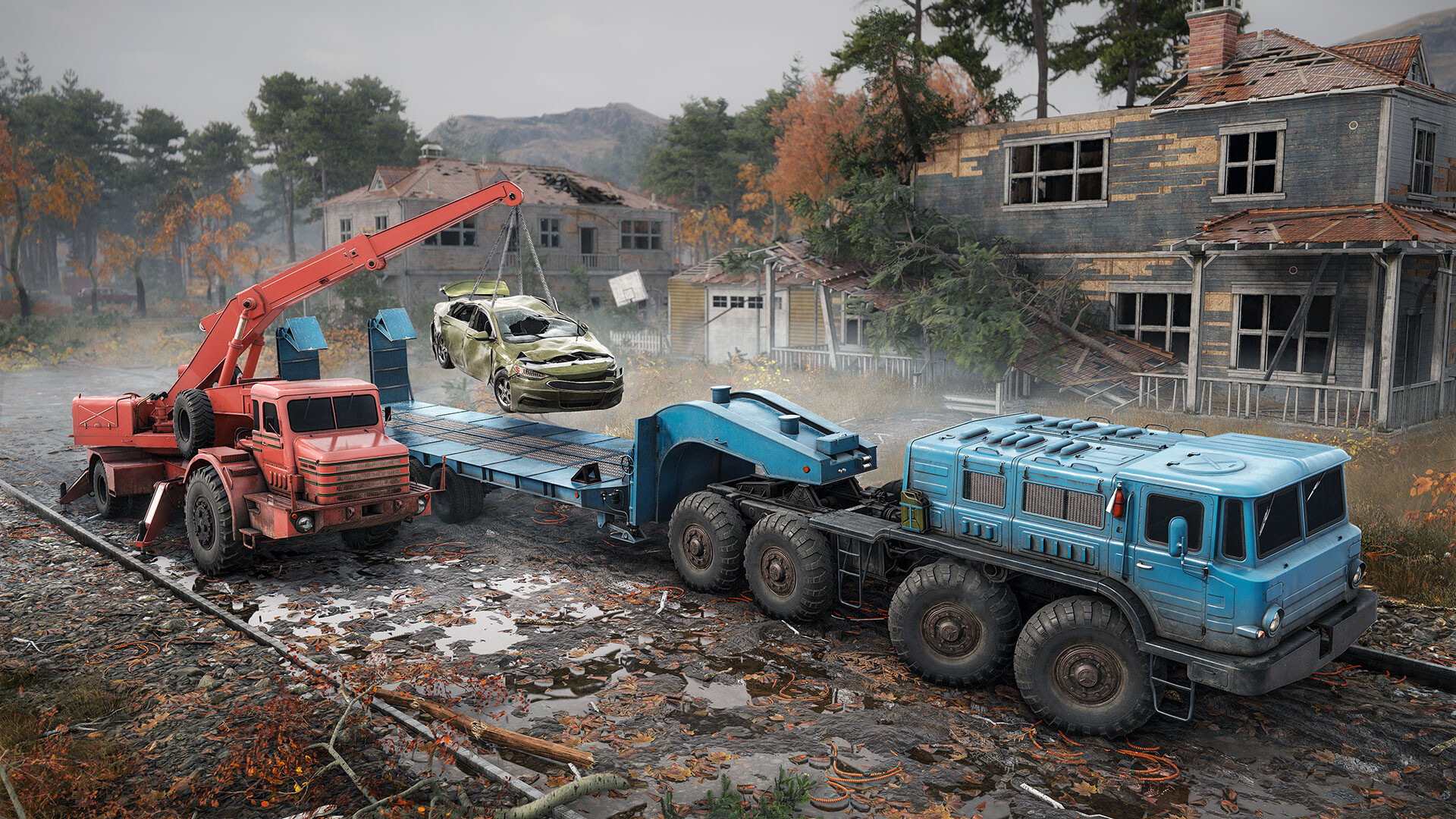
Aleksei Kiriushkin (Lead Game Designer): We’ve noticed that a lot of players lack the ability to winch their stuck (or otherwise crippled) vehicles out of trouble. So the first update available somewhere in June will provide a trio of specialized Search & Recovery vehicles, built for that role. And yes, we’ve seen your messages about wanting more Cargo Crane Trucks – you might be seeing something in that area sooner than you expect!
We’re exploring a number of other potential existing vehicle variants (cargo and dump trucks mainly). There, of course, will be completely new vehicles later down the road, but it’s a bit early to communicate around them.
Also (suppose it’s not even a secret anymore) the Bridge Layer is real and it’s coming (even 2 of them are) It’ll let you deploy folding bridges and even move them around. That’s a big one as far as temporary infrastructure solutions go.
What resolution and FPS will the game run on PS5, PS5 Pro, Xbox Series S and X?
Denis Sladkov (Graphics R&D Technical Director):
Xbox Series S:
- Dynamic render resolution from 720p up to 1080p with upscale to 1440p, 30 FPS
Xbox Series X and PS5:
- Performance (speed) mode: dynamic render resolution from 720p up to 1080p with upscale to 2160p, 60 FPS
- Quality mode: dynamic render resolution from 1080p up to 1440p with upscale to 2160p, 30 FPS
PS5 pro:
- Performance (speed) mode: dynamic render resolution from 1080p up to 1440p with upscale to 2160p, 60 FPS
- Quality mode: dynamic render resolution from 1080p up to 2160p with upscale to 2160p, 30 FPS
10) When it comes to the console versions, will there be enhancements exclusive to the PS5 Pro?
Denis Sladkov (Graphics R&D Technical Director): Higher render resolution, upscale with PSSR.
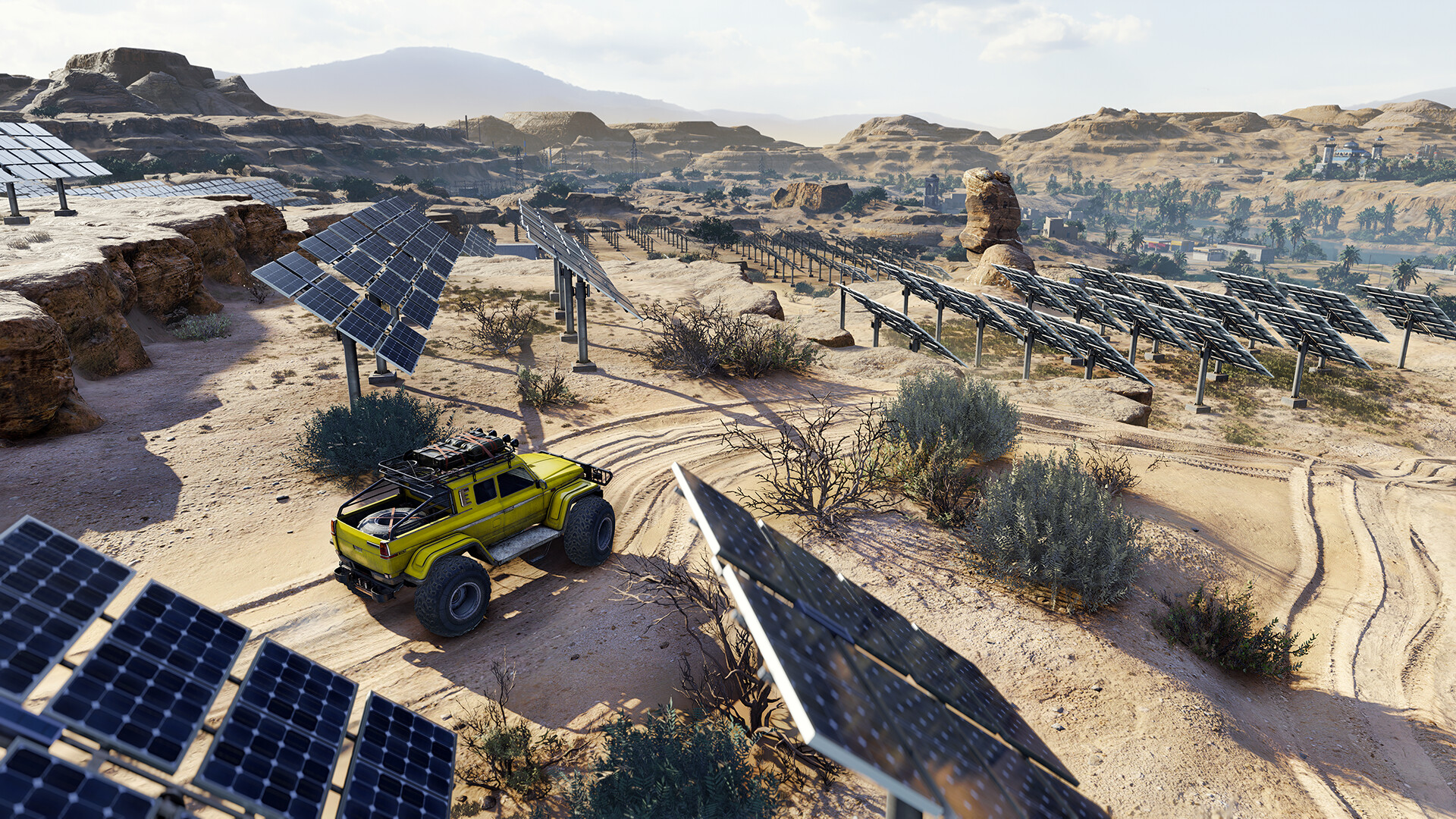
"The quality of PSSR is noticeably better compared to previous FSR solutions."
Are there any plans to bring Roadcraft to the Nintendo Switch 2?
Denis Sladkov (Graphics R&D Technical Director): We’ll have to see how it goes. We have a couple of technical tests, as of now, but nothing to announce this time.
How vital will technologies like PSSR play in pushing visual fidelity further on PS5 Pro?
Denis Sladkov (Graphics R&D Technical Director): The quality of PSSR is noticeably better compared to previous FSR solutions. So it’s not vital per se, but definitely helps push said fidelity:) We try to stay at the forefront of modern visual technologies, and while it’s sometimes hard and requires good timing and a lot of additional coordination with different partners, we’re trying to provide the best quality visuals we can to date.