






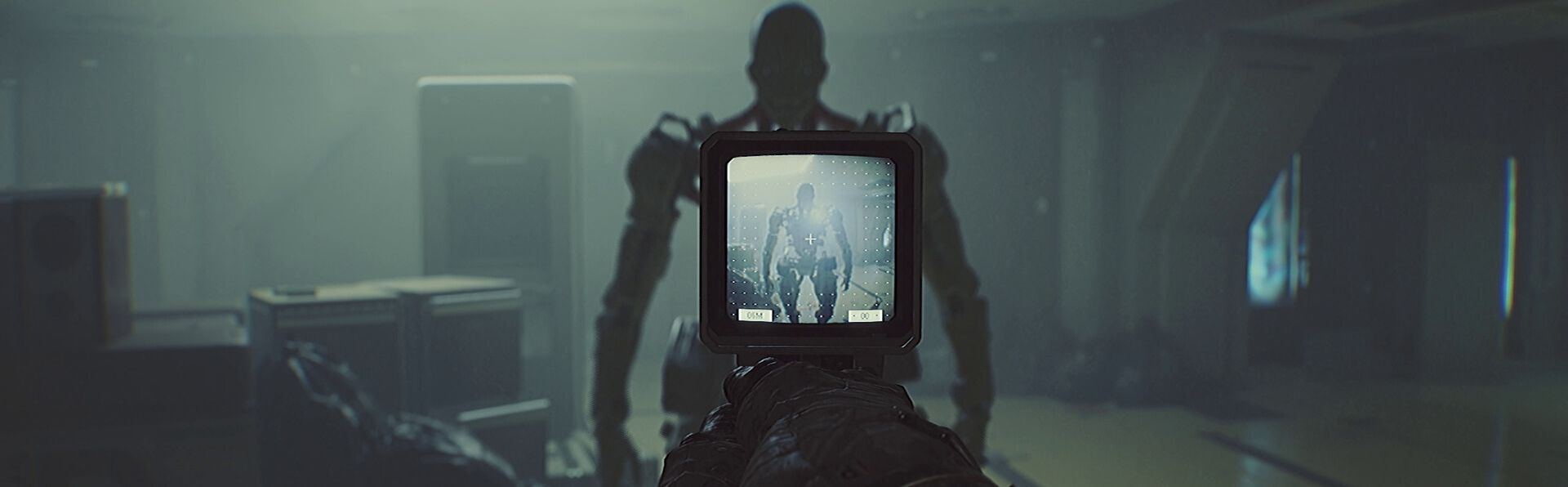
To be able to finally play ROUTINE is a strange experience after having seen and read so much about it. It has been in development for an incredibly long time, after all, and was originally announced all the way back in 2012. Since that initial announcement, we’ve seen an entire console generation come and go. While the development period might have been long, however, the wait is finally over, and we finally get to experience the sci-fi survival horror title in all of its glory. Starting it up, however, already filled me with a sense of dread since games with development cycles stretching out over the course of more than a decade have typically led to bad video games; you can see this happen with Duke Nukem Forever and Final Fantasy 15 for just a couple of examples.
Actually playing ROUTINE, however, instantly shows you where all of that development time and money went, since it’s essentially one of the most unique horror games to have come out in a while. Now, don’t get me wrong, there isn’t a lot happening in ROUTINE that we haven’t already seen in other games before. A lot of the gameplay is just slow-paced exploration and puzzle solving before you run into robotic enemies that you have to run away or hide from. What sets it apart from others, however, is its emphasis on making you feel your character’s body over the course of gameplay. To explain this, however, we’ll also have to take a more granular look at how it controls and plays.
"Just like how it wants you to be aware of all your body parts, the game also has an emphasis on having a more naturalistic UI."
ROUTINE isn’t exactly complicated when it comes to its controls. You get the WASD movement key cluster along with two important keys that affect how you control your body: crouch and lean. Holding down the lean button, as you might expect, lets you lean to either side. Unlike other games that also feature a lean button, however, ROUTINE also lets you use it with the forward or backwards movement buttons, which in turn let you stand on your tip toes or go fully prone to try and get your hands on things that might be in harder-to-reach places. While this might sound like a gimmick, the mechanics are used quite well throughout the game, since there aren’t really any objective markers or UI elements that let you know what you should be looking for.
Full-body awareness is a major gameplay aspect of ROUTINE, and just like how it wants you to be aware of all your body parts, the game also has an emphasis on having a more naturalistic UI. This means that you don’t really get a HUD where you might keep track of your CAT’s (we’ll get to that) battery level or your health. You don’t even get a button prompt for opening doors, in fact. Rather, you have to interact with computers to open doors, and this computer use takes a page right out of 2017’s Prey in giving you a real mouse cursor that you have to use to navigate the system. This adherence to not offering any “gameified’ elements like a HUD goes a long way when it comes to setting up the game’s overall atmosphere.
Speaking of which, one of the best things about ROUTINE is just how good it looks. Fidelity was clearly an important aspect of development, and developer Lunar Software did a phenomenal job of creating a moon base that looks lived-in. To accomplish this, the title goes for a very 1980s-inspired look for its in-universe technology. This means that, rather than having sleek flat screens, computer terminals are large kiosks with low-resolution curved CRT displays and big, blocky buttons. All of the technology is like this, including your own CAT – the Cosmonaut Assistant Tool – which also happens to be your primary method of interacting with the world aside from using computers.
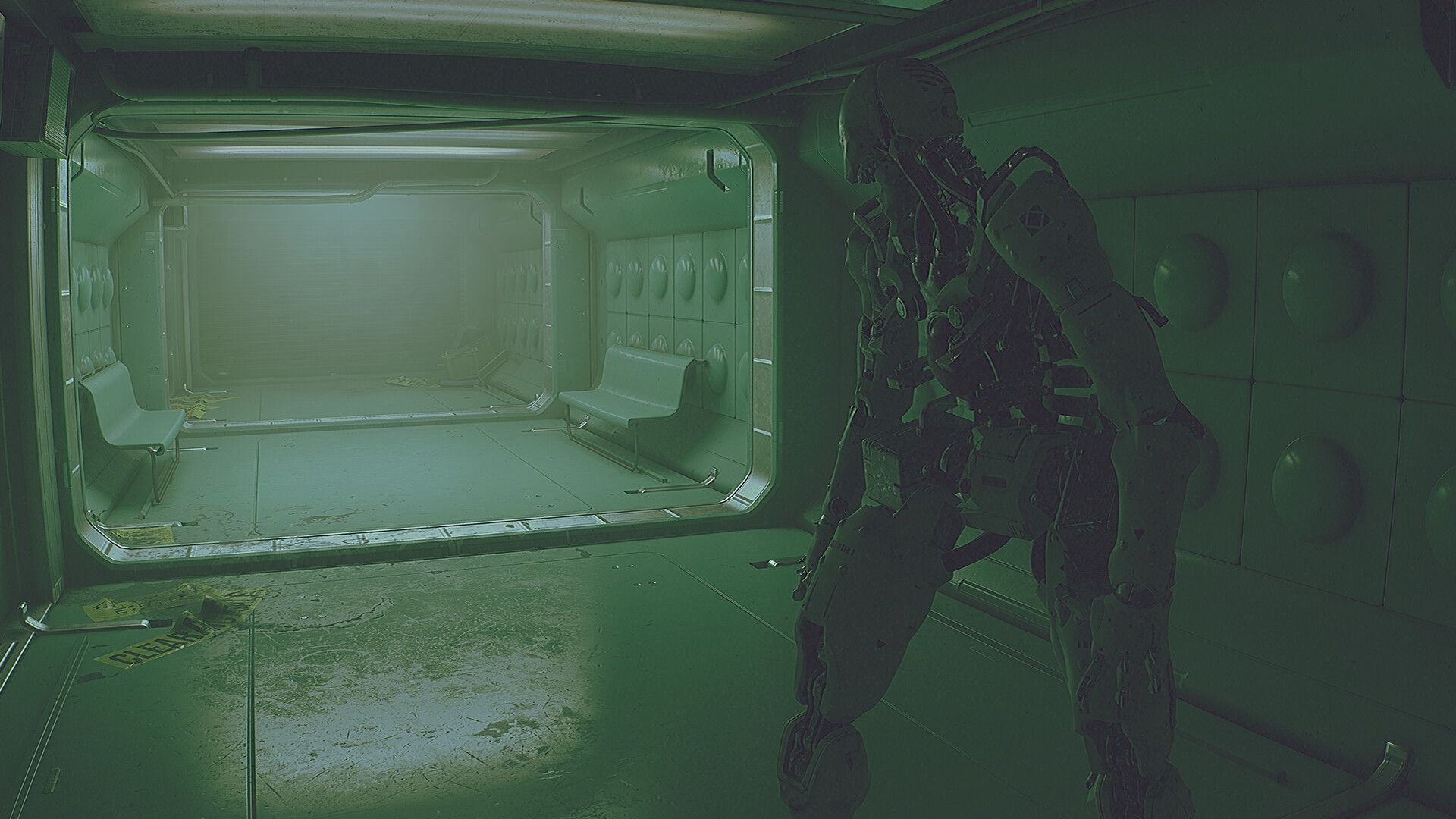
"Going deeper into the base, like entering the living quarters, on the other hand, gives you a great idea of just how out-of-hand things have gotten here"
The visuals go a step further by offering plenty of fun contrast in the different parts of the lunar base that you explore. You start out in ROUTINE’s equivalent of its entry way, for instance, and while things are in disarray, there isn’t really too much wrong there aside from some suitcases being strewn open on the ground and a lack of anyone else in the vicinity. Going deeper into the base, like entering the living quarters, on the other hand, gives you a great idea of just how out-of-hand things have gotten here; there are broken-down doors and blood splatters all over the place. Heading to the abandoned mall will then present you with a more classical style of horror where light and darkness are more pronounced.
Audio is similarly top notch, with ROUTINE opting to not really have much in the way of background music. Rather, the title is more focused on providing you the sense of you actually being in the lunar base and exploring it. This means that you only really hear sounds that your character could feasibly hear, be it the creaking of a loose tile, the opening of a door, the clattering of a tiny robot walking around, or the heavier stomps of a larger robot chasing you.
The story of ROUTINE isn’t a particularly complex one, but it is told in a more twisted way than you might expect. There aren’t really any cutscenes that are going to help you figure out what’s going on. Rather, the entirety of the game’s plot is uncovered through the player’s own exploration and environmental storytelling. You often get large parts of the story beats happening through recordings left behind by other people who might have once lived and worked at the lunar base, and you’ll often find notes, forms, books, and various paperwork that will let you know what you should be doing and where you should be going.
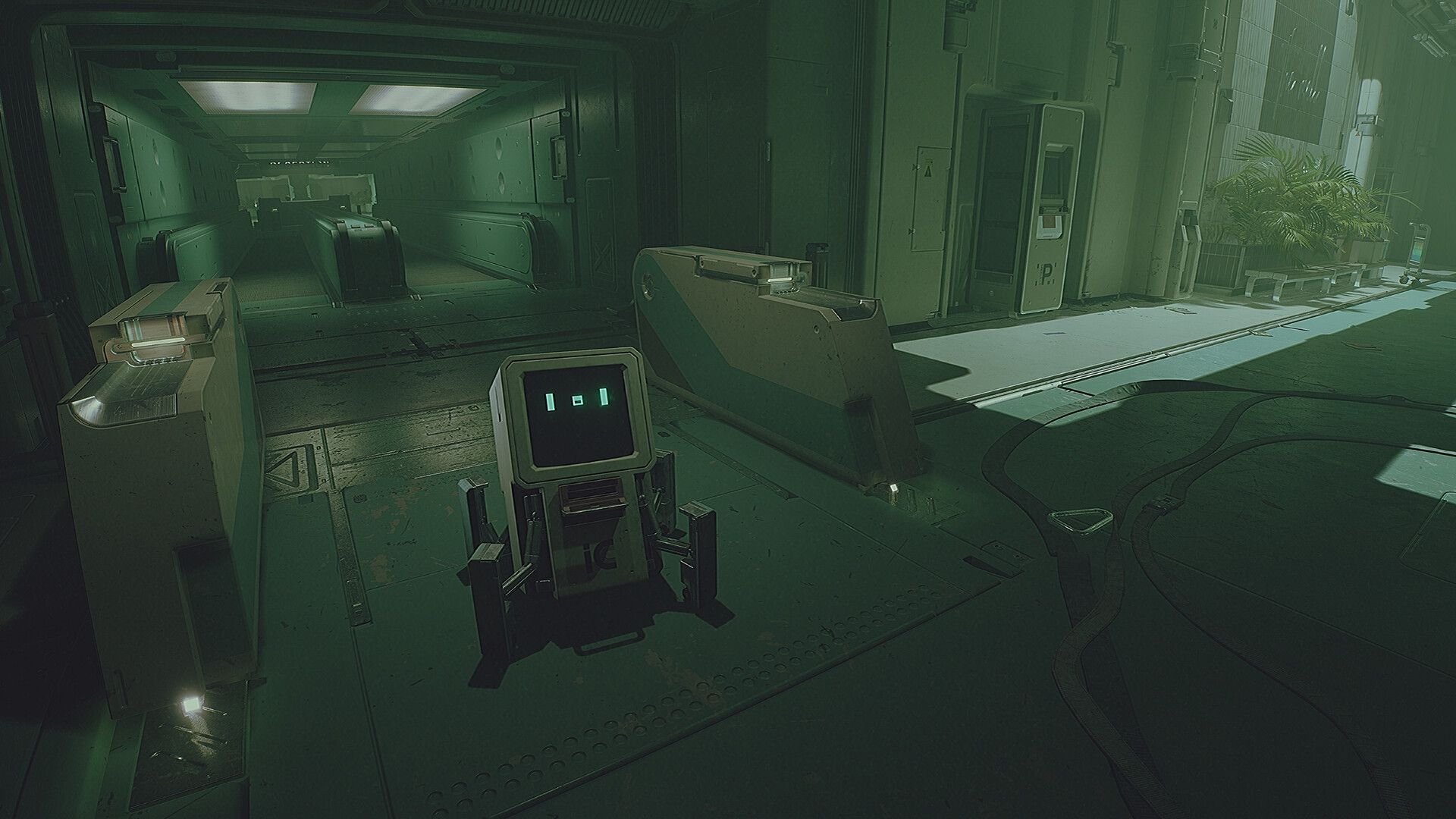
"The central story is fine enough and does a great job of constantly pushing you forward"
Things start off with you waking up in the isolation chamber of the lunar base after having slept through your seven days of quarantine. On waking up, you’re prompted to stretch your body, get your spacesuit helmet and ID badge, and step out the door to marvel at the wonders of the moon base. What you do find when you step out of the door is a base that has seemingly been abandoned and is in complete disarray. Over the course of the game, you realise the threat posed by the robots that once worked as the lunar base’s security force, and have a singular main objective: shut down the system powering the robots.
While the central story is fine enough and does a great job of constantly pushing you forward, some of the smaller stories you get to read about or listen to through old recordings left behind tend to be a lot more interesting. These stories often also give you more questions that you will want to find answers for, like what exactly made the security systems turn on the lunar base’s human denizens to begin with, when all of this started, and even the most basic questions of why you’re on the base to begin with and how you can escape. However, answers to these questions are sparse, and are entirely dependent on your own sense of exploration.
To help you deal with this, you’re given a single item: the Cosmonaut Assistance Tool – the CAT – which is basically your omni-tool for dealing with most of the obstacles in your path. The CAT can be used to diagnose computers that might be too messed up to open doors, clear up the distorted signal coming from some speakers to let you better listen to an old message, or even just power up an electrical box so that it can open a door. This ability of the CAT to release bolts of electric energy can also be used as a makeshift weapon – albeit not a particularly good one. The robotic enemies you face in ROUTINE can’t really be killed with the CAT, and it tends to take several shots to even stun them. This is especially problematic since the CAT’s battery can only hold three shots, and you don’t really get to carry spares.
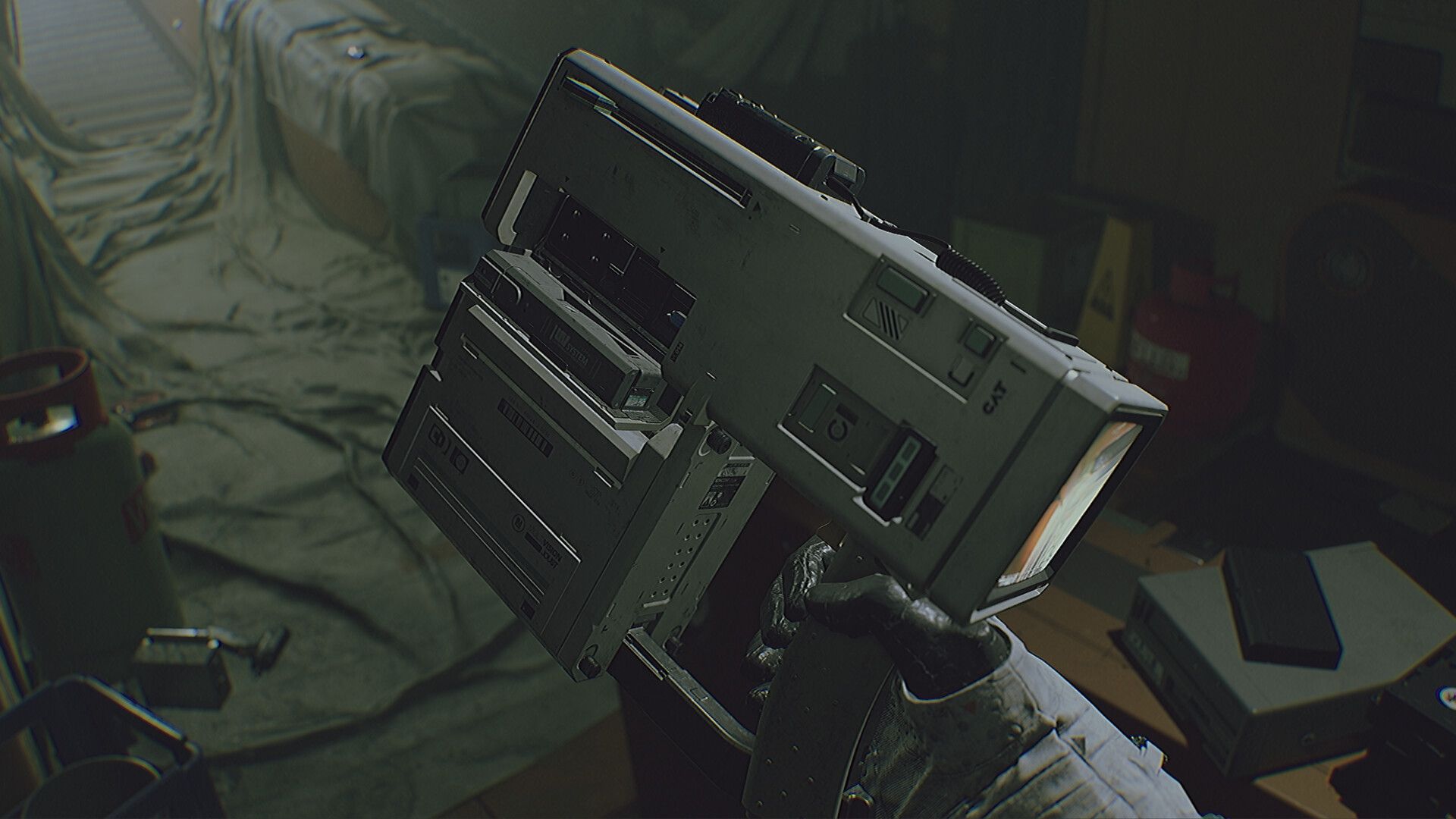
"What makes it a truly excellent experience is its emphasis on making you feel like you’re really there"
That’s not to say that the CAT can’t eventually become a more useful weapon, however. Depending on your own exploratory efforts, you might find some upgrades for the tool that can allow it to fire shots with more energy, making it a more effective way to stun the menacing robots. However, ultimately, your best bet is to still run away and maybe even hide; these robots will stop at nothing to get you, and you can’t really survive more than a single hit from them. A second hit will outright kill you.
ROUTINE is an interesting horror experience, and even if you ignore its incredible development story that involved two game engine migrations, is still one I’d recommend to fans of the genre. The title isn’t particularly challenging, and even though you don’t get any markers or maps to help you navigate, it’s still a fairly linear experience. However, what makes it a truly excellent experience is its emphasis on making you feel like you’re really there, be it from a general lack of a video game-styled UI, to even how you interact with the world and can do things like check under couches for a spare CAT battery. The only major downside here is the fact that the robot enemies’ overall hardiness means that combat isn’t really an option here, and while running around and hiding is always effective, it’s not the style of horror some players may personally enjoy. Despite that, however, ROUTINE still feels like a game I’m glad to have experienced.
This game was reviewed on PC.
Looks gorgeous; Simple story; The overall world feels interesting to explore thanks to its 1980s-style filter; Immersiveness is excellent thanks to the lack of a UI and full body awareness.
No real combat system to speak of and there is too much of an emphasis on simply running away from enemies; The more interesting stories are up entirely to the player to find.