


A month after the release of Silent Hill: Townfall, writer and director Jon McKellan answered some of our questions about the horror experience. Subjects for the conversation ranged from how the team at Screen Burn made use of old-school technology to add to the horror atmosphere, the game’s critical reception, and the decision to go with a first-person perspective. Series producer Motoi Okamoto also joined in on the discussion, talking about player reception, potential follow-ups to the story of Townfall, and even the future of the Silent Hill franchise.
Some reviews have praised Townfall’s atmosphere while finding its stealth encounters frustrating. Where do you draw the line between making players feel vulnerable and making them feel powerless, and has the response prompted you to reconsider that balance?
McKellan: I think the trouble with finding a balance is that everyone has their own threshold for it. For every frustrated comment that they feel too powerless, there’s another praising how they felt so vulnerable! It’s a tricky thing, and while we have addressed some legitimate balancing issues in the patches to ease the frustration part of things, I think evasion-led horror can always be a little divisive that way.
One thing we’ve noticed in watching people playthrough on streams and videos is that sometimes they feel so vulnerable they think they are powerless, but sometimes too scared to try anything. The weapons and distractions are there, but when you are terrified, you don’t think about the options so much!

Ultimately though, the goal of Townfall was always to feel underpowered and put players into that position where they feel the situation is ‘impossible’ but have to search for ways to keep going.
The CRTV gives players information that can help them survive, but information can also make horror less frightening. How did you decide how much it should reveal, and what players should still have to fear despite using it?
McKellan: The amount of information the player had to work with, and how easy/convenient it was to discover, was always in discussion throughout development. What we found in playtesting was again that it really depended on the player what was too little and too much. For some players, giving them a ‘wall hack’ where they could see where the problems were coming from was empowering, and for others it only scared them more as they could see where it was and that made it worse – knowing that you have to open that door to continue, but there’s an enemy behind it can really add to the tension.
In the end we felt the balance was found by giving the CRTV limited range, and separating each separate enemy out onto their own frequencies. This means that you need to alternate tuning to keep tabs on them, which can be stressful when navigating dense environments. Some players would scan all enemies in an area, then leave the CRTV tuned to the ‘main’ one they are worried about. Others would frantically quick-tune between each as they moved. I don’t think there is one design that suits all players, so we tried to give enough flexibility to allow you to use it how you prefer.
Moving into first person changes how players experience both Simon and the world around him. Which established Silent Hill technique became less effective from this perspective, and what did you develop to replace it?
McKellan: In general, the difference between third and first person affects so many little things – some are obvious, some not so much. From the connection with the environment, or even using the CRTV, first person was a stronger fit for Townfall’s goals.

That being said, there’s things that third person gives you as a player that need to be considered in the switch. For example, in third person you generally have much more peripheral vision, and are operating the camera in less of a second to second way. You can scan the environment in this ‘wide shot’ just with your eyes and maybe feel like you actually have more dexterity to dodge an enemy because you can see clearly how close it is to you from the side or behind.
Switching to first narrows that view, and you rely on where you look much more. You have less spatial awareness between your body and the world around it. That’s where complex audio systems really come into play – you become much more sensitive to surround audio to help you determine where to look or pay attention to. We spent a lot of time and effort building a great system of audio pathfinding and occlusion, to accurately present directional audio in a way that makes sense in the environment. A creature crying out on the floor above you doesn’t simply come from directly above you, it’ll bounce down the hallway and sound like it’s coming from the stairs to that floor. That sense of directionality is vital for helping the player deal with the much reduced field of view they have.
You’ve spoken about making St. Amelia believable enough for players to care about it. How did you turn the familiarity of a Scottish coastal community into something unsettling, and which ordinary detail became unexpectedly powerful as a source of horror?
McKellan: We always had a sort of ‘pillar’ in development for ‘pulling horror from the mundane’, and the real life problems stacking up in a way that becomes horrific because it’s so relatable. I think that’s one of the main strengths of the environment and the story we’ve built into every corner of the town.
We know that most of our players will not have grown up or even visited a town like St. Amelia, so we couldn’t rely on familiarity alone to build a connection with the player, it had to simply feel real. The more real the town felt, the more personal it all seemed, and the more the bad things that happened resonate to the player. You feel a bigger sense of loss because the detail of what they lost as a town is conveyed in abundance. There’s no one single thing that makes it unsettling or powerful, it’s really the combination of a thousand small details creating a sense of grief and unease.

Solving a puzzle usually gives players a satisfying sense of mastery, whereas horror often depends on uncertainty. How did you design Townfall’s puzzles so that understanding something could deepen the unease rather than simply relieve it?
McKellan: With all Screen Burn-style puzzles, it’s all about interlinking with narrative 100% of the time. No main puzzle should just be a means to an end, it should be relevant, even subtly, to the characters goals, feelings, situation etc.
I think The Patient chapter is a great example of it. The ‘puzzle’ is actually fairly straight forward – answer the Doctor’s questions. But the role the puzzle plays is to put you directly in the shoes of the character, doubting your own knowledge, feeling like you are being asked the impossible under stress. That whole chapter, while involving searching for items, navigating past enemies and x-raying patients, is all about empathy really. Just putting players into a similar head space and getting the same emotions firing that Zoe felt that night – like she is out of her depth. She CAN solve the problems, as can the player, but she might make some mistakes on the way, and those mistakes will weigh heavily on her mind.
We’ve seen a few comments online saying “You really need to be a qualified nurse to solve this!” and that’s kinda the point! We’re using that feeling of not having the knowledge to solve a problem to put you in the same position as the character under such stress that you feel a connection to it. The frustration and panic, and the “How am I meant to know this?!” feeling is exactly what she felt when facing medical emergencies way more complex than what her daily life as a district nurse normally brought to her.
Townfall’s endings reflect actions taken throughout a playthrough. How did you distinguish choices that express something meaningful about the player’s interpretation of Simon from habits they might adopt simply to survive?
McKellan: Some spoilers ahead! There are a few parameters that move the needle on which ending you get, but we tried to keep it both manageable (for those seeking out a specific ending) and narratively relevant. In the end the two most important aspects were “How inquisitive was the player?” which shows Simon having a ‘desire to learn the truth’, and “How violent was the player?” which shows him essentially dealing with things the ‘wrong way’. Punching trauma in the face is not always the right solution, even if it helps you get through the day!

The idea is that if players were inquisitive and Simon showed a willingness to learn about the people he hurt, and didn’t use violence or simply tried to kill the problems in front of him, then he’s taking the ‘good’ path to resolve the burden he’s carrying. Getting the good ending is quite hard as a result, requiring patience and diligence, but that’s ultimately the best way for Simon to handle what is being thrown at him. To not take the various ‘gifts’ left for him to lure him into violence and continue to reject what the town and its inhabitants are showing him. There’s even a sort of meta-layer to this, where in NG+ you can unlock some overpowered weapons. They make short work of enemies and allow much faster subsequent runs, but that’s Simon not learning from the experience and taking the easy way out again! There’s definitely a point we’re making there about how hard it can be to do the right thing, especially when there are faster, ‘easier’ options available.
Importantly, we don’t count things like Richard’s kills in the tower towards the ending requirements, because in an inverted way, being violent in that chapter is showing Simon exactly what kind of person Richard is, and how he sees himself.
Now that Townfall is in players’ hands, which reactions have most surprised you? Has the reception changed your view of which creative risks paid off, and which decisions you would revisit?
Okamoto: We felt that Silent Hill: Townfall was quite scary while we were making it, so in that sense, the reactions have largely been what we expected. But I was surprised to see some players say that they did not find it quite as scary because the CRTV lets them know where enemies are.
We have seen mixed reactions to the stealth gameplay, and we hope to make further improvements through updates so that more players can enjoy the game.
When it comes to the story, as we expected, players have been coming up with many different theories. One topic in particular that seems to have generated a lot of discussion is the mystery surrounding whose heart Simon has. Personally, I think that ambiguity, and the room it gives players to imagine and interpret things for themselves, is part of the fun of Silent Hill.
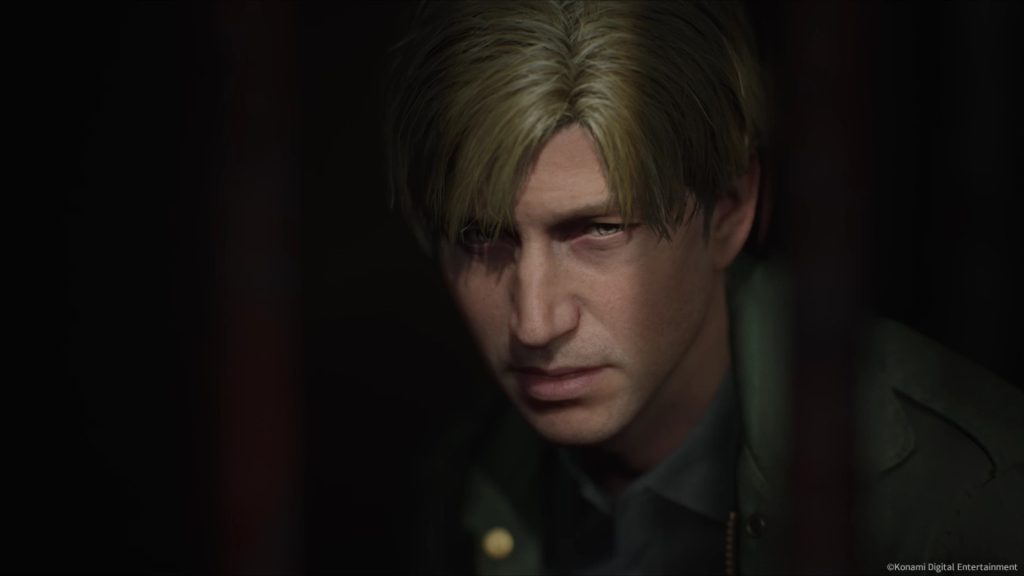
Without assuming a sequel or expansion is planned, what would justify returning to Townfall? Would you want to explore unresolved possibilities in its world, develop its mechanics further, or take Screen Burn’s approach to Silent Hill somewhere entirely new?
Okamoto: With Silent Hill: Townfall, I feel that we were able to fully tell the story we wanted to tell. On the gameplay side, however, reactions to the stealth elements were somewhat divided, so I think there is still room for us to explore the game systems further.
If we ever have the opportunity to work with Screen Burn on Silent Hill again, I think it would be interesting to explore an even bolder story. They are an extremely creative team.
You recently discussed considering a second and third wave of Silent Hill projects. What has the reception to Silent Hill 2, Silent Hill f and Townfall taught you about which proposals deserve to move forward?
Okamoto: We’ve been observing a lot of feedback from players. There have been both positive and negative reactions to moving the setting beyond the town of Silent Hill itself, but overall, I feel that players have largely embraced that direction. Going forward, I hope players will look forward to seeing where in the world we might go next, and which studios around the world we might collaborate with.
I believe that the ebb and flow of tension is very important in horror games. Silent Hill 2 strikes a good balance between moments of heightened tension and moments where that tension eases, while Silent Hill f gives players relatively more room to breathe. I feel that the gameplay in both titles was well received.
Silent Hill: Townfall, by comparison, places greater emphasis on sustained tension, and my impression is that this resulted in more divided reactions to the gameplay. It was a valuable lesson in how important it is to carefully balance those moments of tension with opportunities for the player to breathe.