





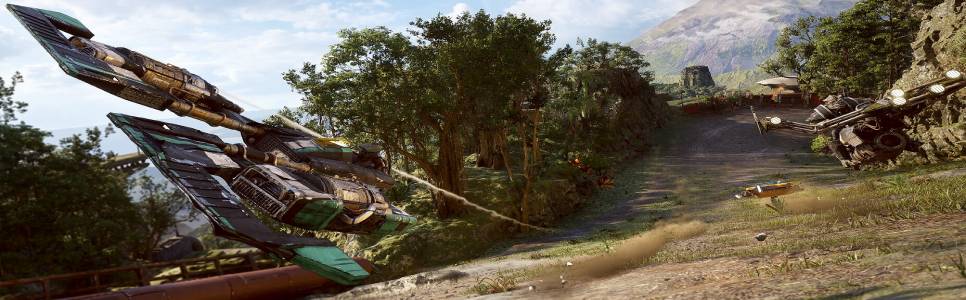
2026 is the year of many comebacks and revivals, but even if it isn’t a sequel to the beloved Episode 1: Racer, Star Wars: Galactic Racer is a true-blue successor in every way. Developed by Fuse Games and launching October 6th for Xbox Series X/S, PS5, and PC, it aims to capture that high-speed, pod-racing fantasy with sleeker visuals, higher stakes, and, of course, more vehicle variety.
Let’s go over everything you need to know before picking it up, starting with…
The Story and Who Shade is
When you think Star Wars, the first things to come to mind are usually the Force, the Jedi, the Sith, the Empire, the Rebellion, etc. Racing is probably far down the list, but it’s sometimes everything. Thus, we have the Galactic League in the Outer Rim, where the top racers gather to compete and be the best. Behind the scenes, its founder, Darius Pax, is trying to stop Kestar Bool, long-reigning champion, from wresting control and enlists the help of Shade (aka, you). There’s no better way to halt Bool’s momentum than dethroning him, but it also seems Shade is seeking revenge for his own reasons.
Branching Campaign Structure
Obviously, the campaign is a vital part of the Galactic Racer experience, but what’s interesting is how it’s handled. Rather than going from one racer to another, it’s actually a roguelite experience that branches. You choose the next event type and rewards, and gain upgrades along the way – all to reach the grand finals. Aside from delivering a fresh experience with each run, there’s also a fair amount to unlock, which we’ll get to in a bit.
Tracks
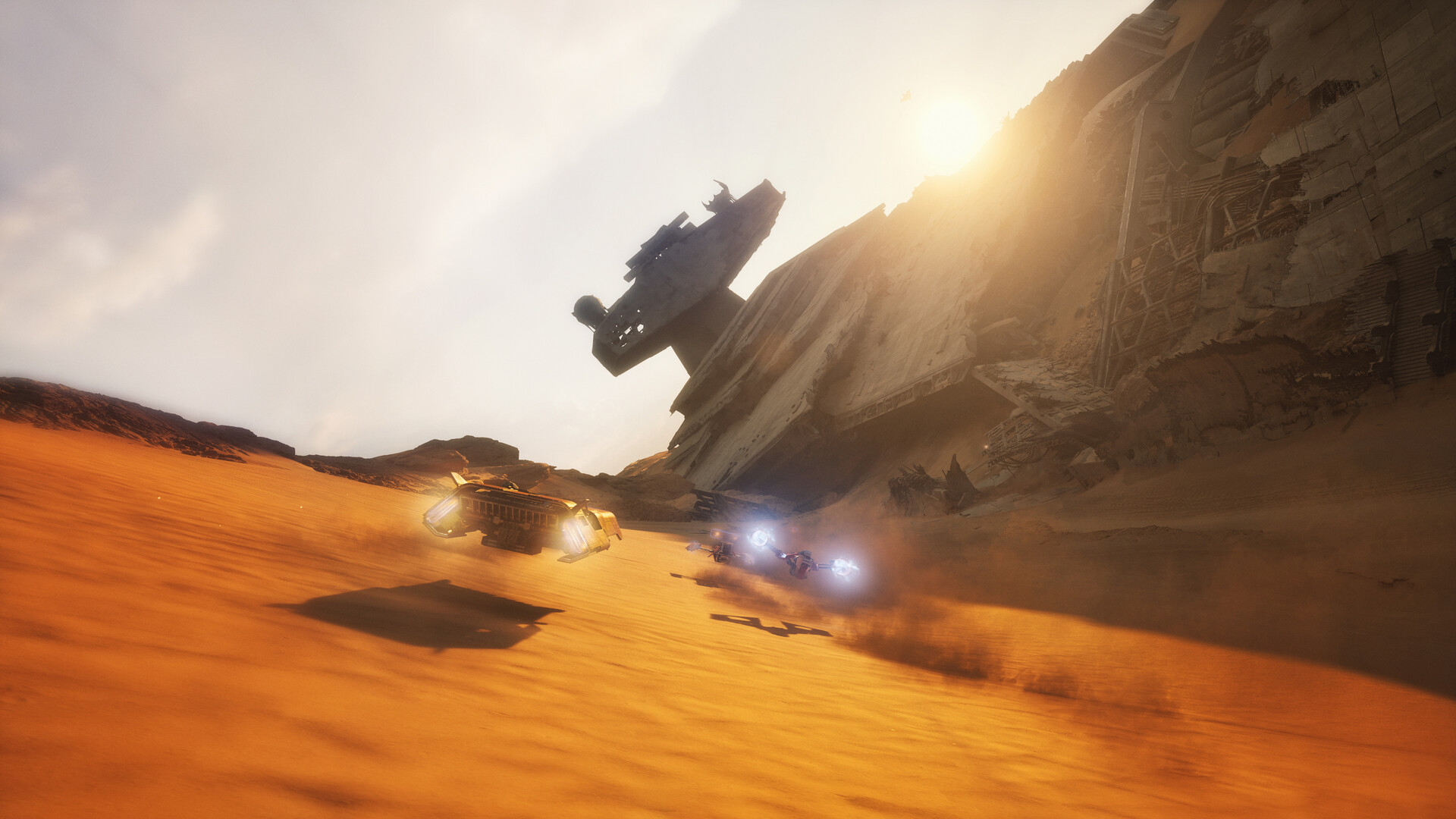
The other important piece of any racing title is the tracks. Each track is hand-crafted, with its own layouts, hazards, visual identity, and racing challenges, helping ensure that no two courses feel quite the same.
Racer Styles and Favors
Before beginning a run, you need to choose a Racer Style for Shade. There appear to be 15 in total, but only a handful are available at the start, including Survivor, which gives you the Shield Ability and increases speed (which you’ll lose on crashing). Tenacious provides the Autopilot Ability and lets you crash one extra time. Ranking up these Styles and unlocking further benefits requires fulfilling conditions, so even if a run fails, you can come back stronger. Favors are also available for additional perks like Mad Genius, where you get one extra crash per event.
Event Types
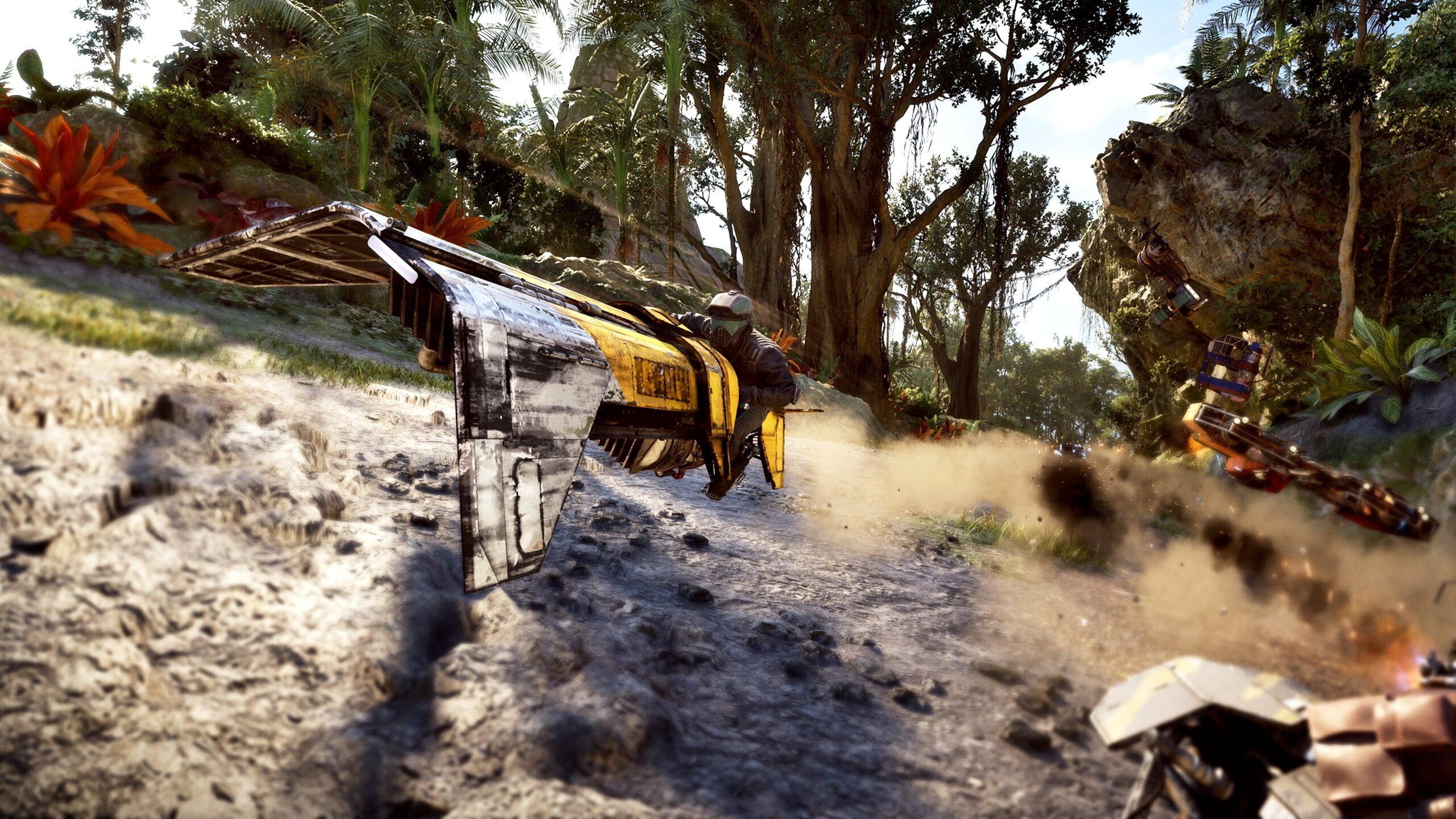
As for events, you’ll partake in everything from standard races against 11 other racers to a Field Test, which involves racing solo and beating the target time. Eliminator is a risk-vs-reward endeavor – it pays well and offers some big upgrades, but requires finishing in the top 3. Anything less and you’ll face elimination. It all culminates in a Qualifier, where Shade battles an “exceptional” competitor to continue onward.
Vehicle Types
Podracing may be many an old-school racer’s go-to, but there are three other repulsorcraft to play with. You have the Land Speeder, which offers strong resilience and can drift around corners; the Speeder Bike for the fastest acceleration and Kinetic Burst to quickly burst out of corners; and the new Skimspeeder, boasting the highest speed and Knife Edge cornering to maintain it (but at the cost of the slowest acceleration).
Upgrading Your Vehicle’s Stats
While each vehicle has different strengths and weaknesses, you can mitigate the latter by selecting upgrades after races. Improve your Resilience or Cornering, or maybe lean into the vehicle’s strengths at the risk of falling behind in other categories when it matters. Alternatively, skip an upgrade for Credits if you’re confident enough.
Vehicle Parts
But the real appeal is the Vehicle Parts, which can significantly change how a repulsorcraft functions in specific scenarios. For example, Afterburner Recharge will fully refill the Afterburner when your Ramjets are ready, and Depleted Shielding will activate a Shield for five seconds after using Afterburner. You can even turn Malfunctions, which require fixing in real time, into a benefit with Overcharged Systems providing temporary energy and reduced ability cooldowns when one occurs.
Afterburners and Ramjets
For those who have the need for speed, Galactic Racer has two ways to pull that off. Afterburner is your standard boost, and also dictates the rate of acceleration and deceleration. Ramjets are the Star Wars version of Nitrous – good for a quick burst of speed, but the more it’s used, the more heat builds up. Too much and, well, fireworks ensue. Keep the weather in mind – a colder environment allows for much more judicious Ramjet usage.
Extensive Vehicle Customization
What would a League that attracts all kinds of scum and villainy be without customization? You can customize every vehicle with different liveries, colors, and whatnot, but that’s not all. The sheer number of custom parts allows for potentially millions of different combinations, according to Fuse Games, ensuring that even two of the same repulsorcraft end up looking wildly different. Which is all the more important in…
Multiplayer Tours
Getting revenge on Kestar Bool is nice and all, but those who want to wreck real players can venture into Multiplayer Tours (alongside Quick Races). Compete against 11 others across races, pick upgrades and face off in the final. The difference here is you can take Contracts to earn more parts and Credits, or even predict your finish for additional rewards. And for those who want to mark other players and create rivals in the process, well, have at it.
Multiple Playable Characters
The other key differentiator is that you can choose different characters – including the infamous Sebulba from Phantom Menace – when playing online. Each has unique starting abilities and passives, like Dud Bolt fully refilling his Afterburner and increasing the power of its next usage by nailing Perfect Landings, or Gasgano gaining Surging when his shields are depleted.
Minimum PC Requirements
Strangely enough, only the minimum requirements have been revealed on PC. Aside from an SSD with 50 GB of space, you’ll need an Intel Core i5-8400 or an AMD Ryzen 5 2600, 12 GB of RAM, and either an Nvidia RTX 2060, an Intel Arc A580 or an AMD Radeon RX 5600 XT 6GB. The graphical quality and performance parameters remain to be revealed, though.
4K/60 FPS on Consoles
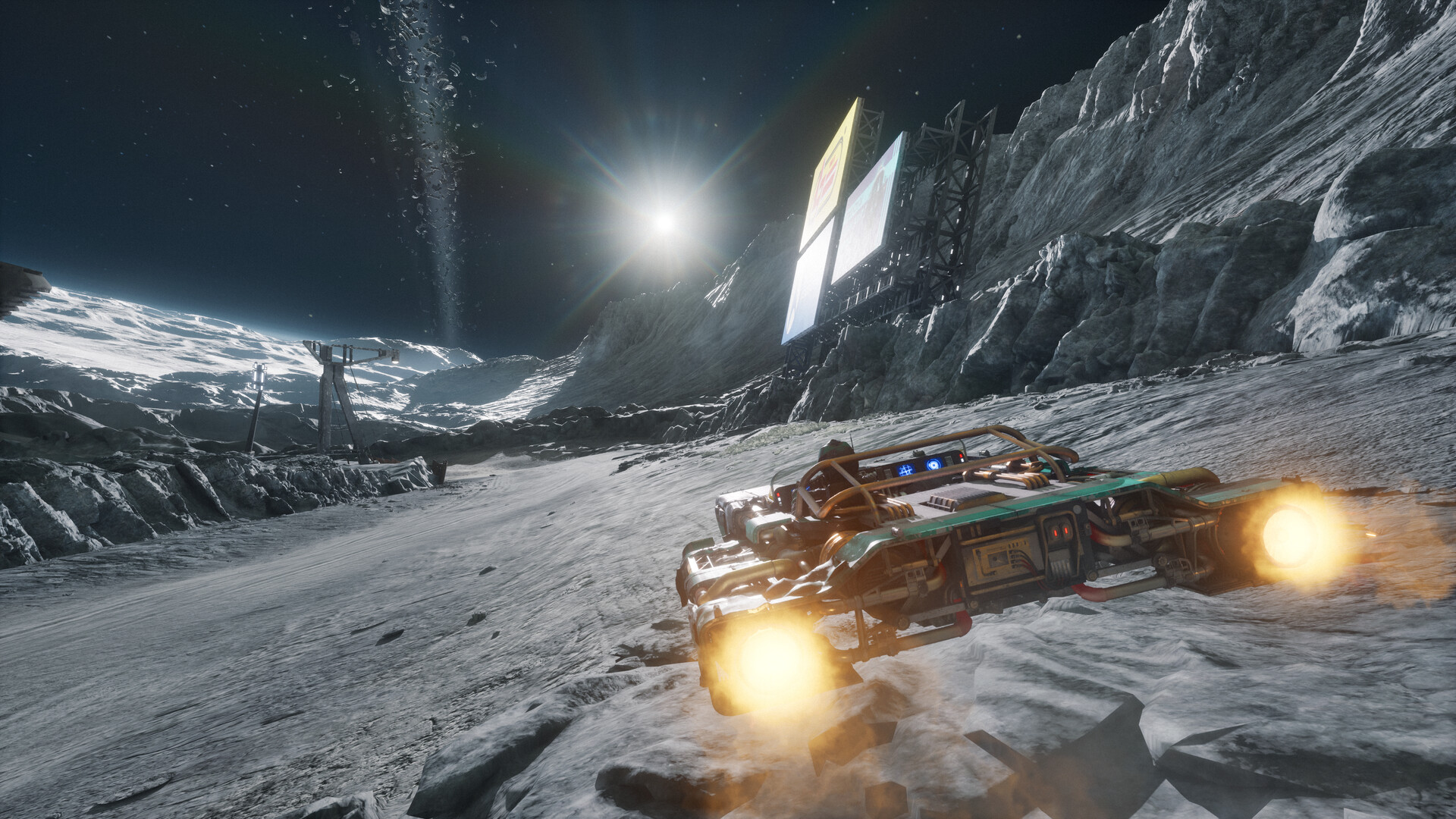
In terms of console performance, Galactic Racer is aiming high. As noted in Digital Foundry’s preview, it runs at 60 FPS only – no Quality Mode with 30 FPS. Lumen GI is also active on all platforms except Xbox Series S, and with TSR, the resolution floats between 1440p and 1690p. This was back in June, however, so Fuse Games may very well hit its 4K target, even if it’s upscaled, by release.
No Season Passes
Given that it has multiplayer, you would think that there would be some seasonal model or passes to grind post-launch. But as confirmed by studio CEO Matt Webster to IGN, that’s not the case. Why? Well, in his own words, “No. This is a premium release, right? We have our campaign, and we have arcade mode, and we have multiplayer, and it’s a self-contained thing.”
This doesn’t mean the team isn’t considering any post-launch opportunities. But Season Passes are a flat “no,” because, “In my head, a season pass is connected to free-to-play games, and that’s not what we are making,” says Webster.