






Say what you will about Xbox, but it certainly has a knack for raining on everyone’s parade, including its own. Where it should be hyping Gears of War: E-Day like no one’s business, especially with how it reportedly cost upwards of $400 million to develop, thus adding another high-profile name to one of the best stretches of gaming in the past several years – and maybe spare some of that marketing budget for Minecraft Dungeons 2 – it’s instead gone back to the well and announced layoffs.
Sorry, “eliminations.” This time, it’s for Halo Studios, with 268 roles gone, and the once-343 Industries reduced to little more than…something. Xbox CCO Matt Booty said a “small team at Halo Studios will continue supporting the Halo community and games in-market,” which is curious because Infinite already had its last content update. Halo: Campaign Evolved, the only title ever released under the rebranded Halo Studios moniker, isn’t getting any DLC or new features (and that was before this whole rigmarole). At best, this team will probably handle bug fixes and any critical issues with either title for however long Xbox deems worthwhile. Could be for several years, could be several weeks – we don’t know.
What we do know is the next Halo is officially in the works, and it’s under Activision. Yes, that Activision, primarily known for publishing Call of Duty (and Sekiro: Shadows Die Twice in one of the bigger “huh?” inducing moments in retrospect). The title is “led by a new, purpose-built team that is separate from ongoing development and plans for Call of Duty,” says Booty. Now, no single Call of Duty title is developed by a single studio, so the word “led” could imply the involvement of others. The Hollywood Reporter hearing that this will allegedly be a “full-feature, mainline installment” indicates multiplayer – if Activision president Rob Kostiche proclaiming the goal to make “the greatest Halo game ever” while still catering to everything fans love about the franchise wasn’t enough indication.
Right away, the first question is “Why?” And no, we don’t mean why World’s Edge and Rare are now under the publisher’s purview as well (with the former being cut in half as part of layoffs).
Why Activision, especially considering how rundown the Call of Duty franchise has been through the years? The obvious answer is obvious enough – because Call of Duty continues to sell, against all odds and increasingly terrible campaigns (though Modern Warfare 4 could mercifully fix that). But I think it’s even simpler than just handing off the first-person shooter franchise to a publisher that, for better or worse, specializes in them.
Go back to June when rumors first circulated about Xbox’s upcoming reset and mass layoffs. The Information reported at the time that the division wanted to “move faster” on creating new entries for franchises like Halo, Fallout and The Elder Scrolls. We’ve already seen that with the announcement of remasters for Fallout 3 and New Vegas, Fallout 5 confirmed to be the “long-range destination”, and Fallout: New Vegas developer working with Bethesda on a brand new entry. The Outer Worlds studio is now working under Bethesda, by the way, as part of this whole reorganisation, but we’ll get back to that.
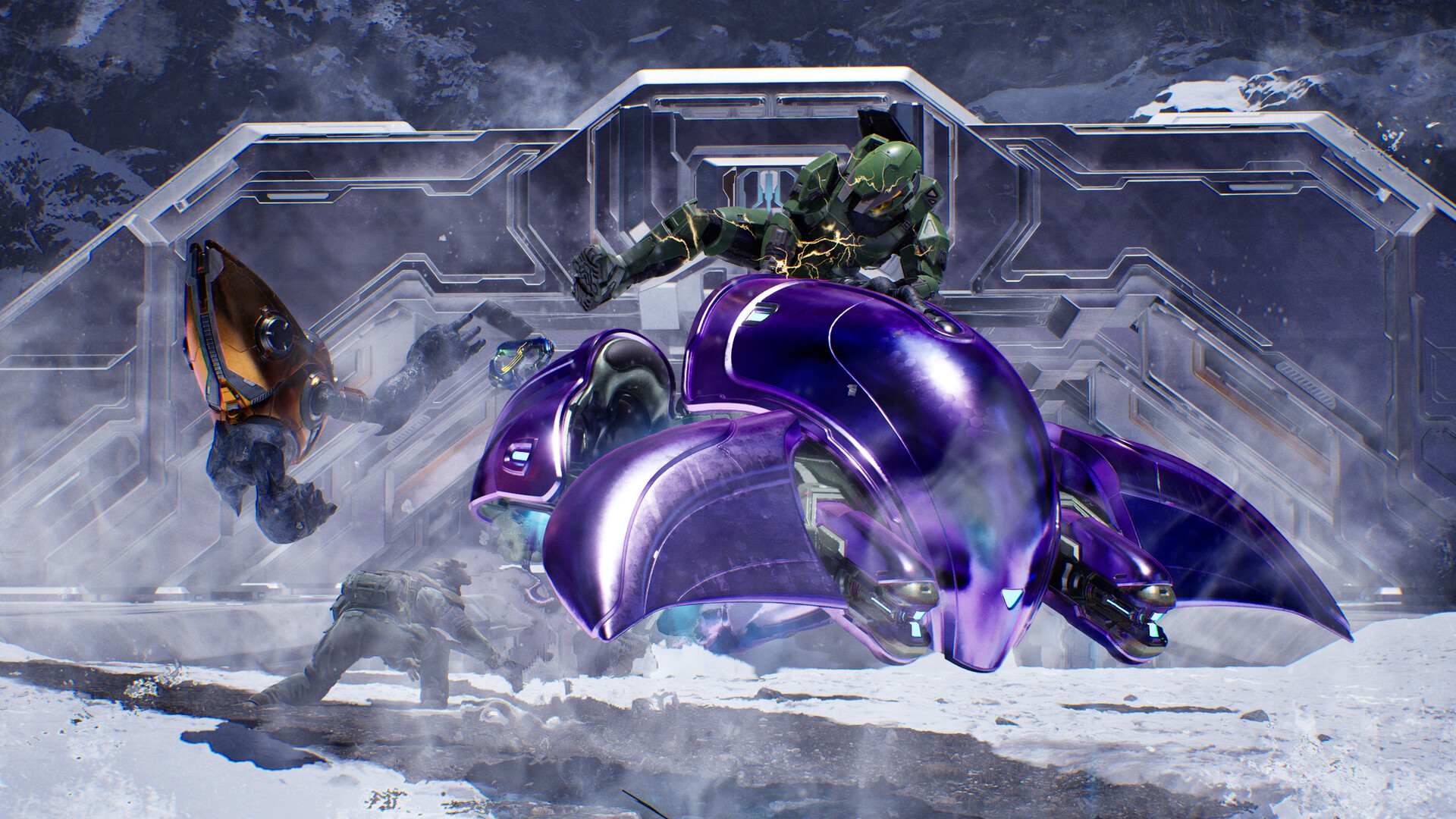
For all intents and purposes, giving Halo to Activision seems like a plan to consistently produce new games. Given that Call of Duty is the publisher’s biggest revenue earner, year in and year out, it makes even more sense to leverage its other big flagship shooter, multiplayer and all. That’s probably why it didn’t pass this off to, say, id Software. Besides the latter facing extensive layoffs and being nowhere near the same size to put out another DOOM: The Dark Ages, it takes years to produce new games. Competitive multiplayer for a casual audience also isn’t in its wheelhouse.
Of course, this reorganisation is more than just a fancier term for layoffs while reducing management layers and ensuring multiple studios function under one roof. It’s also more than just a leaner model with fewer publishers, or even a uniform development model that only specialises in potential hits rather than niche endeavors. See: Hellblade developer Ninja Theory now in consultation for a “proposed closure” after prior agreements fell through, even though other “paths” forward are being explored.
Besides effectively undoing so many of the acquisitions over the course of a decade, it’s also Xbox prioritising products above all else. Which would seem like a good thing to most gamers. After all, Halo Studios/343 Industries has dropped the ball consistently on the franchise, and many fans demanded an overhaul in leadership. The mixed player response to Campaign Evolved doubtless contributed to that as well, even with positive critical acclaim. The fact it’s taken five years for the studio to churn out a remake – not even a fully-fledged, full-priced title – which seemingly failed to set the charts on fire was probably something that Spencer’s regime could tolerate. Not this one, though.
Xbox leadership has also made clear that it wants to cultivate more console exclusives – even if this current generation is lost, then perhaps for Project Helix down the line. That doesn’t just mean giving existing IP to other, seemingly more competent studios. It means establishing a reliable pipeline for the future.
But the focus on products is to the exclusion of everything else. Look no further than Gears of War: E-Day’s story director being laid off, or Halo Studios’ cinematic director Josh Daniels, who was promoted and then laid off in short order. And while Xbox says Turn 10 and Playground have been “consolidated” into a single studio, the former was little more than a support studio after last year’s mass layoffs. This is little more than the remaining employees becoming Playground employees.
It’s also leadership essentially saying you can work for years and years, even on high-profile projects it’s demanding you churn out, now at a rapid pace, and remain expendable. Is the project a success, even with the stagnant Game Pass cannibalising sales? Layoffs. Is it a failure for any number of reasons? Layoffs. Is your studio under another’s leadership because it would make communication easier? Believe it or not, layoffs.

If you’re going to focus on a handful of major franchises, when do you stop jettisoning worthwhile talent? Does the “plan is the plan until it isn’t the plan” include changing your approach on a whim? If the goal is to release Halo titles more regularly, and one of the biggest criticisms for years is the amount of contractors cycled in and out, how will this constant churning of talent work?
It almost reminds me of Bungie, ironically enough, coming out recently and saying that it’s not done with Destiny, and how it wants to explore new stories and worlds…right after Sony laid off the overwhelming majority working on the franchise. I know it’s hard to believe, but game developers – or really anyone – aren’t exactly keen to work at places where a guillotine constantly lingers over their heads. It also makes you wonder if this is the fate that could befall Gears of War if E-Day isn’t a massive success by Xbox’s standards. Another IP to the Activision factory, and call it a day with some layoffs on top. Same with inXile if Clockwork Revolution doesn’t pan out, perhaps. To the Fallout and Elder Scrolls mines you go.
Maybe this new regime really likes clean slates. Maybe it’s getting rid of its most experienced, most expensive employees for the sake of cheaper talent – such is the focus on output. At least for Halo, the sheer amount of money at Activision’s disposal means it can throw as many resources as feasible to create a new game. What will happen if it flops? Well, maybe another big reset and consolidations, and even more layoffs.
Everything may appear more uniform and less muddled in terms of infrastructure, but the fact remains: No one and nothing is safe. Xbox probably thinks the bigger picture is worth these changes, and that if nothing else, it’s cutting spending to tidy up its fiscal reports at the end of the year. Whether that translates into good games or not is ultimately irrelevant.
Note: The views expressed in this article are those of the author and do not necessarily represent the views of, and should not be attributed to, GamingBolt as an organization.