






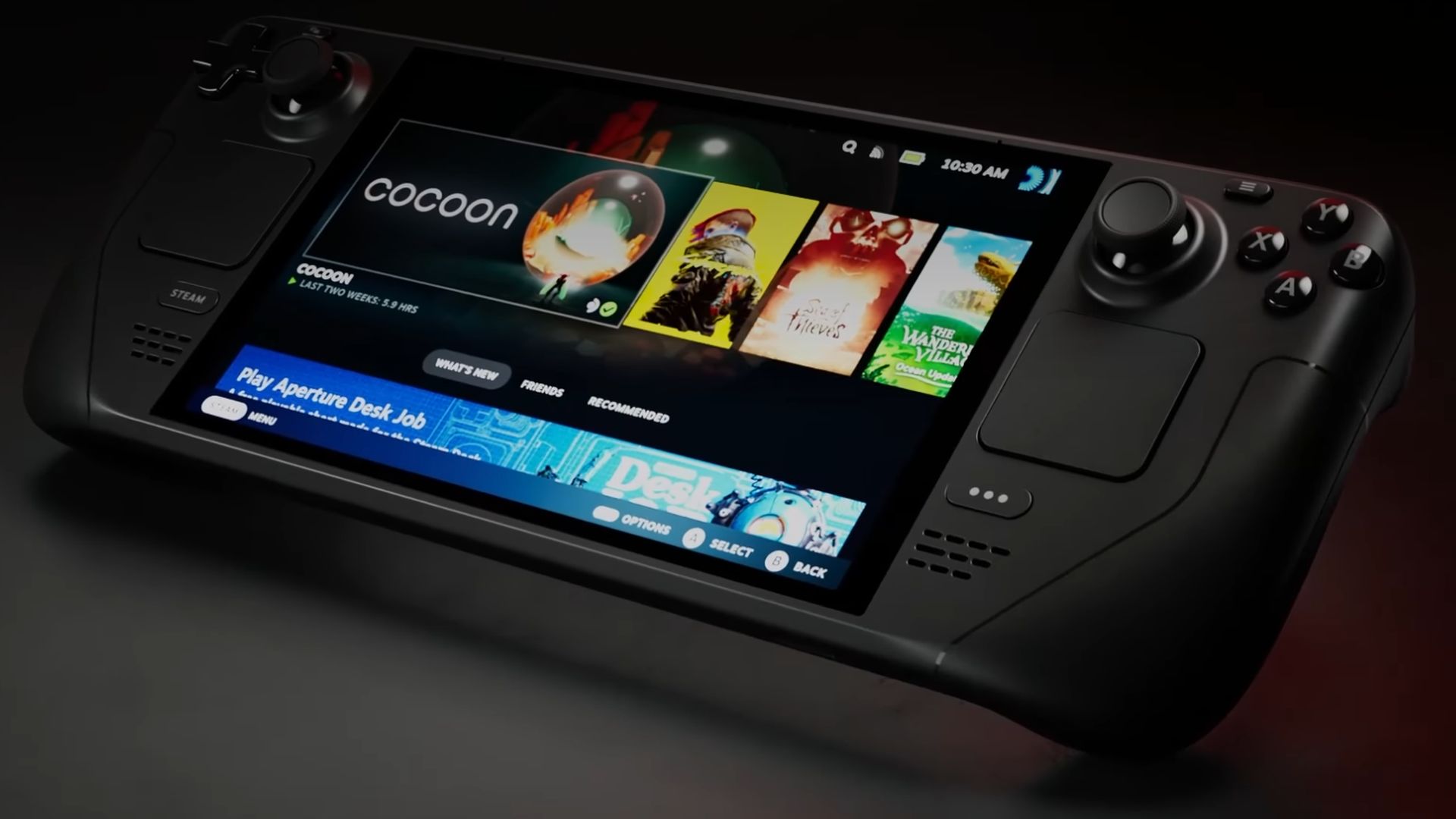
Just a few weeks after Valve started warning customers about intermittent shortages for the Steam Deck OLED, it looks like the next signs of skyrocketing RAM prices are hitting the handheld gaming PC. According to Famitsu, the Steam Deck OLED’s price in Japan, South Korea, and Taiwan will be rising, with Japan seeing hikes of ¥15,000 (almost $100). The 512 GB model will cost ¥99,800 (roughly $635), and the 1 TB model will cost ¥114,800 (roughly $730).
In South Korea, the 512 GB model will be priced at ₩898,000, and the 1 TB model at ₩1,048,000. Taiwan will see prices raised to NT$18,980 for the 512 GB model and NT$22,480 for the 1 TB model. Currently, no price hikes are planned for Hong Kong.
The announcement came from Komodo Station—the company in charge of selling the Steam Deck in the Asian markets. And while no explicit reason has been noted, it comes in light of “rising logistics costs that have continued since the [Steam Deck]’s launch, as well as recent fluctuations in the exchange rate environment,” according to the report (via machine translation).
Back in February, Valve had started issuing a warning on the official listing for the Steam Deck OLED. The company also confirmed that production on the Steam Deck LCD 256 GB had been stopped, with any available units being leftover stock.
“Steam Deck OLED may be out-of-stock intermittently in some regions due to memory and storage shortages,” wrote Valve. “Steam Deck LCD 256GB is no longer in production, and once sold out, will no longer be available.”
Valve has been seeing many of its hardware plans affected by global memory shortages. The company confirmed that its plans to launch the Steam Machine, the Steam Frame, and the new Steam Controller had been pushed back, with the new release window being the first half of 2026.
“Our goal of shipping all three products in the first half of the year has not changed,” explained the company. “But we have work to do to land on concrete pricing and launch dates that we can confidently announce, being mindful of how quickly the circumstances around both of those things can change. We will keep you updated as much as we can as we finalize those plans as soon as possible.”
In the meantime, Sony is also seeing adverse effects of the RAM shortage, with a report from last month indicating that the company might push the launch of the PS6 back as far as 2029. Nintendo is also reportedly keeping an eye on memory prices, with a price hike possibly coming later in the year. Neither company has made any statements, however.
Nintendo president Shuntaro Furukawa had spoken about keeping an eye on market conditions like memory shortages and trade tariffs back in January. At the time, he said, “We aim to address this by advancing component procurement over the medium to long term.”