






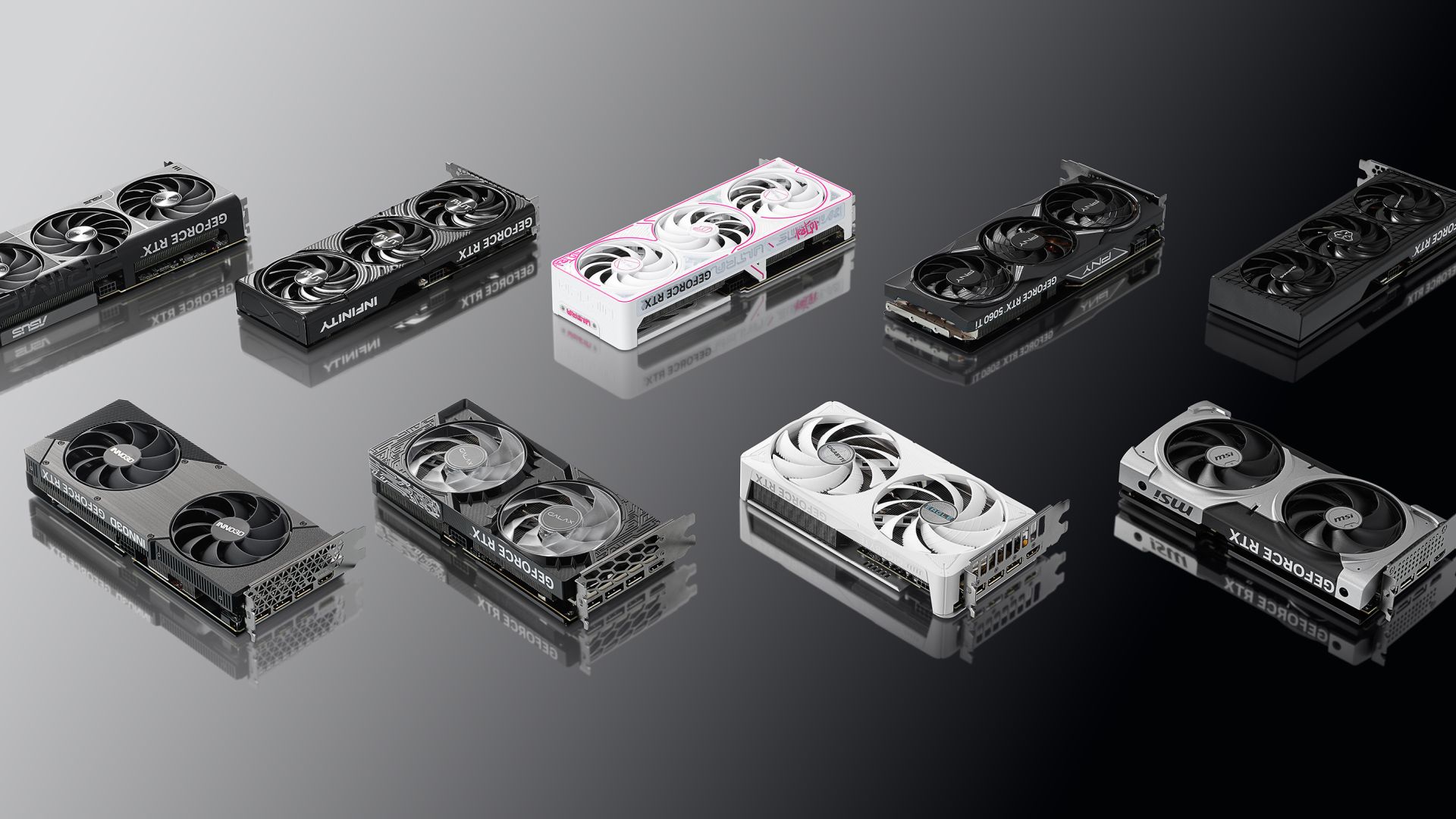
While Nvidia hardware partner Asus had previously indicated that the GeForce RTX 5070 Ti and RTX 5060 Ti 16 GB variant graphics cards might be getting discontinued, the company has now walked this statement back. In a press release, Asus has stated that models are neither being discontinued, nor are they being designated as having hit end-of-life.
Rather, the company cited supply chain fluctuations for both graphics cards. Among the variety of factors at play, Asus also cited memory supply constraints having affected the production of these GPUs, and as a result, making resupplies more difficult. Support for the GeForce RTX 5070 Ti and RTX 5060 Ti 16 GB cards is expected to continue. Asus is working with its manufacturing partners in efforts to stabilize its supply chains.
“The GeForce RTX 5070 Ti and GeForce RTX 5060 Ti 16 GB have not been discontinued or designated as end-of-life (EOL). ASUS has no plans to stop selling these models,” said Asus in its press release.
“Current fluctuations in supply for both products are primarily due to memory supply constraints, which have temporarily affected production output and restocking cycles. As a result, availability may appear limited in certain markets, but this should not be interpreted as a production halt or product retirement.”
As for what might have caused many to believe that Asus was halting support for its GeForce RTX 5070 Ti and RTX 5060 Ti 16 GB graphics cards, the company noted that “certain media”, referring to YouTube channel Hardware Unboxed, which was originally told by Asus that the GPUs will stop being available, “may have received incomplete information from an Asus PR representative regarding these products.”
The worldwide memory shortage has affected a number of different PC hardware companies, with even Nvidia having addressed the fact that its supply chains for graphics cards have been hit. “Demand for GeForce RTX GPUs is strong, and memory supply is constrained,” said the company in an earlier statement. “We continue to ship all GeForce SKUs and are working with our suppliers to maximize memory availability.”
As for the cause behind this memory shortage, it largely comes down to suppliers having signed major deals with AI companies like OpenAI to supply them with memory modules. Due to this, various PC components like RAM, NAND-based SSDs, and even some HDDs are facing supply chain issues. As noted in our own feature piece about this shortage, the cost of RAM has spiked up high enough that, when building a new PC, one would have to consider the fact that a significant chunk of the budget will likely go towards getting 32 or 64 GB DDR5 RAM kits. Contrasting this with consoles makes building a new PC in current market conditions an untenable proposition for many.
With no end to this memory shortage in sight for the foreseeable future, things are also looking quite grim for upcoming gaming hardware releases. Nintendo president Shuntaro Furukawa, for instance, has noted that the company is paying attention to RAM prices for the time being. Rumours have also indicated that next-generation consoles might get pushed back by a year in hopes of more reasonable memory prices.