






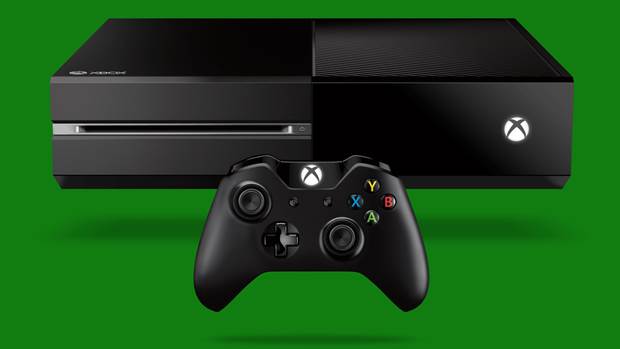
Having developed Ryse: Son of Rome for the Xbox One and managed an excellent visual standard despite working in restricted resolution, Crytek would obviously knows more than a thing or two about properly taking advantage of the console’s power. But as more developers speak out about the limitations that eSRAM is posing, what are Crytek’s thoughts on the same? How does it plan to circumvent them?
Crytek’s US Engine Business Development Manager Sean Tracy spoke to GamingBolt about the same and about the current bottlenecks that eSRAM poses to developers. Does he expect it to be patched in the future or are workarounds necessary?
“I can’t speak to whether this will be patched or improved in the future, but I wouldn’t expect it as a developer,” he said to GamingBolt. “Game developers are masters at engineering workarounds to hardware limitations and I think you’ll see unique and novel technology developed just for such a purpose.”
Now that the PS4 and Xbox One have finally started rolling, what are Sean’s thoughts on both consoles as well as Crytek’s CryEngine ability to scale for the next generation of games given their similar yet different architectures?
“We are delighted with the updates to the next-gen hardware but of course always want more! The unified architecture of the APU’s allows us to easily leverage massive amounts of resources for all kinds of features including rendering, physics, animation and more. Though the PS4 and Xbox-One don’t offer an enormous jump over the previous generation in terms of raw processing power, the custom AMD APU’s within both platforms represent a huge leap forward in terms of integration and capability.
“This seen to us as a thin and very fast intercommunication layer between was used to be dealt with as separate chips (CPU and GPU). Practically this yields great results when used for re-projection techniques like reflections or occlusion as well as for massive compute shader calculations which we use for all our deferred lighting computation.”
What are your thoughts? Let us know in the comments below.
This is just a snippet of our extremely long interview with Crytek. We shall have more for you in the coming days. Stay tuned.