





New details have been revealed about Double Fine’s upcoming narrative adventure game Keeper. Along with this, creative director Lee Petty has also spoken about the main objective of the game, and how it aims to tell its story about a strange friendship between a bird and a lighthouse without the use of any words.
In an interview on Xbox Wire, Petty mentions that one of the game’s key tenets is how it presents things that players wouldn’t expect. To achieve this, Keeper gives players the chance to relax and get in the right mindset to “embrace the unexpected”. Along with this, the game will also encourage heavy experimentations with various interactions in the world without any risk of the player-controlled lighthouse dying.
“A key tenet of this game is the unexpected,” explained Petty. “We wanted players to be able to relax a bit, chill out a bit, and embrace the unexpected. So to that end, there’s some experimentation, but there’s nothing the player can do to die in this game. They can’t mess up the experience. We sort of get the player on board early so that, when something unexpected is thrown at them, it’s not a moment of panic that they don’t know how to get through.”
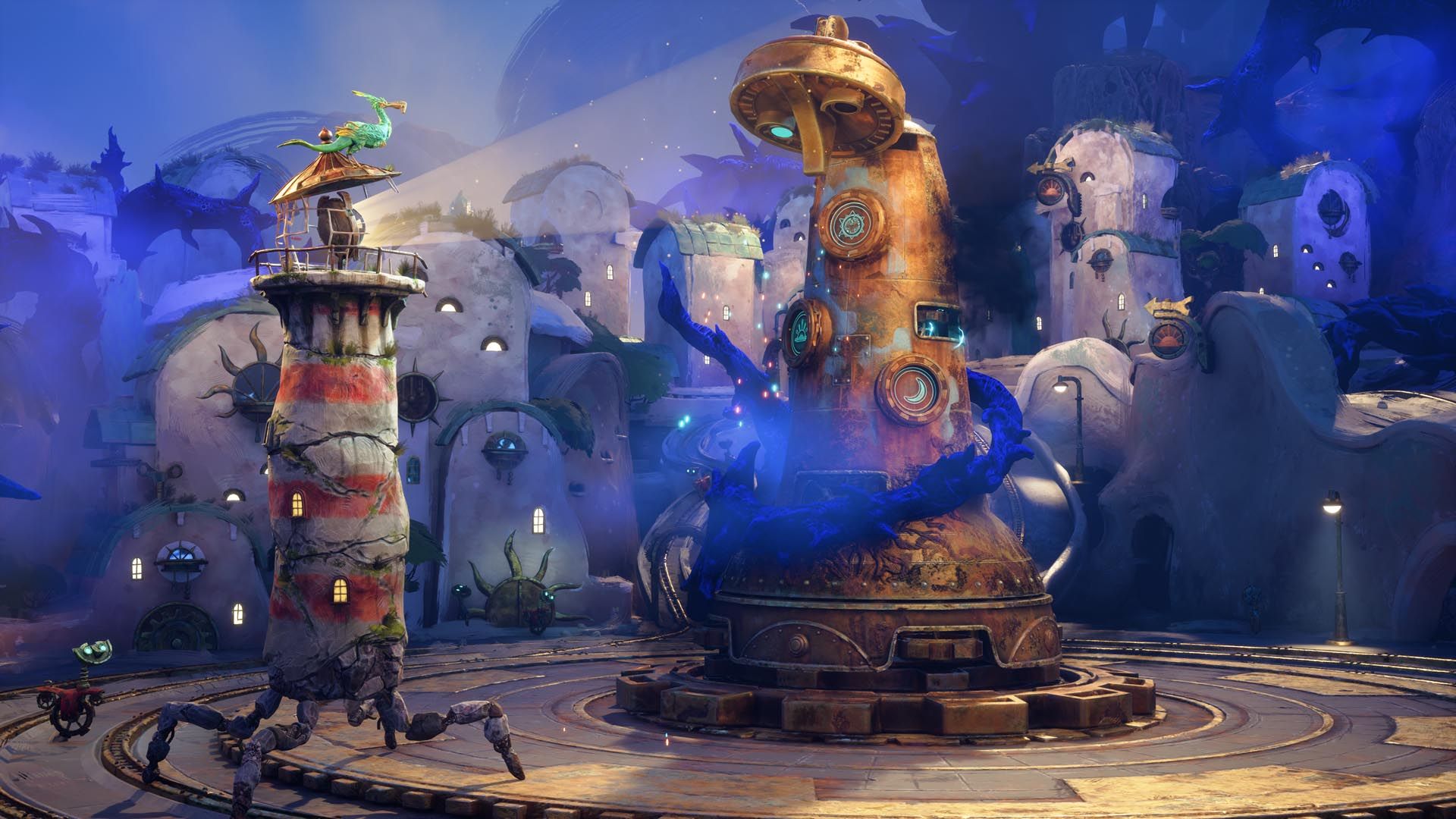
Petty also talks about the gameplay of Keeper, and how the adventure game slowly unveils more and more gameplay mechanics that build on top of previous ones. Things start out simple, with the player only being able to move around and aim the lighthouse beam to help out the bird companion, named Twig. However, there are also obstacles that require both the lighthouse and Twig to work together, since they’re both capable of accomplishing different things.
“The lighthouse beam has two main modes,” he said. “It has an unfocused and a focused mode. The unfocused mode is for exploring – as you shine it around, you might see little subtle shimmers or reactions in the world. Bigger transformations occur when the player focuses that bigger, brighter beam on things, and that’s often used to solve puzzles as well.”
“Twig rides along on the lighthouse and can do things that the lighthouse can’t. The lighthouse doesn’t have arms, only legs. Twig however, can directly manipulate things in the world. So what the player can do, for example, to solve a puzzle is use a combination of that light ability and Twig’s ability to pick up and collect things.”
The gameplay also will be quite dense, with the interviewer noting that there were 11 different puzzles, along with several more smaller interactions in the 15 minute demo that was showcased at Gamescom. Petty said that a lot of the gameplay will depend on the player’s own sense of exploration and how they interact with the world.
“There’s a lot of stuff for the player to discover along the experience,” he explained. “Some of those come in the form of environmental storytelling, some of those things are in the form of hidden interactions with the various creatures, and a lot of it is also just about the players’ interpretation of the games events, and finding meaning in the experience.”
Keeper is also designed with simplicity in mind, with few obstacles in the way of controls and accessibility being a major aspect of the title’s game design. Petty described the game as not being one about mastery over controls, but rather a fun experience to enjoy.
“We wanted Keeper to be an experience that wasn’t especially difficult to play,” he said. “It’s not a game about control, mastery or incredibly hard challenges, because we wanted this sort of unique, weird-but-chill experience for players to go on. We don’t have a need for all those buttons on the controller.
“And we also just have a really big set of accessibility features where people can map the controls to what they want. If they prefer to play with keyboard and mouse, or they play on a controller, we support both of them.”
Keeper is coming to PC and Xbox Series X/S on October 17, and is priced at $29.99. Along with being an Xbox Play Anywhere title, it will also be available on Game Pass on day one.