




![Kingdom Hearts Collection [I-III] Review – I See a Lightness](https://gamingbolt.com/wp-content/uploads/2026/10/kingdom-hearts-cover.jpg)
Kingdom Hearts Collection [I-III] is effectively the Dark Seeker Saga – it’s numbered games and connective entries in their most up-to-date iteration – bundled together in a single package. It assumes the benefits of modern hardware, with smoother framerates, sharper textures, faster loading, and a native Switch port.
But, a question looms: who is this collection for? Newcomers and Nintendo Switch players aside, the collection arguably doesn’t bring anything new. It’s a convenient way to experience the series, and as formative as Kingdom Hearts games are, if you’ve already spent countless hours travelling between Disneyfied worlds with Sora, Donald Duck, and Goofy, simple convenience might not be enough to sway you.
"But, a question looms: who is this collection for?"
And, after a week spent navigating the enormous retrospective, I thought of another problem. See, observing from a newcomer’s perspective, Collection [I-III] doesn’t explain which entries are essential, which are optional, and which are represented as movies. It expects you to know already. And, with a series-spanning story as famously convoluted as Kingdom Hearts, a clearer idea of which route to take would be appreciated.
Still, if you’ve never played a Kingdom Hearts game before – or, indeed if you fancy experiencing the saga again – you’re gonna start at the first game; where the magic begins. And, first thing to note with Kingdom Hearts I – or, Kingdom Hearts Final Mix, to take the named version included in the collection – is this is very much a relic of its time. Awkward camera transitions, enemy lock-on problems, clunky movement, poor signposting.
The list of age-related roughness goes on, but even twenty-four years after its release this imperfection is counteracted by the game’s undeniable charm. It feels like a Disney game discovering it can be an RPG, rather than an RPG decorated with Disney characters, that’s quite an endearing thing.
If you were raised by 90s Disney movies and Final Fantasy, the nostalgia alone will draw you in. Traverse Town, one of the game’s earliest locations, mirrors Disneyland itself, where strolling by quaint shops, a hotel, and a bell tower feels like the Magic Kingdom. Yoko Shimomura’s accompanying score is whimsical, memorable, and uplifting too, and it’s totally appropriate for the setting. Music, in fact, is consistently excellent throughout the series, showcasing a timelessness befitting the game’s themes if not its mechanics.
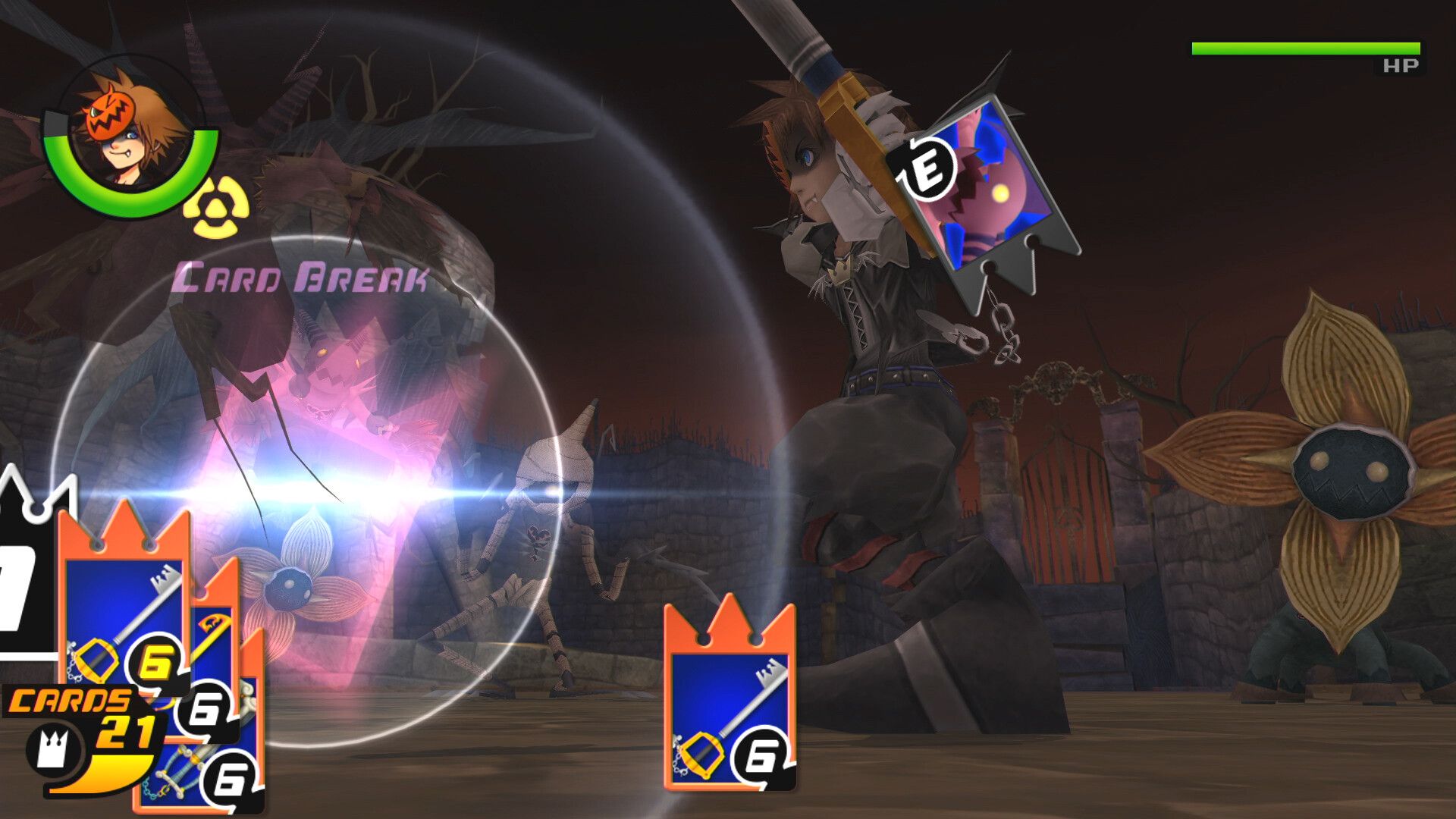
Kingdom Hearts Final Mix introduces you to the series’ combat, slowly evolving its foundation across the game’s many hours. To start, bashing the bottom face button executes combos, while earned abilities unlock dodge rolls, mid-air recoveries, and more. Then, magic abilities arrive alongside summons, Keyblade upgrades, and resources for party development.
"Moving onto Kingdom Hearts II Final Mix and those rough edges immediately feel better. "
Taking stock of the combat’s low skill floor at this stage is important as, if nothing else, playing through the entire retrospective illustrates how complex and kaleidoscopic the series’ fighting becomes, with a high ceiling to master. Still, the foundation remains the same. The brilliance of this basic combat is that it’s always accessible, with later entries showcasing considerably more depth.
Moving onto Kingdom Hearts II Final Mix and those rough edges immediately feel better. Controls are more responsive, animations are snappier, and the camera is mostly fixed (aided by wider combat arenas). Meanwhile, numerous quality-of-life additions like objective tracking, auto-refillable items, and a mini-map further smoothen the first game’s friction. Deeper combat action arrives too, with more commands, more abilities, and a nifty reversal trick adding a sense of style and expression to the many bouts your party gets involved in.
The biggest problem is pacing. Those combat extras take too long to arrive, with magic power in particular coming surprisingly late. Long cutscenes drag the opening hours, with a story setup that feels deliberately disorientating. But, importantly, the narrative starts working after the prologue, and there’s a confidence here that wasn’t present earlier. The worlds you visit – Mulan’s Land of Dragons or the Beast’s castle – become self-contained Disney stories.
Jumping straight to KH2 means missing some of the supposedly essential connective tissue, but its evidence of good narrative design that the early disorientation never feels overwhelming. Visually, too, the game’s HD treatment makes the PS2-era graphics look bright, clean, and vibrant, with Mulan’s mix of green and terracotta giving the landscape a storybook quality, fitting Disney without looking like a film recreation.
Kingdom Hearts II, to me, is where the series felt less like an experiment, and more when the execution started matching its ambition.
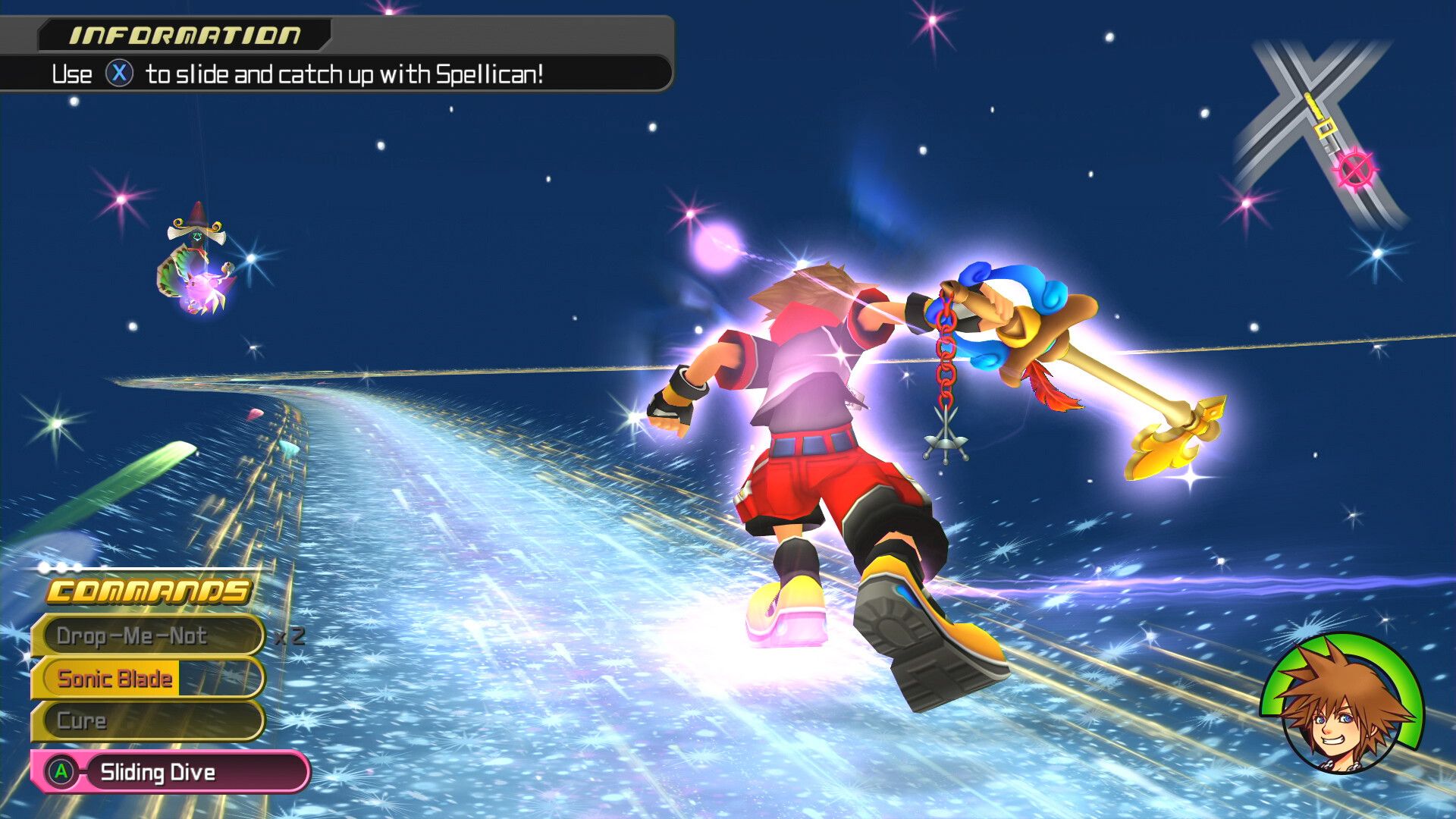
"However, some of the Disney charm is lost, which is a feeling I experienced in Dream Drop Distance HD and the conceptually dense χ Back Cover movie."
Between I and II is deckbuilding curio Re:Chain of Memories and contextually relevant 358/2 Days, the latter presented here in cinematics only. Neither are perfect, with occasional stuttering and texture issues illustrating 358/2 Days’ DS heritage, while Re:Chain of Memories’ interesting ideas never coalesce into intuitive gameplay. Following II is Re:coded, another cutscene compilation, and Birth By Sleep Final Mix which introduces Ventus, Terra, and Aqua, characters who grow in significance toward the saga’s tail-end.
Bridging into Kingdom Hearts III is 0.2 Birth by Sleep – A fragmentary passage – where the most expansive moveset yet for the series sees you double-jumping, aerial dashing, and generally defying gravity across noticeably more vertical world design pocketed with airborne enemies.
Rather than drip-feeding abilities, combat is immediately expressive, with blocks, combos, and magic present from the get-go. However, some of the Disney charm is lost, which is a feeling I experienced in Dream Drop Distance HD and the conceptually dense χ Back Cover movie. Kingdom Hearts III, though, is where the series’ characterful colour returns, and boy does everything explode.
KH3, and its Re Mind DLC, is the series’ transformation into cinematic blockbuster, with Pixar-like presentation, huge setpieces, and excellent character models making this the most spectacular entry yet. Combat is still the same foundation, but joining air mobility, magic, and auto combos are – deep breath – multi-target attacks, wall-running, links (like summons, only crazier), multiple extravagant Keyblade forms, fairground rides, and more.
In short: fighting becomes pure chaos. The series goes from Sora whacking a Heartless with a key, to a mushroom cloud of colour, sound, and movement. Yet, the underlying interaction remains approachable, which is testament to the original’s combat design devised all those years ago.
Pacing throughout is much improved too, with brisk dialogue and cutscenes understanding that momentum must be maintained away from gameplay. Initially, too, the complex lore doesn’t seem to matter. This begins as another compendium of Disney movie experiences, but narrative simplicity does give way to the series’ loftier concepts. While some might find the complexity off-putting, I still never found it to be too distracting.
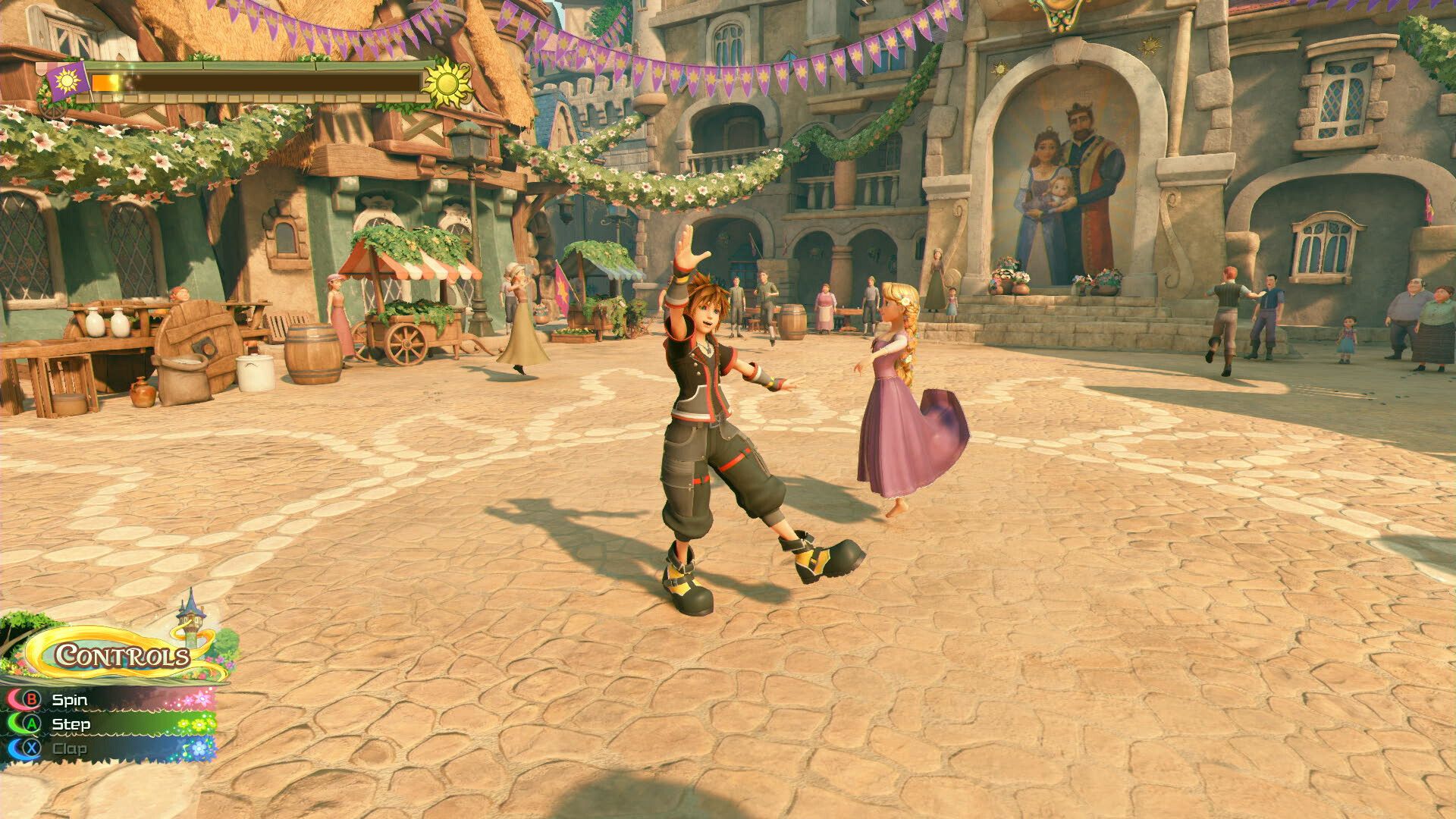
"Pacing throughout is much improved too, with brisk dialogue and cutscenes understanding that momentum must be maintained away from gameplay."
Whether you’re a newcomer or not, assessing Kingdom Hearts Collection [I-III] as a mostly complete anthology, a bigger question emerges: do its themes still matter? See, back in the noughties, its themes of friendship, identity, and memory were ideals wrapped around Disney characters and RPG conventions, with the unyielding desire to help people driven by relentless optimism. Now, in 2026, in a world becoming increasingly disconnected, these themes arguably feel more relevant.
Through certain character arcs, Kingdom Hearts argues that identity isn’t fixed, and that people aren’t defined permanently either through their mistakes or otherwise. With technology continuing to increase the distance between physical interaction in the real-world, Kingdom Hearts shows us that friendship has universally enduring appeal.
So, yes, while Kingdom Hearts Collection [I-III] doesn’t bring anything new to the table, this remains a series rooted by a strong emotional core. And that’s why, despite the convoluted mythology, the dated mechanics of its early titles, the strange side stories, and occasionally absurd narrative directions, a remarkably sincere belief consistently shines. People matter, and you don’t need to know every piece of Kingdom Hearts lore to understand that.
This game was reviewed on PlayStation 5.
The collection provides a convenient way to experience the Dark Seeker Saga. A solid combat foundation endures throughout, evolving into some truly spectacular fighting. Disney charm, Shimomura’s soundtrack, and vibrant art direction support an emotional core that still resonates.
The sheer number of entries, cinematics, and connective stories can make it difficult to know which parts are essential. From KH1’s camera to Re:Chain’s unintuitive deckbuilding, some mechanics from early entries haven’t aged well. Modern hardware benefits and convenience aside, there isn’t much here that’s new.