





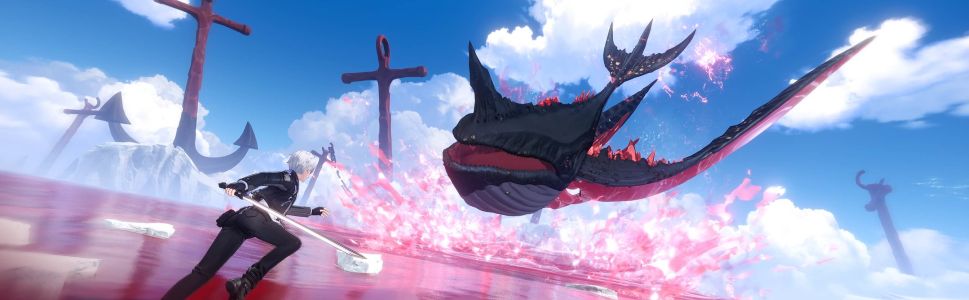
All hail the rise of the supposed “everything game.” While at one point meant to describe the likes of Grand Theft Auto (though the crime bent was ultimately the driving impetus), it’s since become synonymous with games where you can do pretty much anything.
“Synonymous” is stretching it, though. After all, Wuthering Waves, Genshin Impact and even Hotta Studio’s own Tower of Fantasy – the proverbial three-headed dragon meme given shape – are known for packing their games with content. Sure, their themes still ring true, but far be it from the odd cooking, racing, hunting, rhythm, tower defense and whatnot to slip through in (mostly) noncanonical events.
That said, NTE: Neverness to Everness, for all its flippancy, does have a bent. Urban fantasy, but not post-apocalyptic like Zenless Zone Zero. Instead, it opts for a more paranormal/paranatural playground, where Anomalies run the gamut. It’s all the BAC’s CSU can do to ensure they things don’t end up FUBAR, and if the destruction is any more widespread (and foggy), it’d have to be called Hellsalem’s Lot. It’s a potent combination – one where nondescript, near futuristic tech can meet mystical abilities that defy expectation – but does it have staying power?
"For all these hiccups during the main story quest, however, I was surprised at the writing for the side activities, especially when investigating different Anomalies and how you can select different tones for your final report."
As someone who didn’t like pre-overhaul Tower of Fantasy (and outright laughed at hearing how the post-overhaul went), I have to credit NTE for hitting the ground running almost immediately. Summoned to the scene of a Class 7 Anomaly – which irreversibly transforms those who so much as sneak a glance – you immediately control three members of the CSU, getting a feel for the controls while unleashing all manner of destruction. However, the star of the show is you – or rather, the protagonist, Esper Zero – who suddenly shows up and helps to stabilize the Anomaly by looking at it. Things take a turn when another Anomaly shows up, seemingly hostile to our hero.
What happens ultimately forms the crux of the story because, Zero doesn’t remember anything aside from being at Ghroth Island, which is in charge of detention, before suddenly hanging off a building in the middle of this storm. With several weeks having passed, they accept a binding contract with the CSU to investigate in the hopes that it will lead to more answers. It’s a mutually beneficial arrangement – one that sees them sent to Hethereau for some groundwork at an antiques store that serves as a front.
As far as premises go, it’s surprisingly intriguing, especially when you get a front row seat to containing a relatively low-level Anomaly. The writing, however, has left me a bit torn. On the one hand, it leans into the over-the-top antics and habits you’ve seen in ZZZ without going all the way (the plucky Mint is the most standout example). It’s packed with jargon from the get-go, but it doesn’t feel too overwhelming, steadily easing you into the world and balancing the seriousness with enough levity. The presentation also mostly helps, as it flows from cinematic cutscenes to in-game dialogue exchanges without skipping a beat, to say nothing of the jumps between paranatural spaces.
That said, some characters aren’t as interesting as others, and there’s one that tends to be fairly grating, bordering on an active detriment to the story as a whole. Certain conversations also feel like they’re lost in translation – like Zero revealing they never visited Hethereau before, leading to Mint…insulting the city? Even the MC seemed confused at that response. Overall, it won’t blow your mind, but the storytelling, quirks and all, complements the experience more than you would think.
For all these hiccups during the main story quest, however, I was surprised at the writing for the side activities, especially when investigating different Anomalies and how you can select different tones for your final report. The latter doesn’t really affect the gameplay in any meaningful way, but it’s a nice little detail to everything else.
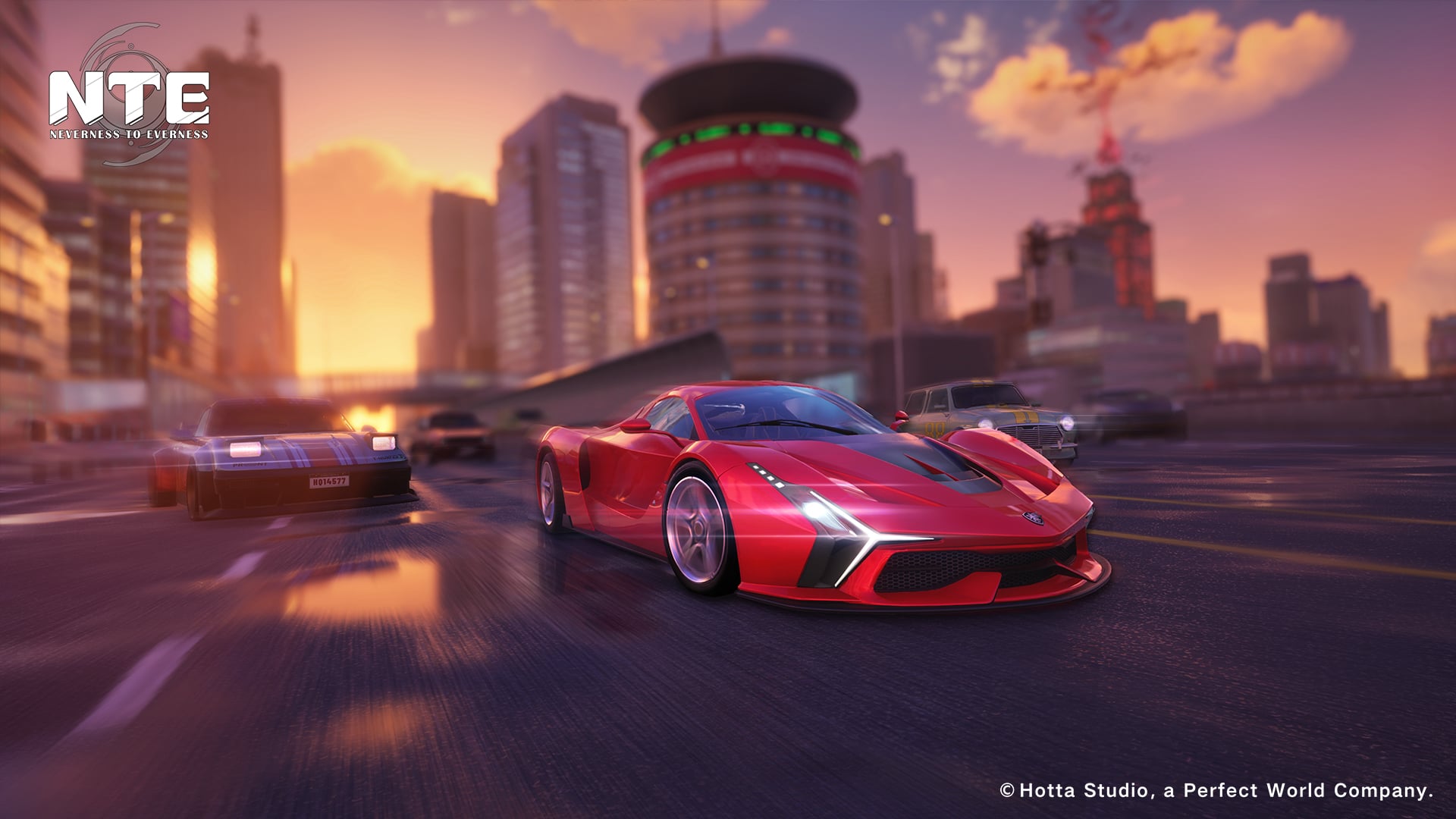
"Wandering around a city and investigating these occurrences is fun, and the generous amount of stamina ensures that you can scale entire skyscrapers without too much trouble (even if the climbing animations could use some more polish and less awkwardness)."
Speaking of details, Hethereau is brimming with them, though you shouldn’t expect anything on the level of a Grand Theft Auto. Yes, you can requisition cars from citizens and stop crimes, not to mention visit restaurants, earn passive income through businesses, buy properties, and even acquire different vehicles to cruise around in. But it’s all filtered through the usual game progression. Whether you’re investigating Anomalies, completing side quests, or maintaining the peace, everything awards currency and upgrade materials. Resolving Commissions contributes to your Hunter level, which offers even more rewards and subsequently allows for breaking past a character’s level cap.
It’s all standard fare – even the Console that every character carries, despite the Tetris-like method for arranging pieces, still relies on the set bonus system that you’ve seen many times over. This isn’t to say that NTE doesn’t offer its own unique twists (and I’m not just talking about screwing up, going to prison, and discovering all the ways to escape). Because Anomalies form such a core part of the gameplay loop, they can lead to some very interesting scenarios. You might wander into a floating object and fight off several enemies before claiming its prize. Street graffiti could transform into an attacker before bursting out of the wall for round 2. A box will constantly keep unboxing, building an impromptu tower that you need to scale to contain it.
Wandering around a city and investigating these occurrences is fun, and the generous amount of stamina ensures that you can scale entire skyscrapers without too much trouble (even if the climbing animations could use some more polish and less awkwardness). However, the “structured” side quests don’t really offer much depth – you’re kind of just going through the motions for the sake of rewards. It’s also admittedly odd to see the anime aesthetic collide with more realistic elements like cars, so much so that the latter feels out of place at times. Not that this is the most offensive thing about the aesthetics, but we’ll get to that. All in all, the open world, despite how gorgeous it can be at times, feels like it could do with some more cohesion and interactivity – the sheer degree of random NPC conversations and occasional events helps, but it’s only a start.
Combat is another core pillar of NTE, and on the surface, it can seemingly offer too much style and not enough substance. Which isn’t entirely accurate but also not completely wrong. You have the standard attack and combos, coupled with a special ability, an Ultimate, and a dodge. Perfect dodging ensures windows for counterattacks that can further break down an enemy’s stamina, and once fully broken, you have a brief window to pile on the damage. Parrying is performed by timing your blows as soon as an enemy’s glowing red attack lands, but simply using an ability while the red ring is active or swapping to an ally offers way more leeway. It’s pretty easy, admittedly, even if you’re working around cooldowns, but dodging everything else is still paramount.
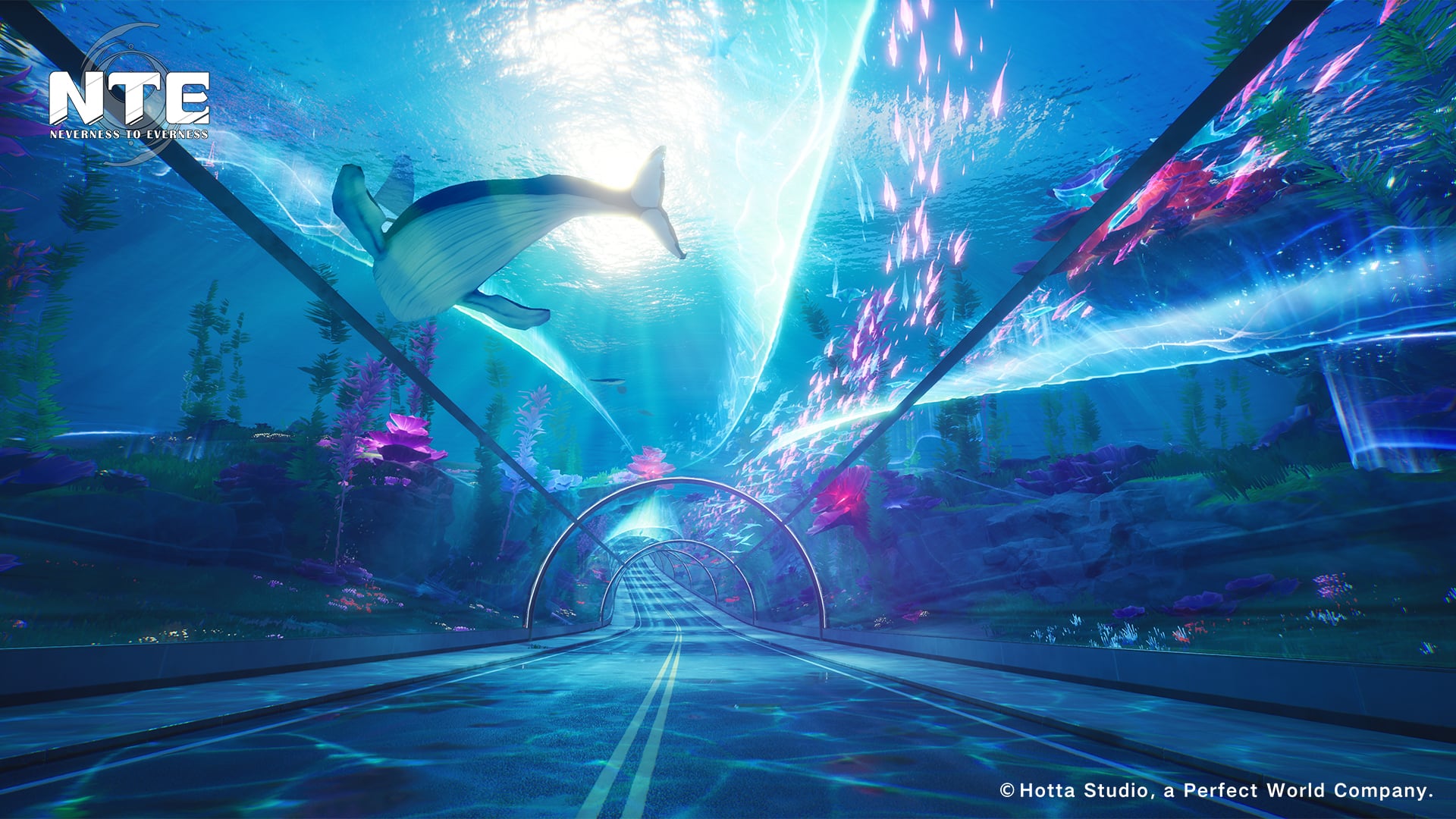
"As responsive as it feels, the skill ceiling for combat is nowhere near the level of Wuthering Waves or ZZZ (or as exciting). Nevertheless, it more than gets the job done while offering enough additional depth for those who care."
Further adding to this mechanic are the Elemental Reactions, which combine elements to trigger different effects. Damage-over-time, bursts, and increased damage taken from certain types over a period are some of the more straightforward reactions. However, you can also slow a target or activate a temporary mini-turret that fires seeking projectiles. You can even stack reactions to achieve effects like Charge or Discord, which can grant Ultimate energy and further break an enemy, respectively. And if that wasn’t enough, characters have unique passives to bolster certain reactions even if they’re not on the field.
Will much of this matter except in end-game content (which isn’t all that much of a focus in the grand scheme of things) or for min-maxers? Probably not, and as responsive as it feels, the skill ceiling for combat is nowhere near the level of Wuthering Waves or ZZZ (or as exciting). Nevertheless, it more than gets the job done while offering enough additional depth for those who care.
Duplicates (known as Awakenings) are perhaps more valuable in NTE because of Resonance Effects. Collect three and suddenly, Nanally’s skill levels increase by one; nab all six and that’s an extra 15 percent damage for her. While I kind of like how the system makes lower-ranked units more potent, it feels like a trap to entice players to spend more on duplicates. It may seem all nice now with the freebies and limited roster, but once the meta shifts, as it always does in these types of games, you’re suddenly dealing with the prospect of having to obtain multiple copies of a character instead of just one and their signature weapon.
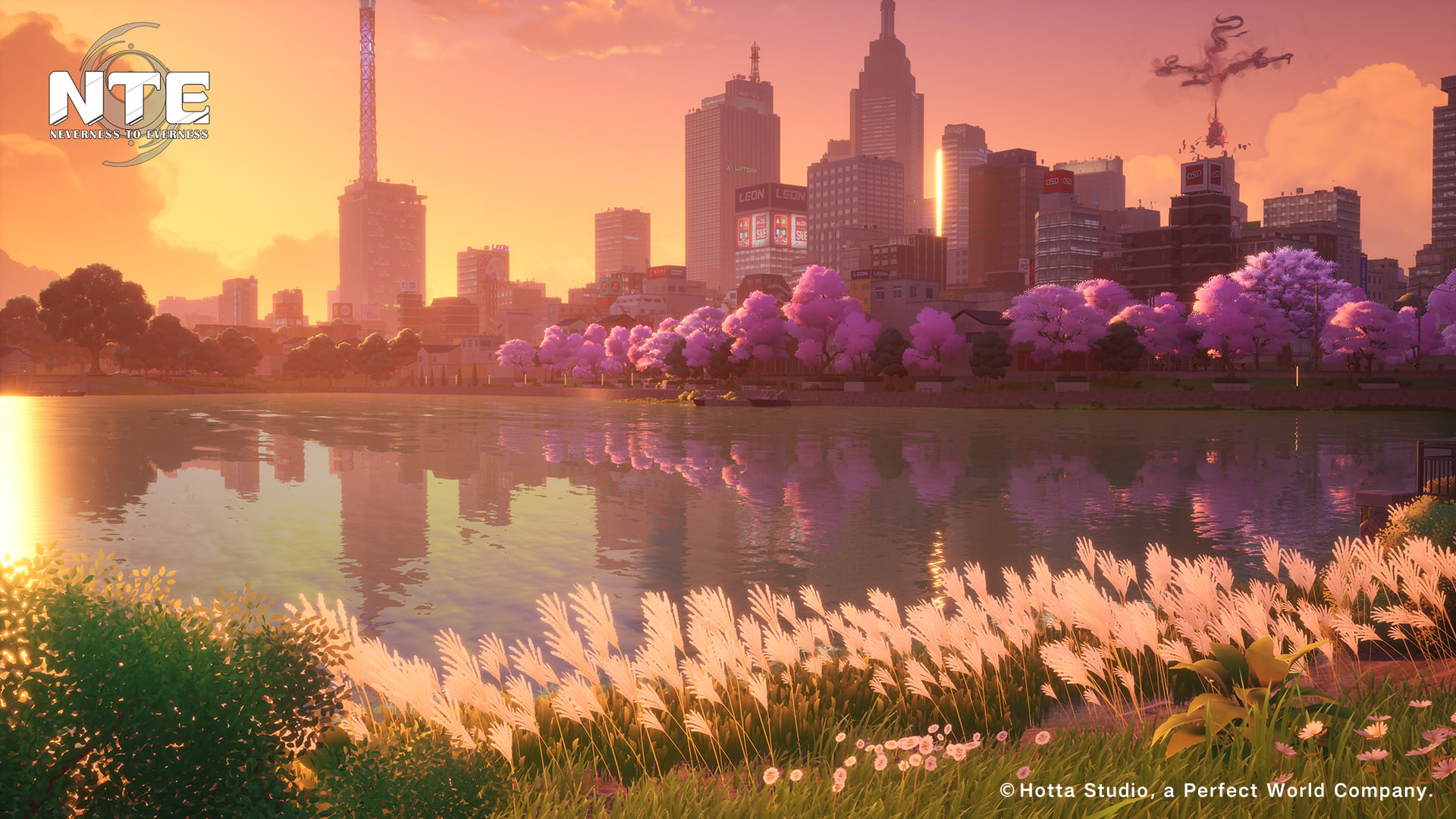
"The setting is unique and lends to some interesting activities; the overall visual fidelity and music are good (even with some very occasional performance hiccups); and the combat is solid."
As always, time will tell if Hotta Studio decides to lean in that direction. But if it needed to change anything, it’s probably better to focus more on its alleged AI-generated art, with at least one controversial billboard that feels less “inspired” by Weathering With You than outright AI-filtered. Various assets that appeared AI-generated were discovered during the closed beta, and even if the developer said it never used the tech for “core assets and character portraits” but rather for “atmospheric renderings” and “trial and error,” recent evidence isn’t too flattering. Even if it’s not outright confirmed, there are other issues and inconsistencies with the presentation, be it the lip-syncing for the English voices (which seems better in Japanese) or the choreography in certain combat scenes.
Despite all this, Neverness to Everness is far from the worst addition to the free-to-play action RPG genre. The setting is unique and lends to some interesting activities; the overall visual fidelity and music are good (even with some very occasional performance hiccups); and the combat is solid, even if it’s far from the biggest highlight. Notwithstanding Taygedo and potential AI-generated art – truly the two biggest hurdles in the history of gaming – it’s at least worth a try..
This game was reviewed on PlayStation 5.
Strong presentation values, from the environmental design to the surreal nature of its Anomalies. Solid, responsive combat with more depth than expected. Brisk pacing with strong world-building.
Can feel a bit too easy throughout the story. Combat skill ceiling is nowhere near the genre's best. Some awkward story beats, seemingly due to translation errors.