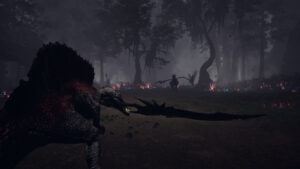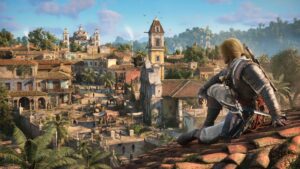







Between killing mechanical dragons, commandeering your own, piloting a mech, skydiving from floating abyssal islands, and finding out that Beloth the Darksworn indeed has hands, Crimson Desert feels like the experience that just keeps giving. Even if you pour over 100 hours into the game, there’s just so much to do, and it doesn’t hurt that the developer keeps adding new features, like new mounts. Later this week, there will be difficulty settings, so you can start a fresh playthrough and challenge yourself like never before.
But what if you’re looking for a break? What if you’re looking out at a grateful Pywel and wanting a vacation from being a good boy scout? As enjoyable as diving into a massive open world like this can be, there’s something to say about taking a vacation and enjoying something that’s, well, the opposite. Maybe I want to navigate something more linear. I could want the opposite of high fantasy intermixed with clockwork machinations. And maybe I want a different puzzle style that doesn’t require a rudimentary knowledge of shogi to pass.
Enter Pragmata, which launched last Friday and is currently at 97 percent “Overwhelmingly Positive” on Steam, not to mention an 86 Metascore based on a whopping 96 critical reviews. Given how long it’s been in development and the gameplay style, you would think the reception could have gone either way, but no. After Resident Evil Requiem, it is another winner for 2026. More importantly, however, it stresses how you don’t need a main quest that lasts dozens of hours to have fun. In the same vein, you don’t need so many different systems, tons of loot, or a vast open world structure to deliver a compelling single-player experience.
Now, don’t get us wrong. Crimson Desert’s myriad of complexities is one of its biggest strengths. There’s also something about the open world and how it consistently draws you in with discoveries. A cave with some ores to mine and a bandit camp may not immediately ignite the imagination, but discovering a ladder that leads underground into a chamber with various traps that also houses one of the best bows in the game? Or happening upon a massive floating Abyss structure, only to go up against a challenging fire-wielding boss? It’s those discoveries that give us life, and keep us coming back after all the mission dispatches, resource management, research projects, Abyss Gear rolling and min-maxing.
By comparison, Pragmata keeps things relatively simple, right down to the setup. As Hugh, you’re sent to a lunar base called the Cradle to investigate its lack of response. What follows is the discovery of destruction and mass killings by the AI, Idus. After running into an android known as Diana, the story becomes one of survival, from finding a way back to Earth to discovering what went wrong with the station.
There’s more to it than that, but it’s also refreshingly streamlined when it comes to themes of found family, where it’s not about blood but love and compassion. While Crimson Desert occasionally offers somewhat similar familial elements (because how else could anyone tolerate Yann?), Pragmata delves deeper into this. Hugh teaches Diana about humans, families, emotions, and life on Earth as a whole. It goes even further with the ability to talk to her in the Shelter and offer gifts, strengthening their bond (and that’s without getting spoilers about how the themes affect the overall plot). Even coming off all the different references, retcons, conspiracies, and twists in Requiem, it’s refreshing to have a compelling story that’s so laser-focused.
Then there’s the combat. There’s something about having dozens of moves available and chaining them together into stylish combos. Do I need to torture some random shmuck with an RKO into an Angle Slam into an elbow drop? Probably not, but I want to, and Crimson Desert feeds that urge like no other. The fact that there are Damiane and Oongka with their own move sets and dozens of unique gear, each with special abilities, just further allows for an array of fighting styles.
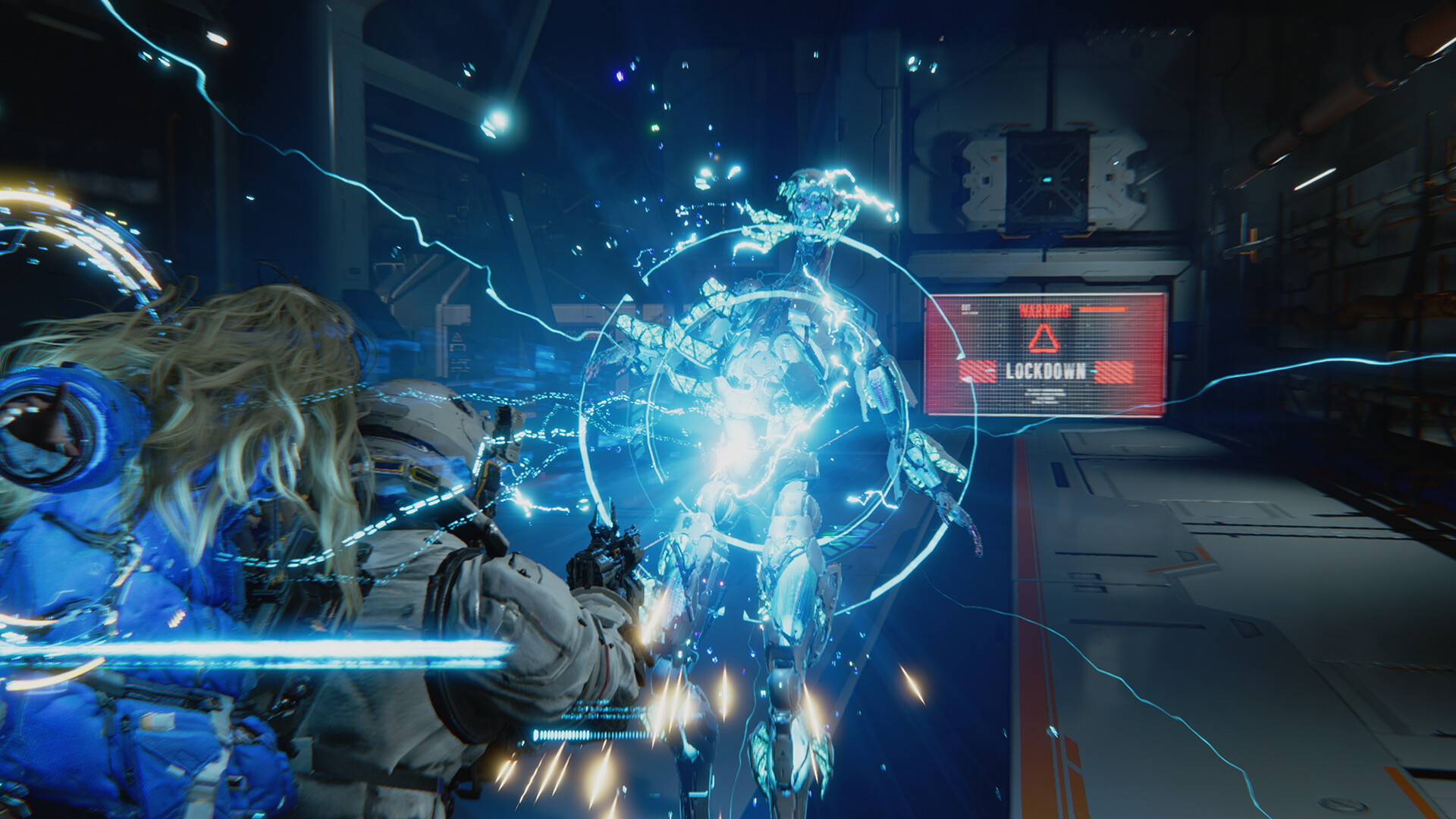
By contrast, Pragmata’s combat is simpler. You only have a handful of weapons, and only two are ever-present. The others break down from use, and no, that’s not foreshadowing at all, what do you mean? But it’s not a straightforward third-person shooter either. Enemies have defenses that must be hacked to expose their weak points, and that’s only possible with Diana’s help. While hacking, players need to navigate a maze, essentially forming a path towards the green goal. Meanwhile, Hugh needs to keep his distance, dodging as best as possible until the hack is complete.
And as disorienting as it may seem at first, it’s actually pretty straightforward once you’re attuned to the controls. Pragmata does mix things up, of course. New nodes will become available while hacking that offer different effects, from dealing more damage to the target to damaging several threats at once. You also need to be mindful of obstacles which can nullify a hack completely. As for Hugh, he can employ tools like a Decoy Generator to distract enemies to the Stasis Net for crowd-controlling enemies and locking them down, making it that much easier to dispatch them. The fact that enemies start adapting to your tactics, requiring the destruction of certain pieces to allow Diana to hack them, also keeps things fresh. So while it has a low-to-mid skill floor, the combat has a deceptively high skill ceiling, one that rewards you as much for your quick puzzle-solving ability as it does for smart repositioning and aim.

I’d be remiss not mentioning the level design. Yes, this is a fairly linear experience, where you’re traveling from one point to another. You’re not going to be discovering multiple ways to tackle the same objective or running through a massive sandbox. Which isn’t to say that the Cradle doesn’t have its share of secrets and detours, but the tight pacing takes prominence among all else. The fact that it can be finished in as little as eight hours and stretched to probably twice as much if you partake in the post-game Unknown Signal Mode means you can have it done and dusted before even hitting the halfway point of Crimson Desert’s campaign.
Of course, they’re completely different games, and the point isn’t to belabor either their flaws (and yes, some would criticize Pragmata’s story length). Instead, it’s to highlight just how great a palate cleanser the latter can be. Sinking dozens of hours into a single game gives you a sense of place, in a way; the fact that you’re immersed makes it that much more depressing to leave when all is said and done.
Yet, that same feeling means it wasn’t for nothing. Pragmata can convey that in a fraction of the time, which takes no small amount of skill, and delivers excellent production values on top. So even if it isn’t your break from Pywel, you can still count on it to lift those spirits and deliver an emotionally satisfying story before embarking on that next big adventure. And in this day and age, with so much media vying for your attention, that’s more than enough.
Note: The views expressed in this article are those of the author and do not necessarily represent the views of, and should not be attributed to, GamingBolt as an organization.