






Has it really been five years since the release of Returnal? Regardless, Housemarque is back with another third-person shooter set on an alien planet, as the odds are stacked against the player: Saros. Launching on April 30th for PS5, it packs everything that you’d expect from the developer, from intricate patterns of bullets that must be avoided to epic boss fights against bizarre foes. Here are 15 things you should know before diving in, starting with something that the developer isn’t typically known for.
Story
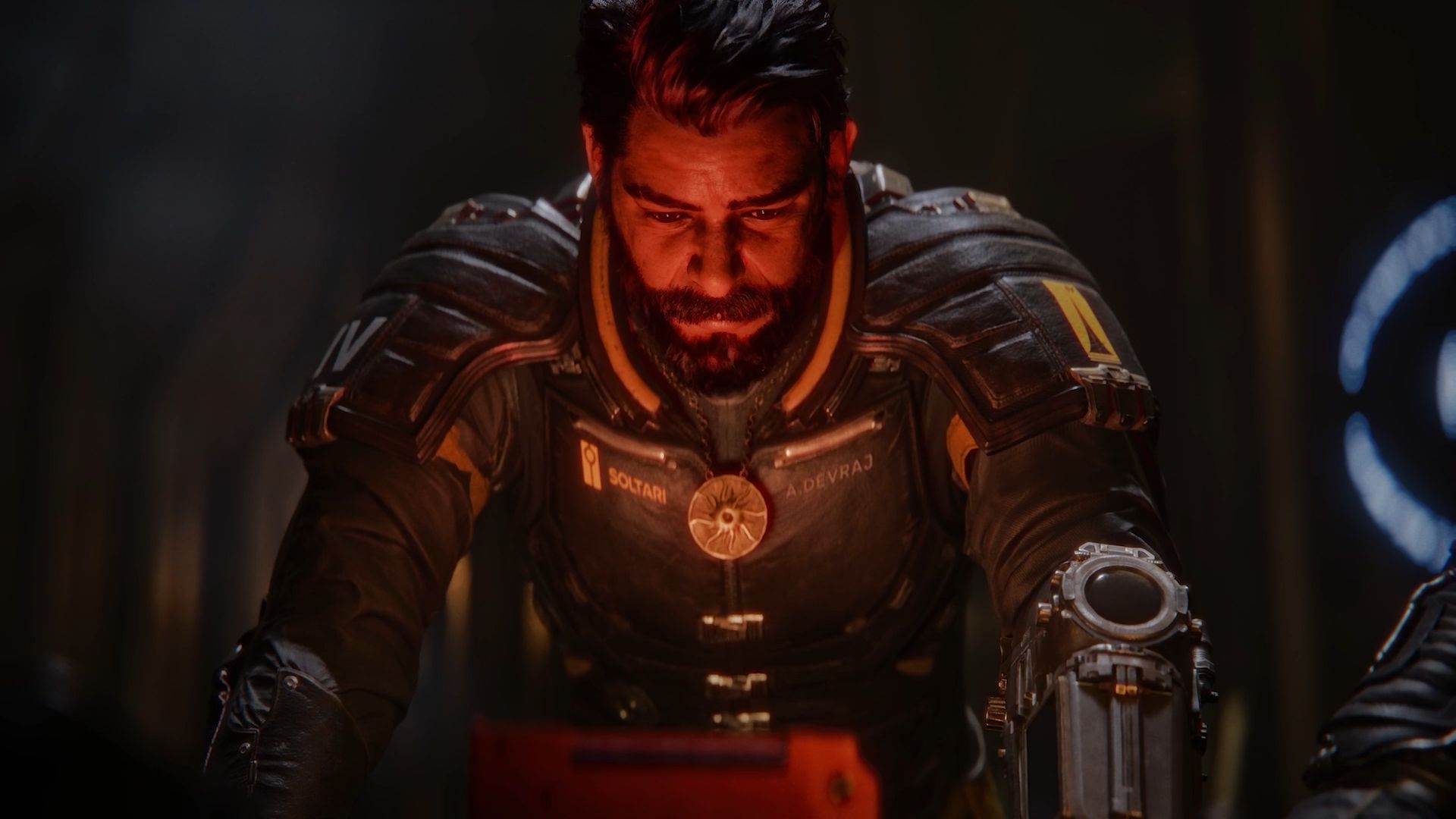
Touted as Housemarque’s “most story-focused game” yet, Saros is about Soltari enforcer Arjun Devraj (played by Rahul Kohli) and the crew of Echelon IV. They’ve been sent to Carcosa because of the resource Lucenite. Things take a turn for the worse, however, and the entire crew is now stranded on the planet, as it constantly reshapes, with seemingly no way to escape.
Carcosa
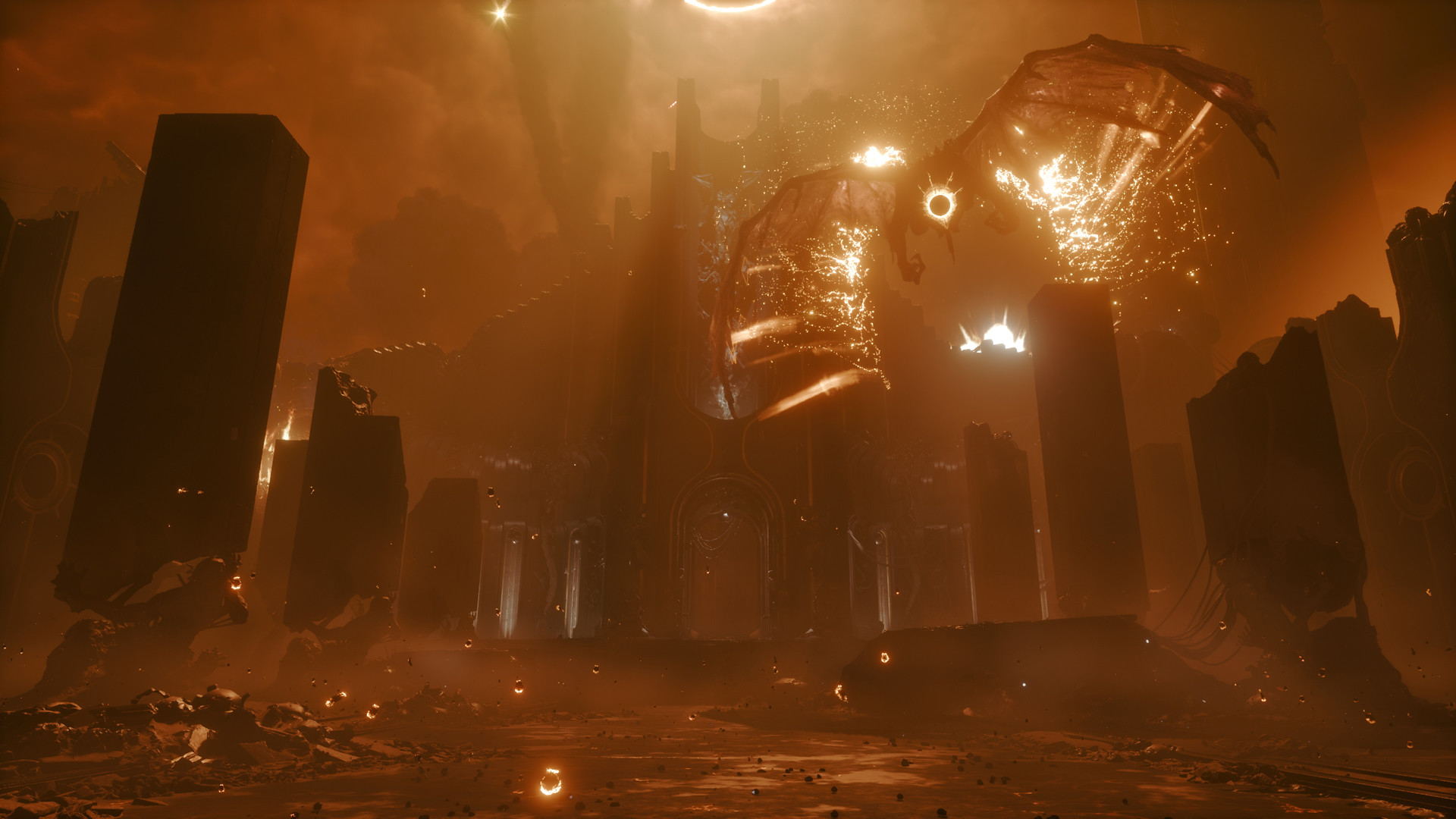
So what’s going on? The Eclipse, or rather, a solar eclipse where the sun “dies” and everything on Carcosa is twisted beyond repair. While Arjun is looking for a way out – and what happened to the previous Echelon crews – he also needs to deal with the demands of Soltari, his employer, and the mysterious civilization that seemingly existed way before. There are also hints that his own sanity is being affected with each run, as he stumbles further into the mystery of the Eclipse.
Characters
He won’t be alone throughout this journey, though. His commander, Sheridan Bouchard, rescues him from a crazed crew member, even if she’s unsure whether he can be trusted. Others have yet to be detailed, but don’t think for a second they’re always going to remain calm. As narrative designer William Shaughnessy explains, “The more the characters learn, the more the sense of dread grows. The friction within the crew increases, and each handles that in different ways.” To that end, you can expect way more cinematic cutscenes, although it’s possible to skip many of the interactions back at The Passage for the sake of diving back into Carcosa.
Spiritual Successor to Returnal
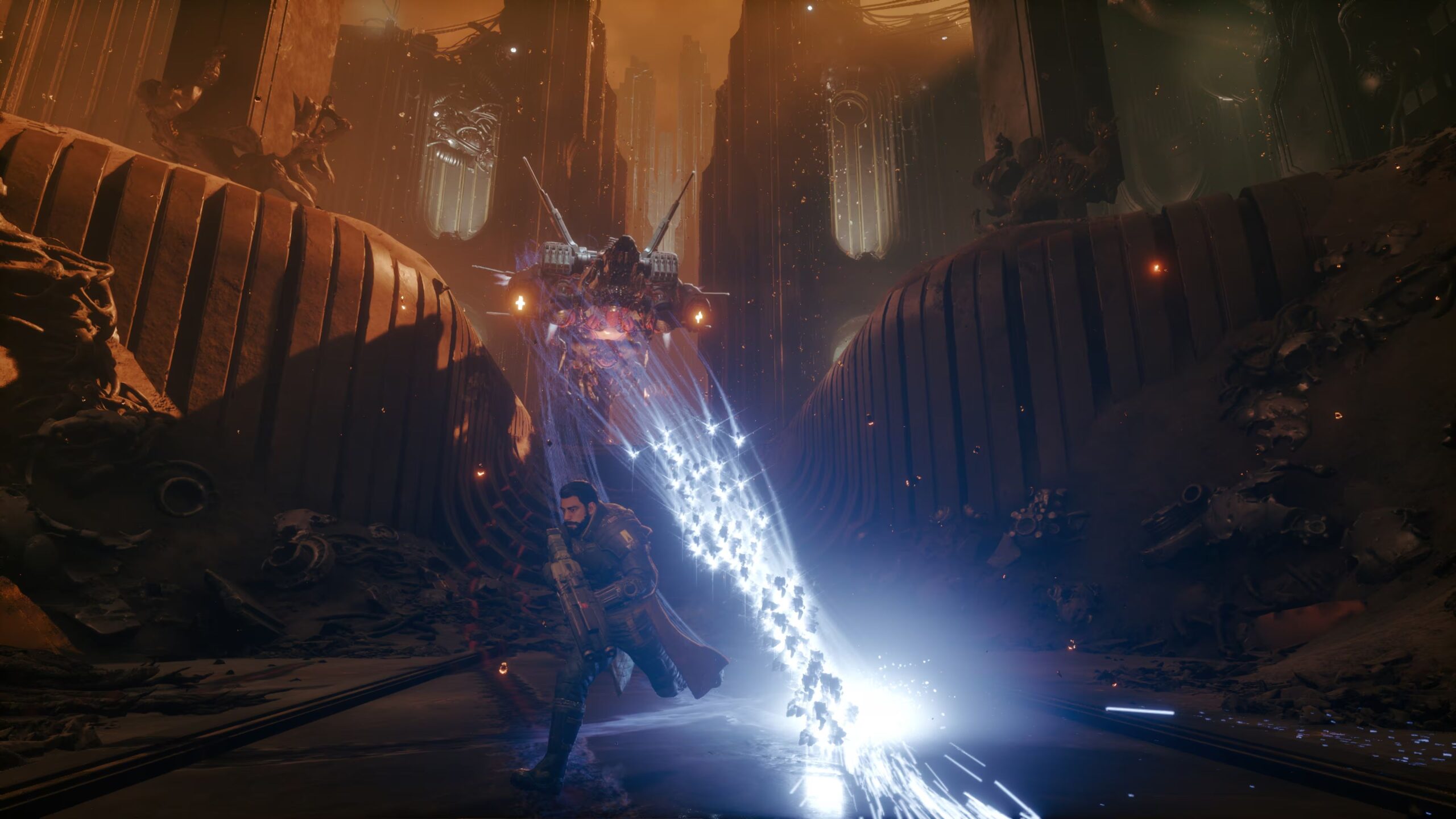
A cycle of death and rebirth, a mysterious shapeshifting planet where players must rush through biomes to discover answers – this may all sound a bit familiar to some players. That’s because Saros is a spiritual successor to Returnal, Housemarque’s last major title. How exactly their stories may connect (if at all) remains to be seen, but it even features Jane Perry, who played Selene, as Bouchard. Surely that’s not a coincidence.
Unreal Engine 5 and “Tentacle Tech”
Saros is developed on Unreal Engine 5, which shouldn’t come across as too surprising – Returnal was developed on Unreal Engine 4, after all. Stick with what you know and all that, but Housemarque is making some pretty notable improvements, including rigid-body particle simulation for bullets, enhanced environmental destruction and so on. It’s signature (and creepily named) “tentacle technology,” allowing for more “realism and unpredictability” courtesy of “hand-made animation with procedural systems.”
Rogue-Lite Gameplay and Returnal’s Influence
While it’s a “spiritual successor” to Returnal, Saros includes all of the essentials. Holding down L2 partially to activate alt-fire mode? Check. Accumulating Adrenaline by not taking damage and accumulating buffs like increased melee damage? Also check. Red shields that can only be destroyed with melee strikes? You know it. The story, characters, and setting are completely different, but it carries the same delightfully difficult gameplay loop.
Permanent Progression
So what sets it apart? It’s much more like a rogue-lite now. By accumulating Lucenite and interacting with the Soltari’s Primary in The Passage, you can now unlock permanent upgrades to improve Arjun’s stats, including Resilience (aka health), Command (or shields) and Drive (which affects Lucenite Gains). These go a long way to not only ensuring that Arjun survives through multiple excursions but that he’s becoming stronger with each run.
Carcosan Modifiers
Far be it from Primary to just let you walk into the world of Carcosa without any gimmicks, however. Before embarking on a run, you can select modifiers to change things up. Protections provide advantages, like easier perfect reloads, increased damage to hostiles, and so on, while Trials go the other way. Balance is the key here, but don’t worry – there are plenty of ways to up the difficulty, such as…
Second Chance
The other biggest change to the core gameplay is the new Second Chance perk. It’s unlocked fairly early on through Primary and gives Arjun the chance to return from death. No, not at the beginning of the cycle but immediately after taking a lethal hit, healing up most of his health in the process and clearing out any Corruption (which we’ll get into). It’s a game-changer in many ways, but if you’re seeking a greater challenge, there’s a Trial to turn it off.
The Eclipse
Far from a cycle that will annihilate Arjun at any chance it gets, the Eclipse is also risk/reward incarnate. By triggering it during a run, the world is completely changed. Think much more red hues, twisted audio, and just the overall impression that Carcosa is on the brink. Enemies become crazed, gaining new attacks, but you’ll also gain more Lucenite to invest in further upgrades. Also, tentacles. Many, many more tentacles.
Corrupted Weapons and Artifacts
Then there are the Corrupted weapons and artifacts. These offer unique benefits but with certain trade-offs – like a Corrupted Power Spike artifact that increases Command and adds to Power while reducing Drive. You also gain Pressure, which decreases damage if you’re low on health. Another option is increased Resilience for increased max health, but you’ll lose Lucenite whenever taking a hit.
Soltari Shield and Power Weapons
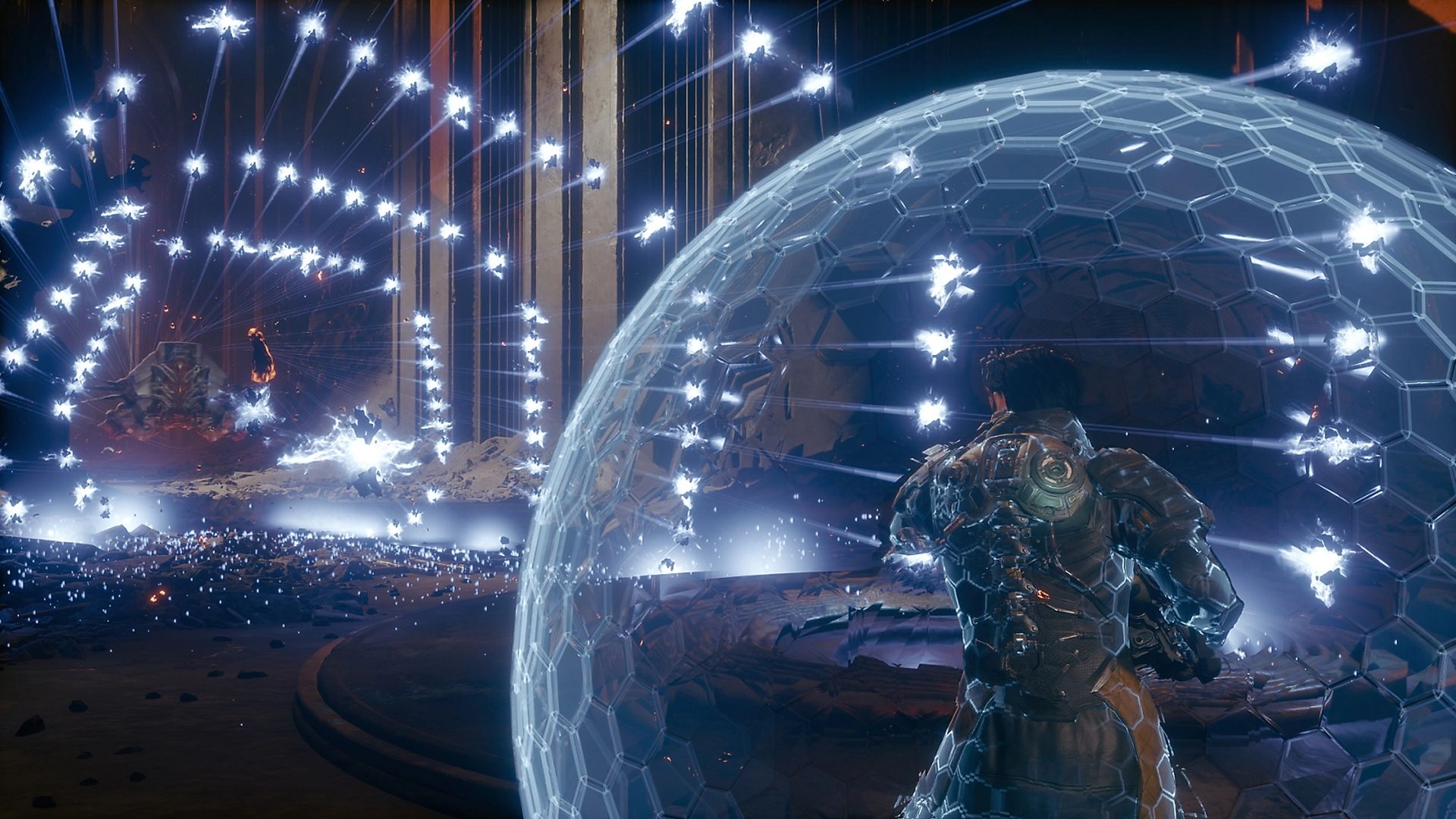
If you’ve played Returnal, you’re probably wondering what “shields” are. Arjun is equipped with a Soltari Shield, and it’s more than just defensive – it can absorb blue projectiles and fuel his Power Weapon. We’ve seen one thus far, Prominence, which deals explosive damage in a radius and scales on Power. So instead of constantly dodging projectiles, there are several that you would absorb instead for the sake of sending that energy back to an enemy. Be careful, though – it doesn’t last forever.
Corrupted Projectiles
Of course, this is a shoot ’em up, and such benefits don’t always come easy. During an Eclipse, enemies will shoot yellow projectiles that inflict Corruption. You can’t absorb these, and Corruption will reduce your max health. What you can do, however, is clear it by using a Power Weapon. So while that health won’t be immediately regained, at least you can heal it back up.
Runs in 4K/60 FPS on PS5
While a more detailed analysis is necessary, Saros runs at 4K/60 FPS on a base PS5. The footage thus far showed a satisfyingly consistent frame rate, even with dozens of effects and projectiles on screen at once. Housemarque has yet to detail PS5 Pro enhancements, but it wouldn’t be surprising to see it up the ante even further.
DualSense Features
The responsiveness of the adaptive triggers returns, providing a satisfying sound when alternate-fire mode is ready. You’ll feel it when Arjun dashes in a particular direction or when absorbing projectiles with the Soltari Shield, and much like with Returnal, loading times are near-instant thanks to the SSD. And then there’s the 3D Audio support, which is apparently recommended for experiencing the true dread of the Eclipse.