







The Resident Evil franchise is easily one of the most legendary ones in its class, spanning more than a dozen entries over a lifespan of more than 2 decades. It’s of course still growing strong, with multiple new entries in the pipeline that will be released over the next couple of years. But there’s always room to look back upon the glorious past, and this feature will run down Resident Evil 7.
But this isn’t your usual retrospective, but a re-review of sorts as we take a look at this game if it existed in the current market. It might have been a strong force in terms of what it did for the franchise and the changes it brought to the formula, but with this review, we will be eliminating those aspects and looking at the game in a vacuum, gauging how it stands in 2026.
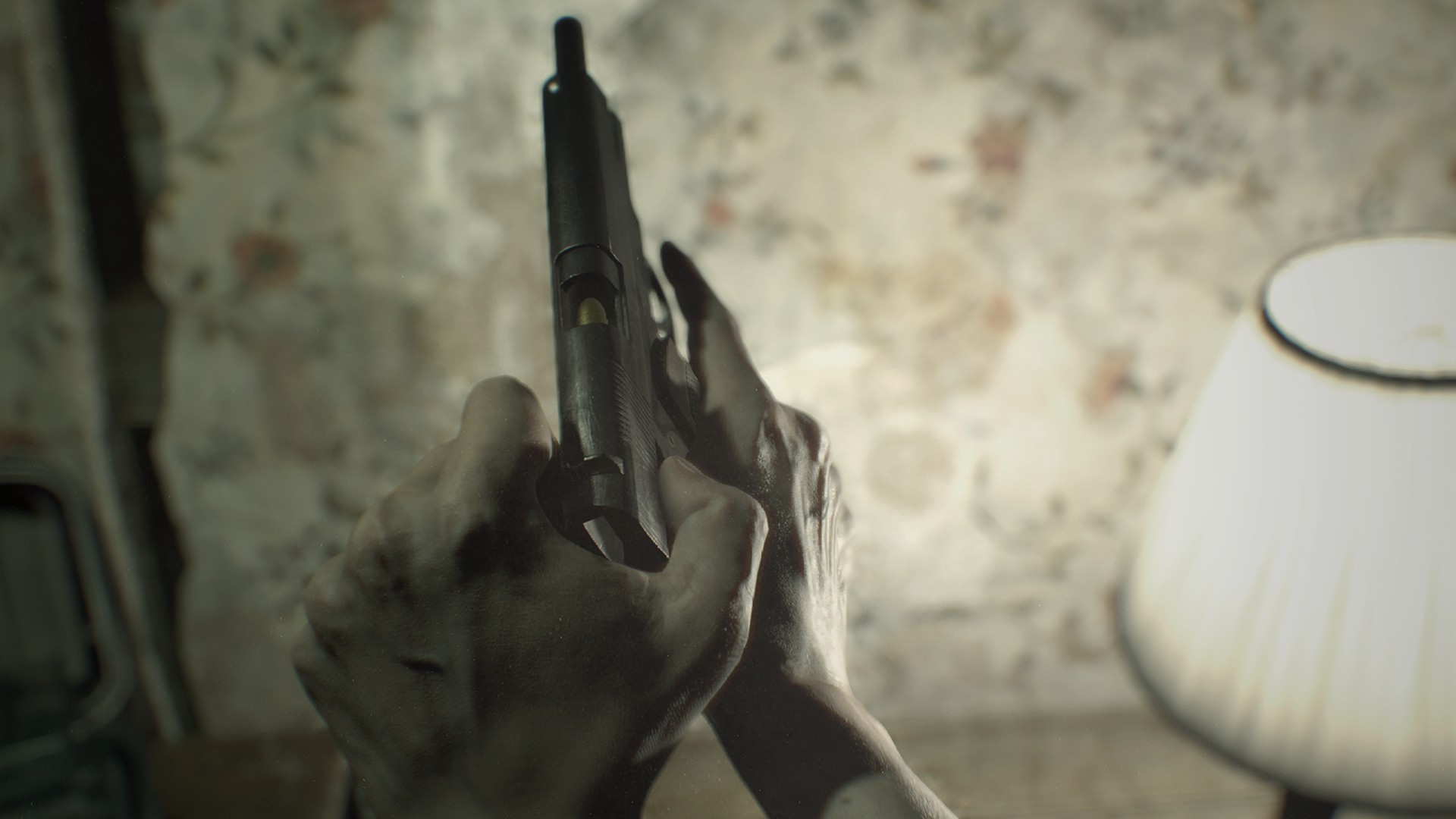
Resident Evil 7 transports players to the decrepit Baker Mansion, a rotting estate tucked away in the swamps of Dulvey, Louisiana. You step into the shoes of Ethan Winters, an unassuming and initially unremarkable protagonist searching for his missing wife, Mia, after receiving a mysterious message from her years after she was presumed dead. What begins as a seemingly simple rescue mission quickly spirals into a nightmarish ordeal involving the deranged Baker family and a sinister biological threat lurking beneath the house’s mold-infested walls.
The premise is quite familiar to anyone who has played a Resident Evil game, but it’s definitely effective, to say the least. The narrative feels quite personal with Ethan’s quest majorly revolving around his search for Mia, but in typical RE fashion, the latter half introduces larger conspiracies that bring up the Umbrella Corporation and escalate matters from a simple horror affair to a full-blown Biohazard.
But I’m not complaining about it, despite the writing not being something that will end up winning any awards. The dialogues can be corny at times, relying too heavily on horror tropes – but the focus on slowly and steadily building and maintaining that ominous vibe throughout the adventure is a merit that far outweighs the flaws stemming from such writing. The narrative progression is quite consistent, and the story will keep you hooked with certain twists and turns.

Talking about the minute-to-minute gameplay, Resident Evil 7 revolves around exploration, light puzzle-solving, and survival-focused combat, and this loop remains compelling even by modern standards. Ammo is quite scarce, which is obviously appropriate from a survival horror perspective, and healing items feel precious, which comes together to make every encounter feel intentional; you have to think twice before pulling the trigger. Unlike more action-heavy entries in the franchise, Resident Evil 7 never lets you feel powerful for long. Even late into the game, you’re just scraping by, improvising solutions, and managing limited resources. That sense of vulnerability is something many contemporary horror games attempt to recreate, but few sustain as consistently as Resident Evil 7.
The first-person perspective, which was controversial at launch, has aged remarkably well. In fact, viewed today, it feels less like a gimmick and more like a foundational design choice that modern horror titles have since embraced. The intimacy it creates is undeniable, and it fits really well within the deeply personal narrative context. Every narrow hallway, every sudden turn, every grotesque detail feels uncomfortably close. In the year 2026 when first-person horror is far more common – Resident Evil 7 still stands out for how deliberately it uses perspective to amplify tension rather than overwhelm the player with constant sensory overload.
The controls are quite responsive despite the game not being about conquering fast enemies in large arenas. Movement is intentionally deliberate, sometimes even slightly stiff, but that stiffness serves the experience rather than detracts from it. The slower pace reinforces the feeling of being trapped and hunted, but clever design elements like the quick turn do help players in being somewhat swift during chases or hectic boss fights. Inventory management, while occasionally clunky, reinforces the survival aspect without feeling excessively punitive.
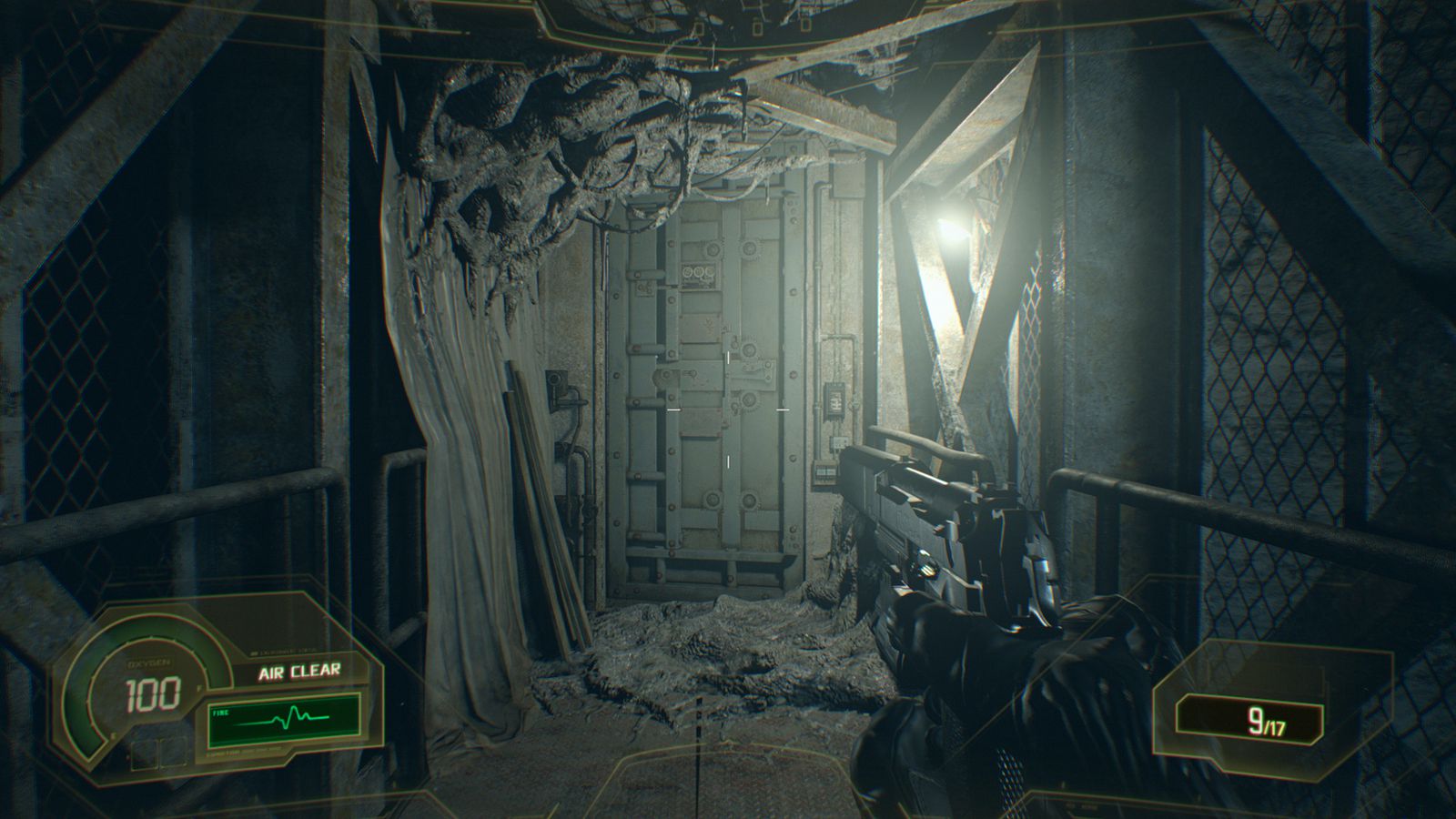
Enemy design is another area where the game continues to shine. The Molded, while not visually diverse, are used sparingly enough to avoid becoming tedious. More importantly, the Baker family themselves act as a persistent threat rather than ta raditional boss encounters, which also acts as a throwback to the original Resident Evil 2’s Mr X. Jack Baker’s early-game presence, in particular, is still one of the most effective implementations of an invincible stalker-style enemy. His unpredictable patrols, taunting dialogue, and ability to disrupt what would otherwise be safe spaces create genuine anxiety that few modern equivalents manage to match.
Talking about the combat in Resident Evil 7, the gunfights are deliberately awkward, tense, and frequently uncomfortable – and that remains one of its strongest design choices despite taking some time to get used to. The gunplay lacks the immediacy and fluidity of modern shooters with deliberate aiming, heavy recoil, and enemies that rarely react to being shot. Fights can end up being scraping affairs in closed spaces, often forcing players to weigh whether an enemy is worth engaging at all. This philosophy extends seamlessly into boss encounters, which function less as skill-based tests and more as endurance trials. Fights against the Baker family emphasize movement, positioning, and environmental awareness, often asking you to survive long enough rather than simply deal enough damage. While a few late-game bosses lean closer to traditional shooter mechanics, they never fully abandon the core idea that combat is a last resort.
This design philosophy naturally feeds into the game’s restrained approach to weapons. The arsenal is small, but each weapon has a clear role and purpose, reinforcing the game’s survival-first mentality. The handgun is reliable for pinning enemies at a distance, the shotgun offers instant reprieve in close quarters, and heavier options like the grenade launcher provide situational relief rather than sustained dominance. Ammunition scarcity ensures that even powerful tools feel temporary, and upgrading weapons improves efficiency without ever making Ethan feel overpowered. In a current market where horror games often blur into action shooters, Resident Evil 7’s measured, sometimes frustrating combat and limited weapon selection work in harmony to preserve tension, ensuring that fear remains the driving force behind every encounter.
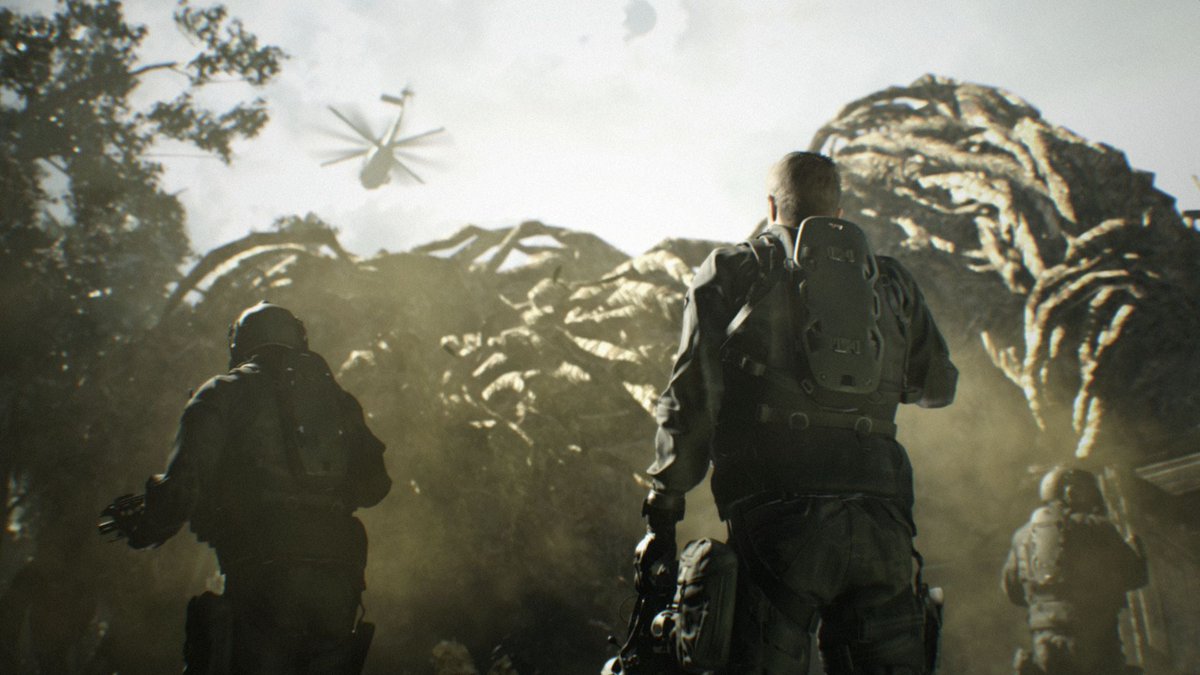
From a technical standpoint, the game has aged gracefully. The RE Engine was already impressive at launch, and its strengths are even more apparent today. Lighting remains exceptional, with shadows playing a crucial role in establishing mood. Texture work, environmental detail, and animation quality all hold up surprisingly well, especially on modern hardware. Character models may not match the hyper-realistic fidelity of current AAA releases, but they don’t need to. The art direction carries the experience, ensuring that visual immersion remains intact.
Sound design also deserves special mention. Audio cues are used quite generously, right from the distant footsteps echoing through the mansion to the unsettling ambient noises that constantly keep you guessing. The actual music is rather sparse, even absent entirely at times, which is a great way of achieving a constant fear of the unknown. When the score does kick in, it heightens moments of danger without overwhelming them. Even by today’s standards, Resident Evil 7 understands that horror is as much about what you hear or don’t hear as what you see.
Looking at Resident Evil 7 in isolation, it’s clear that the developer didn’t resort to cheap tactics like relying on nostalgia, banking on legacy characters, or fan service to succeed – but actually put in the efforts to make something worthwhile. In a modern landscape where horror games are homogenized in the face of overreliance on jump scares or cinematic spectacle, Resident Evil 7’s focused design feels supreme. Revisiting Resident Evil 7 in 2026 reveals a game that hasn’t merely survived the passage of time but has thrived. Even without considering its impact on the franchise or the genre, it remains a benchmark for survival horror design. The oppressive atmosphere, deliberate pacing, and constant commitment to building a sense of tension allow it to stand neck to neck with some the best modern horror experiences available today.
There are minor flaws, particularly in its latter half and occasional pacing dips, but they’re easy to forgive when you have such great merits and a strong focus on coherent design. Resident Evil 7 is standing proof that strong fundamentals age far better than flashy trends, and I would rate this experience as 9 out of 10. It’s an excellent game that you should check out if you haven’t already, and it’s an experience that you would appreciate more on subsequent replays.
Note: The views expressed in this article are those of the author and do not necessarily represent the views of, and should not be attributed to, GamingBolt as an organization.