






Following layoffs that allegedly gutted id Software’s engine development team, a new report indicates that the studio will continue to use the id Tech engine and that Xbox has no plans to force it to use Unreal Engine instead. According to Windows Central’s Jez Corden, the idea that development on id Tech is “effectively on ice” is false.
Citing sources, Corden says that there is still plenty of id Tech expertise at id Software. Along with this, Wolfenstein developer MachineGames, which uses the engine for its own titles, also has plenty of developers who know their way around the id Tech software stack. Microsoft itself further backed this up with a statement. “There are dozens of people working on id Tech across multiple locations. Reports that there’s only one person left in Texas are inaccurate.”
As for rumors indicating that id Software’s headcount may have shrunk to worrying levels, Corden notes that these are also false. Rather, the studio’s development team is said to be “roughly the same” as it was during the development of 2016’s DOOM.
Rumors from earlier this week indicated that around 90 employees at id Software were affected by Microsoft’s company-wide layoffs. Along with “most (if not all) coders,” the layoffs were also said to have “decimated” the studio’s QA department quite hard.
The idea that Xbox might hang on to id Tech despite layoffs at id Software first popped up earlier this week. A report noting that the layoffs included the principal engine programmer, director of engine technology, and senior engine programmer, among others, claimed that Xbox wants to continue using id Tech since it has been an invaluable part of the development processes at MachineGames as well.
The studio last used a fork of id Tech 7, dubbed Motor, for Indiana Jones and the Great Circle. MachineGames has also used older versions of the engine in the past for its various Wolfenstein titles, with 2017’s Wolfenstein 2: The New Colossus built using id Tech 6.
The first iteration of the engine emerged back in 1996 for the development of the original Quake. Besides being the first truly 3D engine built by id Software at the time, further iterations made it an even more capable engine. The version used for Quake 3 Arena, for instance, was also used by the developers of the original Call of Duty.
It was also forked by Valve to create its GoldSrc engine, which powered not only the original Half-Life, but also older versions of the popular PvP shooter Counter-Strike. Valve would eventually replace it with its own proprietary Source engine.
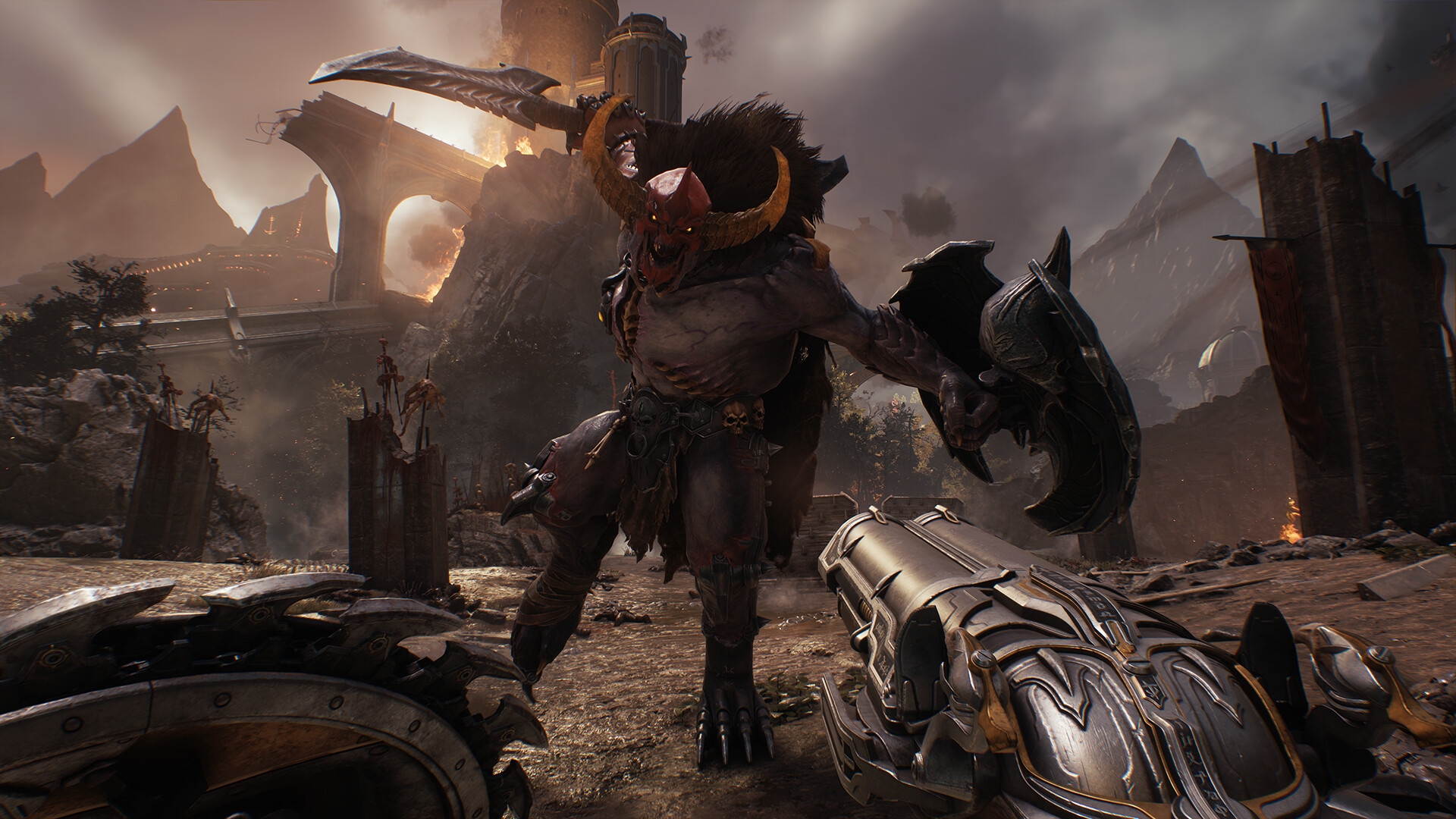
The most recent version of id Tech was used for the development of DOOM: The Dark Ages, and is the first iteration of that required hardware-level ray tracing support.