





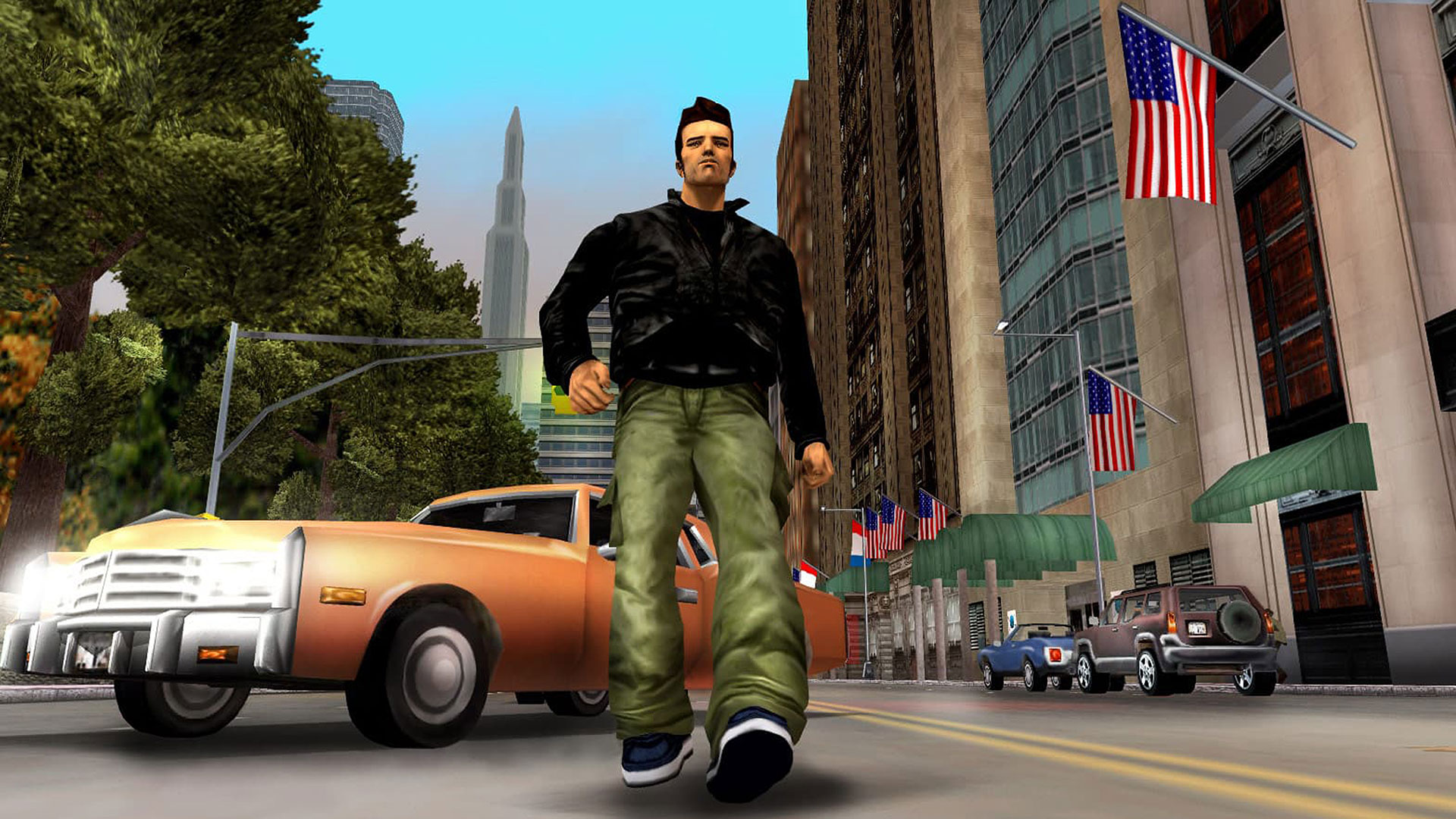
When it first came out, Grand Theft Auto 3 was a major release, especially since it revolutionized open-world games. However, according to Rockstar Games veteran Obbe Vermeij, its development was a bit of a mess. In a social media post looking back at the iconic game, Vermeij has spoken about how “For most of development, GTA 3 was in a sorry state.”
Vermeij describes the host of technical problems affecting the project, including poor frame rates, constant crashes, and the map even having several holes that would cause players to fall through. However, he noted that it started coming together in the final six months of development before the title would then be shipped. This includes the team working hard to get the game’s frame rate up to 30 FPS.
“It crashed frequently, the frame rate was terrible, and the map was full of holes. Only in the last six months did everything come together. For the longest time, it looked like the frame rate was going to be 20 fps. Only in the final months did we manage to hit 30.”
Offering further insight into the state of the studio at the time – before it changed its name from DMA Design to Rockstar Games – Vermeij revealed that GTA 3 was initially a small project being worked on by Leslie Benzies and Aaron Garbut, while the rest of the team worked on a new isometric entry in the franchise that would be set in Miami. While this isometric game would get canceled, DMA’s new parent company – Take-Two Interactive – gave the green light for GTA 3.
“Everything was written from scratch. Only two people worked on both GTA2 and GTA3, and no code or art from GTA2 was reused. The way we worked was organic. People would come up with ideas for missions, and we’d just try them. If they were fun, they were in. The story was secondary. In fact, the opening plot involving Catalina trying to kill Claude was added well into development.”
Even the early concepts of GTA 3 were quite chaotic, with Benzies seemingly moving missions from one character to another. Things only started getting solidified once the voice acting was completed. This chaotic nature of the development could even be seen in the final release of the game.
“You sometimes come across locations on the map that are more detailed than you’d expect. Chances are there used to be a mission contact there that got moved elsewhere.”
Interestingly, Vermeij also noted that the studio wasn’t too sure about GTA 3’s potential success due to “a disappointing showing at E3 in May 2001” with people not being interested and some even thinking it was too violent. “It had an OK launch, but sales never tapered off.”
In hindsight, Grand Theft Auto 3 would have a lasting impact on the video games industry, and while Rockstar made its own follow-ups in the form of Vice City and San Andreas, other studios were also trying to emulate the success with their own open-world projects like the True Crime franchise.
“The thing I remember most is the camaraderie. In a small team, everybody relies on each other, and everybody has a lot of input. Most of us were young and had only recently moved to Edinburgh. We went to the pub together. It felt like a group of friends who happened to be working on a project together.”