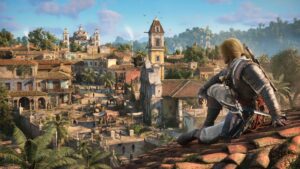







It’s hard to get Where Winds Meet out of my head, despite diving into a bunch of other titles in the days since its release. I found myself yearning to get back to my adventure, itching to get further with my mastery of the dual blades while solving a few interesting mysteries that I’d left hanging since my last session with it.
Mind you, I’ve spent a little over 100 hours with it. That’s more than enough for most games to show you everything they have to offer, aside from a few notable exceptions. But Where Winds Meet makes me feel like I’ve barely begun to scratch the surface, no matter how diligently I pursue every thread of content it throws at me. But what prompts such a feeling? How does a free-to-play title manage to take the fight to big-budget AAA releases?
I’ve got a few ideas, and quite a bit to say about them. Let’s get started.
The Road Goes Ever On and On
One of my favorite things to do in my early hours in a new open world is to try to get from point A to point B while observing how many distractions try to deter me from my attempt. I’ve found it to be a good indicator of how much content is packed into a game’s map. Where Winds Meet delivers those distractions in spades, with so much to do for your character, it’s hard to believe one single individual could live through all that.
But many open worlds in the past have nailed that feeling over the years, only to falter when it comes to the quality of content that takes you off the beaten track. Things often devolve to repetitive activities or quests that might not be as well-written as the main campaign they’re trying to supplement. It’s a real shame when that happens, but an absolute delight when it doesn’t, with The Witcher 3: The Wild Hunt being a great example of the latter. That’s a title whose quality of side content has been widely praised, a tradition that CD Projekt Red continued in Cyberpunk 2077.
Worlds like that are automatically set up for success, having their players so invested in their journey that the hours speed by unnoticed. Both of the titles I’ve mentioned are ones that rank very high among games I’ve played for too long. When the story and side content match each other in quality, it’s a game that’s going to take a while.
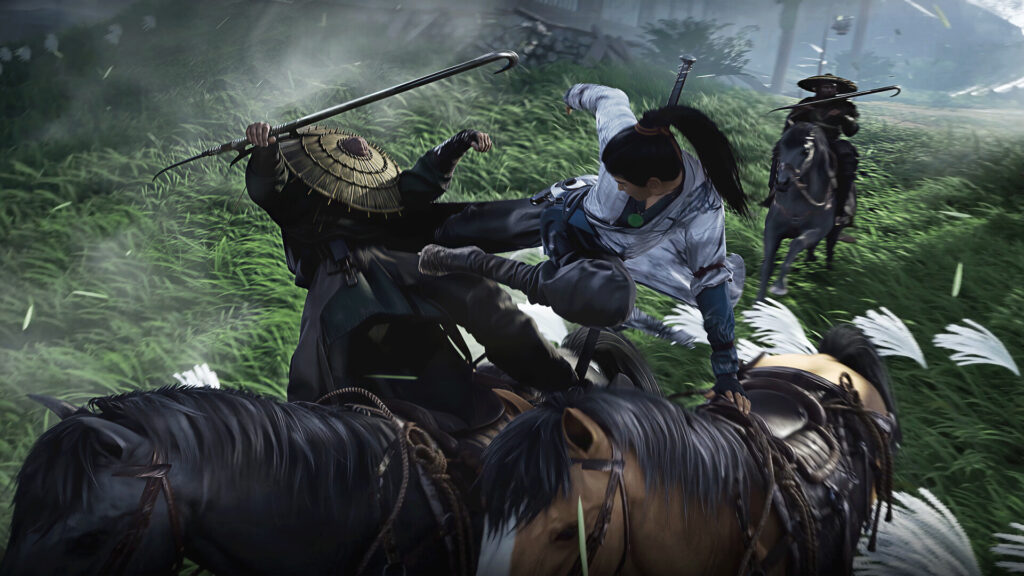
Where Winds Meet is a rare addition to those ranks, and since it actively rewards going out of your way to dig up more loot, lore, or secrets, it almost makes sense to play your character as an absent-minded wanderer who lets the wind carry them to their next destination, your wits and blades capable of helping you sail through any adventures that come your way.
With the world’s story merrily tucked away within its confines, an approach the developers were quite enthusiastic about during the game’s pre-release coverage, exploring it became all the more attractive. The lore on offer is surprisingly deep, and I found myself diving into descriptions and any readable material I found. It immediately brought Elden Ring to mind, considering how there’s a perfect balance between obscurity and clarity in the lore you discover, leaving just enough room for interpretation for things to be interesting.
With a lot of quality content packed into a world that’s so well designed and visually well-presented, it’s no wonder that my time exploring it in Where Winds Meet has been so immersive, addictive, and just downright entertaining. It was a world I lost myself in, keen to indulge in any activity I could find, one of which brought me to my next favorite part of the game.
The Art of Combat
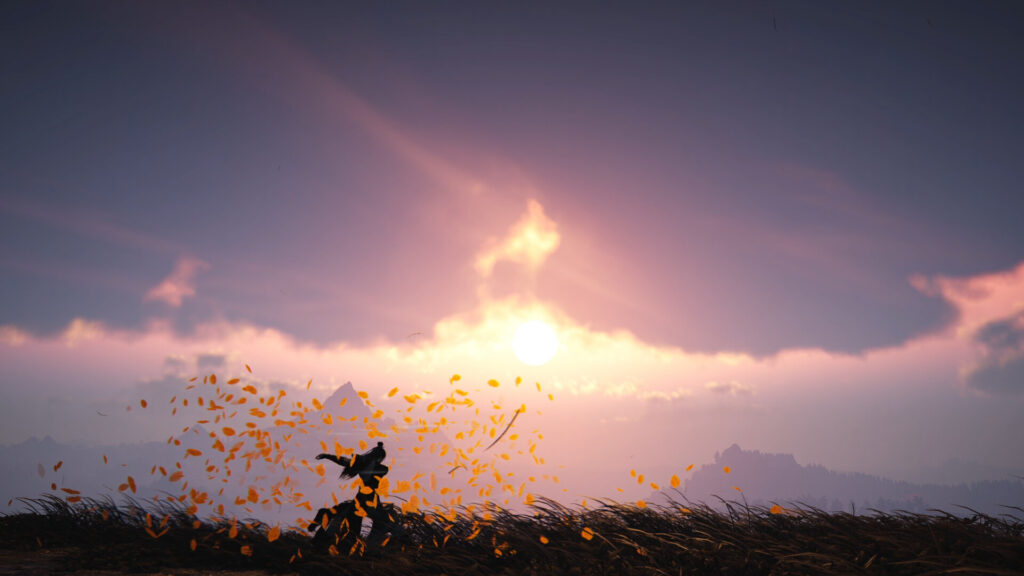
With an enthusiasm for the game’s combat system that equaled what was shown towards the world’s lore, the developers certainly set the bar high for the game’s combat. Early previews were similarly positive about it all, and I couldn’t wait to dive in and see what the fuss was all about.
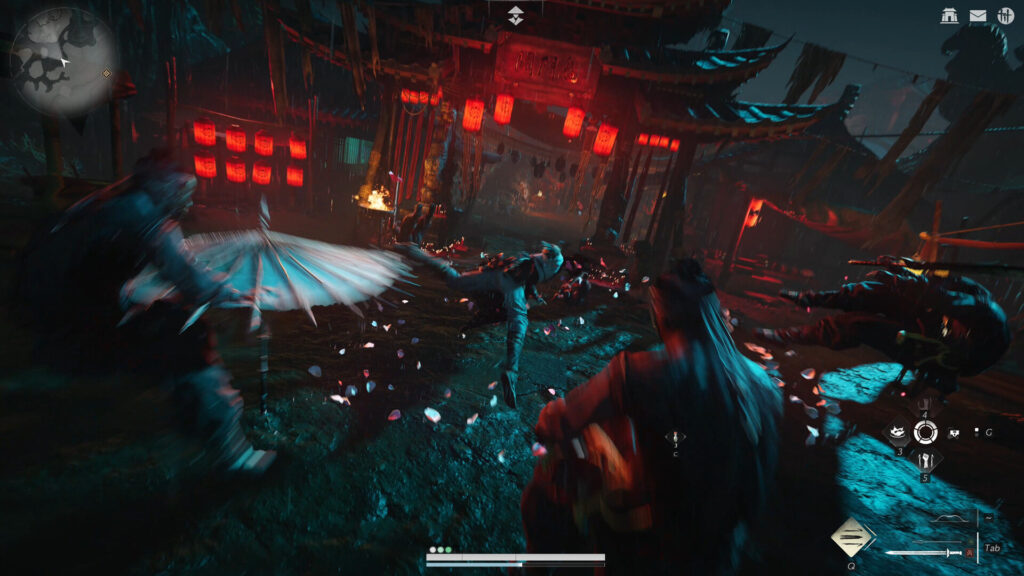
A hundred hours later, I’m still craving the mechanics that make this game’s combat as amazing as it is. It feels like Everstone distilled everything good about the best melee combat systems in recent years and created a blend that feels fresh yet familiar. It’s so easy to get a grip on the controls, and yet, every battle is a deadly dance where you give as much as you get, trying to get the upper hand by using your loadout with tactical efficiency.
It’s a system that references so many great fighters in modern gaming. The parry window and animations are quite reminiscent of Sekiro, while the weapon animations and pace of each fight take me back to titles like Nioh and Rise of the Ronin. They aren’t copied, not in the slightest, but are tuned to match the frenetic pace that those titles offer, allowing the game’s combat to be among its biggest draws and a solid reason to put in the hours to get even more out of it.
It helps that the game’s enemies don’t hold back, coming at you with ferocity that you must then use against them, channelling your inner Sekiro parrying their rage-fuelled attacks to throw them off balance and unleash a flurry of blows that are so well-animated they really sell the wuxia fantasy that the game prides itself on.
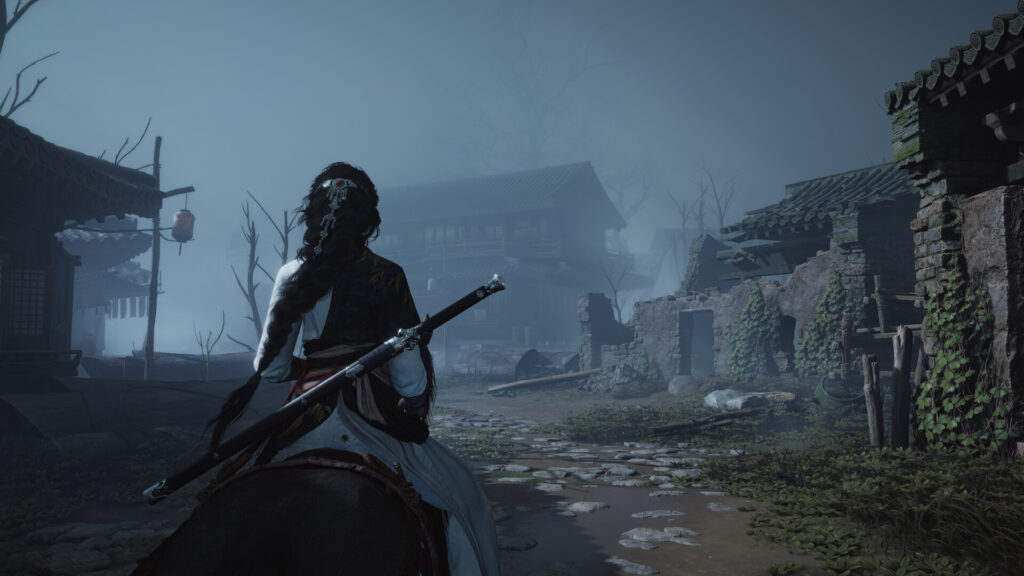
Animations, for both the player and their opponents, are sublime. Each weapon comes with its own pros and cons, and it’s so much fun to experiment once you get close to the endgame and have the resources to fork out for quick upgrades. As somebody who likes to explore a game as thoroughly as possible while constantly tinkering with my build, Where Winds Meet felt like a love letter.
But of course, that’s just the PvE single-player mode. Take things online, and you’re going to be helping fellow players with their adventure or taking them on either one-on-one or in massive brawls. The PvP potential in this game is off the charts, and probably accounts for a significant chunk of my playtime.
It’s the kind of potential I’ve seen in Soulslike titles with multiplayer offerings, and it’s great to have an option that’s accessible to a wider gamut of players. It’s another reason why it’s so easy to have more than 100 hours in this one, and perhaps even more considering the fact that there’s a lot more in terms of content on the way in the near future.
Where Winds Meet is now a go-to game where my buddies and I jump in to unleash our best moves, complete with trash talking and a lot of fun to be had. The combat system’s simplicity belies its depth, a facet that’s revealed quite early once you start seeing what other players are coming up with. It’s fascinating, and is a very good reason for anyone to keep going back to the Jianghu in order to find something new to try for their character.
Making Connections
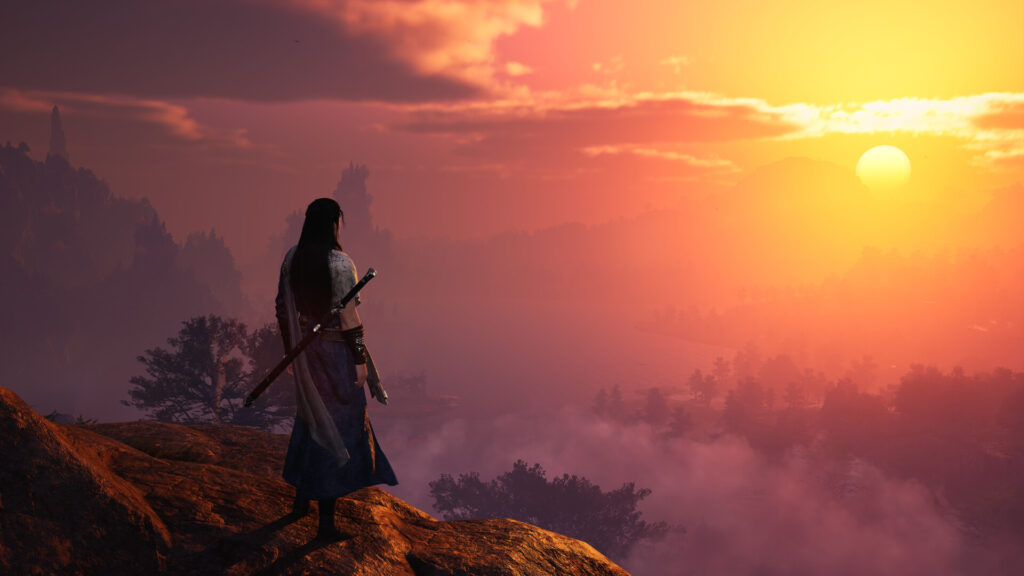
But aside from the combat, another facet of Where Winds Meet that kept me immersed in the fantasy it presented me with was the guild system and all of the RPG trappings that come with the game. Joining the guild and being a part of its activities was a lovely time indeed.
It’s a great reason to stop by the game’s world almost daily, collecting rewards and just hanging out, while some guild members even became worthy adversaries for my PvP battles. It isn’t just your guild, though, as this game gives you the scope to make a very social butterfly out of your character.
Extroverts among you are probably finding it hard to get anything done thanks to an interaction system that lets you actually chat with NPCs. If I’m being honest, it never gets old, and it’s a great way of reminding players that no matter how great an adventure might be, it’s always made better by the people you meet along the way.
Those people make Where Winds Meet a very interesting game to spend your time in, with so many unique conversations, possibilities, and even new content coming to me via the NPCs I stopped to play meet and greet with. It’s so well done that it becomes one of the most immersive systems in the game.
Once again, it brings a very unique take on similar mechanics from the best games around. Red Dead Redemption 2 immediately comes to mind, as does Watch Dogs: Legion, where you could access entire profiles of people in the world with your hacking skills. Both these titles did well to make their NPCs seem independent of the player if they were left undisturbed. The A-Life system in STALKER 2 is another great example of how NPCs bring an additional layer of immersion to a game.
Where Winds Meet has been careful to give its NPCs that layer of autonomy, while bringing a creative flourish that I was initially sceptical about, but found myself increasingly drawn towards the more I played the game. Chatting with anyone who would stop to listen has definitely added to my total playtime, and is definitely going to be a part of any further adventures I undertake in the Jianghu. It’s such a nice touch and implemented well enough to make each person you strike up a conversation with a potential friend, and perhaps a treasure trove of information on more things to do in the world. It’s the art of organic discovery at its finest.
But while all of the great features I’ve spoken about are great to have in a game, it’s in how well they blend together that determines just how good a game is. Fortunately, Where Winds Meet uses its wuxia framing to great effect, with the genre and all that it represents being a subtle backdrop for the grand spectacle that presents itself.
It’s what lends Where Winds Meet a sense of freedom and possibility, a set of humming strings that breathe life into the world, and lend authenticity and fun to everything you do within the world. It’s a tune that sings to you while you’re neck deep in things to do, and is one that you’re going to be humming when you’re out living your life in the real world.
It’s a thing of beauty, and spending an inordinate amount of time with it is just human nature, after all.
Note: The views expressed in this article are those of the author and do not necessarily represent the views of, and should not be attributed to, GamingBolt as an organization.