






The wait continues for an official reveal of Final Fantasy 7 Remake Part 3, even as director Naoki Hamaguchi promised to “share more updates than ever before” on the trilogy. Thus far, it’s confirmed to launch for Xbox Series X/S and Nintendo Switch 2 alongside PC and PS5, and while that may cause concerns for visual fidelity, Hamaguchi isn’t of the same mindset.
“Both the Nintendo Switch 2 and Xbox versions have been incredibly well-received and generated a lot of buzz online, and that attention has also made me realize how many people are worried about this issue. However, our decision to go multiplatform with the Final Fantasy 7 Remake series will not in any way lower the quality of the third installment. Our development structure simply doesn’t work that way to begin with. …I suppose I’ll just have to keep saying it,” he told Automaton-Media.
While it’s all well and good to say it, how can Hamaguchi be sure that this will be the case? After breaking down the “four key points” to consider across all platforms – CPU, GPU, RAM, and ROM – he revealed that the team focuses on achieving 30 FPS on lower-end platforms while achieving 60 FPS on the higher-end. “In other words, we don’t design the game to fully saturate a high-end CPU at 30 FPS.
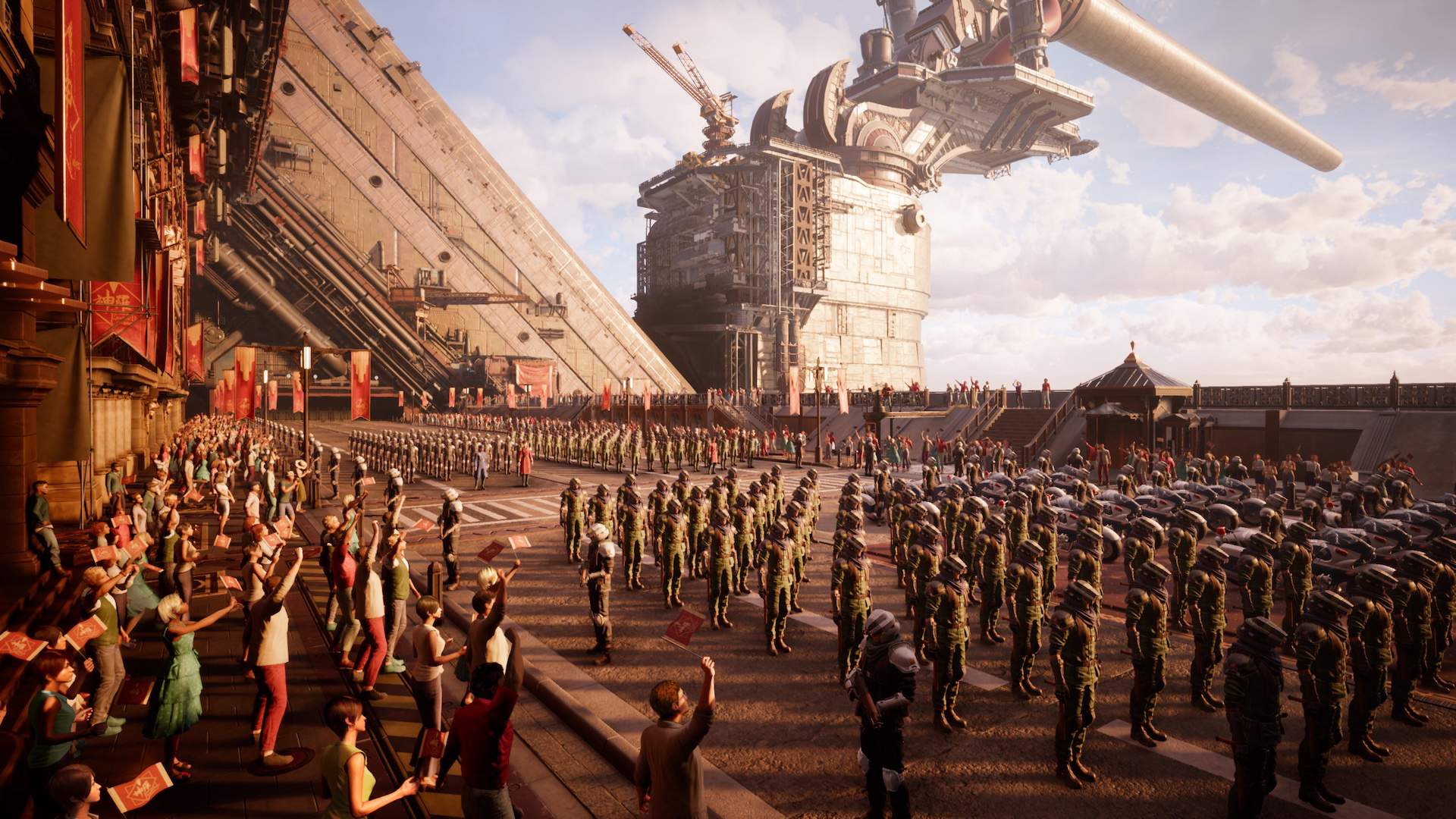
“Instead, on hardware that lends additional CPU headroom, we scale density elements, like increasing the number of NPCs in towns. As a result, towns feel more alive on higher-spec hardware, while lower-spec systems may display fewer NPCs. So even when factoring in Nintendo Switch 2 or Xbox Series S support, CPU-related bottlenecks are unlikely.
“Finally, the area most people are concerned about is the GPU, the graphics processor. When a game launches across multiple platforms, many enjoy comparing the visual differences, like in those side-by-side comparison videos. The main concern is that if development assumes hardware of a certain level as the standard, all platforms might be pulled to that level of quality. What I’d like to clarify first is that the highest-end gaming environment is PC.
“While PC gaming is gradually expanding in Japan, overseas growth has been even more rapid. The market has broadened tremendously across both consoles and PC. The Final Fantasy 7 Remake series has sold very well on platforms like Steam and the Epic Games Store, so we develop assets with the broad PC market in mind. In fact, our 3D assets are created at the highest quality level based on PC as the foundation.”
Hamaguchi goes on to recount how Final Fantasy 7 Rebirth on PC was considered visually superior to the PS5 version. “As our fundamental principle, we do not design assets to meet the lowest baseline. Instead, we create them for high-end environments first.
“We then apply what we call ‘reduction,’ adjusting assets and tuning them appropriately for each platform. This means that we avoid negatively impacting high-spec platforms. This isn’t unique to us, either. I believe it’s become fairly common practice among developers in recent years.”
Of course, some may point out that Final Fantasy 7 Rebirth launched with several issues on PC, which required patching to reach an acceptable state. Then again, one hopes that the experience will carry over to the finale and produce better results.
The real litmus test will be on June 3rd when the second game becomes available for Nintendo Switch 2 and Xbox Series X/S. While Final Fantasy 7 Remake Part 3 doesn’t have a release date, its title and reveal date have been decided internally. All that’s left to do is wait and hope that it truly matches Hamaguchi’s vision.